Master Building an Influencer Ambassador Programme for Your Restaurant

Matt Greenwell
Apr 14, 2026
You’re probably already doing some version of influencer marketing. A local food creator messages for a free meal. A team member spots a TikTok account with decent reach and offers a tasting. A post goes live, you get a short bump in attention, then nothing connects back to bookings, covers, or spend per head.
That’s the pattern I see most often. Restaurants aren’t failing because creators don’t matter. They’re failing because they treat creator work like a loose collection of favours instead of a managed revenue channel.
Building an Influencer Ambassador Programme for Your Restaurant works when it stops being about “getting posts” and starts being about operational consistency. You need the right creators, the right offer, the right tracking, and clean rules around disclosure, content rights, and attribution. Once those pieces are in place, the programme becomes much easier to run and much easier to defend financially.
Why Your Restaurant Needs a System for Influencer Marketing
Most restaurants don’t have an influencer problem. They have a process problem.
A one-off gifted dinner usually produces one of three outcomes. You get a nice photo with no action. You get content from the wrong audience. Or you get a temporary spike in attention that nobody can trace to bookings or spend.
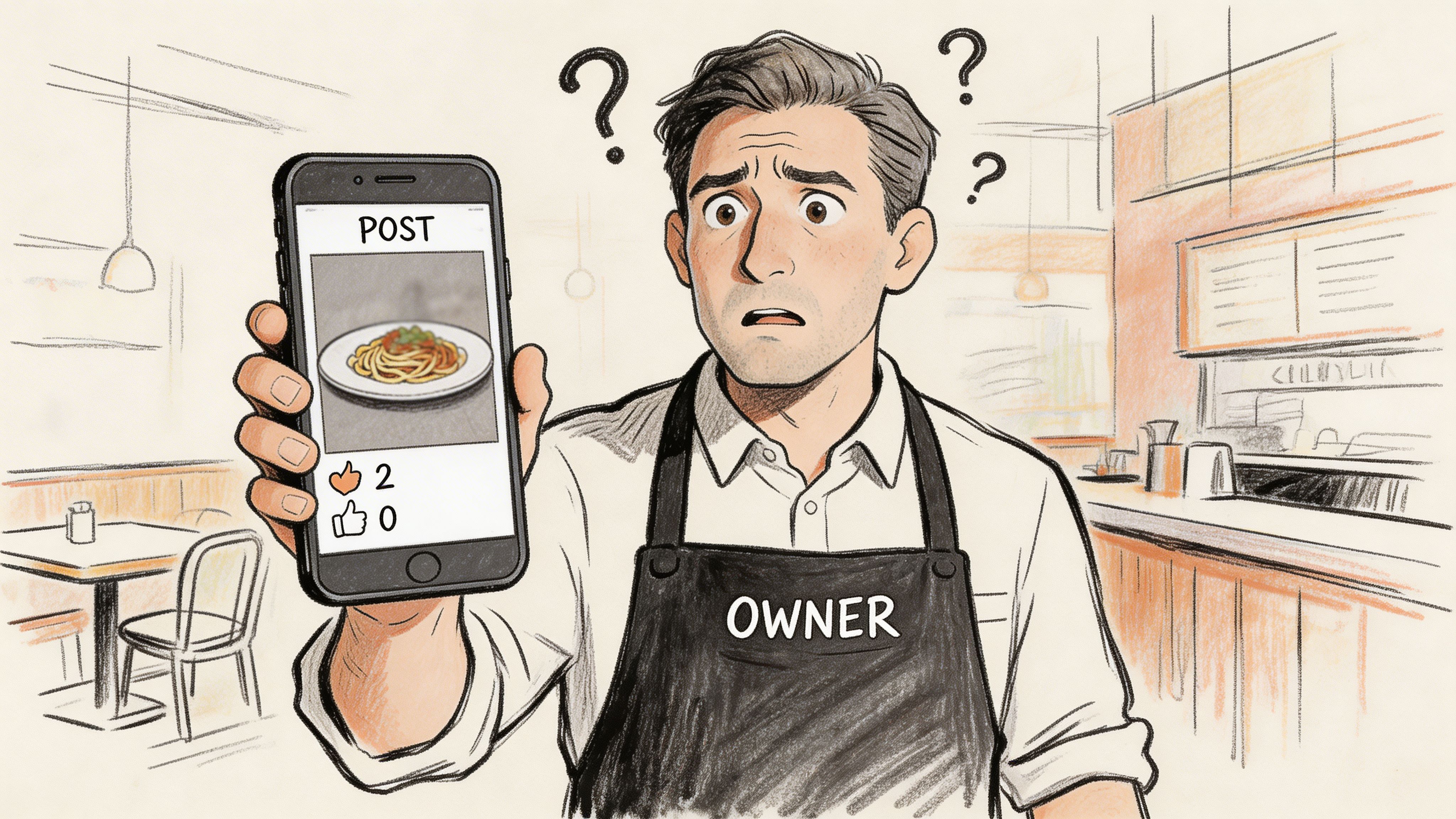
A structured ambassador programme fixes that because it turns random outreach into a repeatable system. Instead of asking, “Who can post for us this week?”, you build a roster of people who know your menu, your service style, your audience, and your commercial priorities.
That matters because off-peak trade is where many restaurant marketing plans break down. In the UK restaurant sector, ambassador programmes can drive a 15% increase in weekday visits during off-peak hours, and one ambassador using a unique promo code generated £3,000 in new revenue in a single week according to this restaurant ambassador ROI framework.
One-off campaigns create noise, systems create revenue
The difference is operational.
With one-off gifting, each collaboration starts from zero. New briefing. New negotiation. New expectations. No clean benchmark. No real comparison across creators.
With an ambassador model, you standardise:
Recruitment criteria so you stop choosing creators by follower count alone
Campaign mechanics such as codes, links, booking prompts, and content windows
Incentives so top performers earn more and weak performers fall away
Reporting so every activation tells you something useful
Practical rule: If a creator campaign can’t be tracked to a booking, order, code redemption, review, or usable piece of UGC, it’s brand activity at best and a write-off at worst.
Restaurants that get this right also build a content engine. Your ambassadors don’t just create awareness. They generate social proof, menu footage, local relevance, and recurring reasons for people to book now instead of “sometime soon”.
The shift most operators need to make
Think less like a PR manager and more like an operator.
You’re not buying isolated posts. You’re building a channel with inputs, outputs, and controls. That means choosing the creators who fit, giving them a clear job, measuring what happened, and keeping only the relationships that keep paying back.
If you want a useful benchmark for what good programmes can look like in practice, these influencer marketing campaign examples are worth reviewing for structure, not just creative inspiration.
Laying the Foundation for a Successful Programme
Restaurants often start with the wrong question. They ask who to recruit before they’ve decided what the programme needs to achieve.
That’s backwards. The brief comes first.
UK restaurants with clear, SMART goals for their ambassador programmes report a 30% uplift in online reservations and orders within three months, with ambassador traffic showing conversion rates 4x higher than traditional ads according to this restaurant influencer marketing benchmark.
Start with the commercial problem
“More customers” isn’t a goal. It’s a wish.
A proper ambassador programme should solve a specific trading issue. In restaurant terms, that usually means one of these:
Quiet service periods such as Tuesday lunch, late Sunday afternoon, or early dinner slots
Margin priorities like set menus, cocktails, brunch add-ons, or private dining
Location-specific needs where one site underperforms compared with the rest of the estate
Reputation goals such as getting more fresh reviews and stronger local social proof
When the commercial problem is clear, creator selection gets easier. A neighbourhood brunch spot that needs weekday footfall should recruit very differently from a destination steak restaurant pushing occasion dining.
Define your ideal diner by behaviour, not just age
Demographics help, but behaviour is what shapes a useful brief.
Ask:
Where does this customer discover restaurants?
Do they book ahead or decide on the day?
Do they come for convenience, atmosphere, dietary fit, or social status?
Are they likely to share content themselves?
What would make them act this week rather than next month?
A vegan café in Bristol might need creators whose audiences care about plant-based eating and routine visits. A premium small-plates venue in Manchester may need creators whose followers respond to atmosphere, date-night content, and short-form video with strong visual storytelling.
Write goals that your team can actually run
Good goals need to be measurable by the people on shift, not just by the marketing lead.
A simple framework:
Goal type | Weak version | Strong version |
|---|---|---|
Footfall | Get busier midweek | Fill specific off-peak sittings through ambassador-led bookings |
Sales | Sell more desserts | Push a named add-on through creator codes and server prompts |
Reviews | Improve Google rating | Generate a steady flow of recent reviews tied to service periods or launches |
Content | Get more social posts | Build a reusable bank of creator-made menu and venue content |
The strongest goals usually combine customer action with tracking method.
For example, if you want to fill a Thursday dinner service, decide before launch how that booking will be attributed. It might be a creator-specific code, a tracked booking link, or a booking note attached to a campaign phrase your host team recognises.
Make the programme operationally realistic
A bad goal can still be SMART on paper.
If your front-of-house team can’t recognise the offer, if your booking platform can’t store campaign notes, or if your managers don’t know which menu item is being pushed, the programme will wobble before the first post goes live.
The best ambassador plans read like shift-ready instructions, not boardroom slogans.
Keep the first version tight. One audience. One or two commercial goals. One clear booking or purchase action. Once that works, you can add complexity.
Designing Your Programme Blueprint and Incentives
The structure of the programme decides the quality of the creators you attract.
If your offer is “free meal for a post”, you’ll get a lot of applicants who want the meal and not many who care about performance. That doesn’t mean gifting never works. It means gifting on its own is a weak operating model.
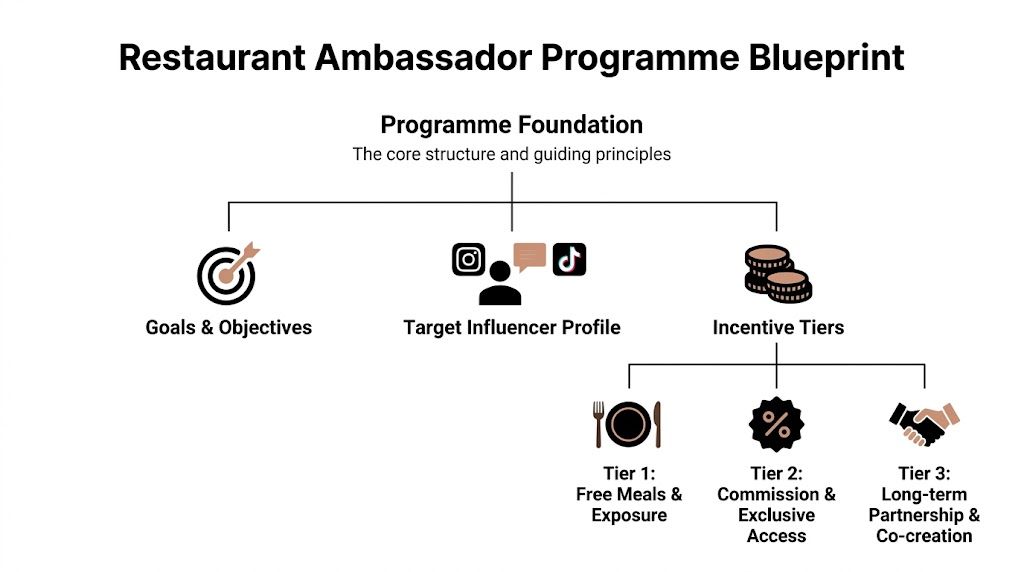
Choose an incentive model that matches your margins
Different restaurants need different economics.
A fast-casual brand with repeat purchase potential can justify commission more easily. A fine-dining restaurant with limited covers may get more value from selective access and higher-content quality expectations.
Here’s the practical comparison:
Model | Best for | Upside | Risk |
|---|---|---|---|
Free meal or tasting | Early testing | Low friction, easy to launch | Attracts freebie seekers |
F&B stipend plus deliverables | Independent venues | More control over spend | Can still feel transactional |
Commission on tracked sales | Chains and growth-focused sites | Aligns payout with performance | Needs clean attribution |
Tiered ambassador rewards | Ongoing programmes | Retains top performers | More admin if unmanaged |
Access-based perks | Premium concepts | Builds exclusivity | Hard to value if used alone |
What usually works in practice
For most restaurants, a tiered model gives the cleanest balance between creator motivation and commercial control.
A simple setup might look like this:
Starter tier
This is for creators you’re testing.
Offer a hosted visit, clear content expectations, and one tracked action such as a booking link or promo code. Keep the brief narrow. Don’t ask for five assets across three platforms from someone you’ve never worked with.
Good use case: new local creators, menu launches, or sites testing local fit.
Performance tier
The programme begins acting like a revenue channel.
Creators in this group get stronger rewards because they’ve already shown they can drive bookings, orders, or quality UGC. Add commission, repeat visit privileges, guest allowances, or first access to launches.
Good use case: creators who consistently produce usable content and move diners.
Partner tier
This level is for the small number of ambassadors you’d trust with bigger brand moments.
That might include seasonal launches, location openings, chef collaborations, or behind-the-scenes access. By this stage, they should know your standards, your service tone, and your essential requirements.
Build rewards around behaviour you want repeated
The smartest programmes reward actions that matter commercially, not just visibility.
Useful reward triggers include:
Booked covers driven through links or codes
Redeemed offers tied to a menu item or service period
UGC quality that your team can reuse on social, paid, or in-store screens
Reliability such as posting on time, following the brief, and responding quickly
Brand fit measured through audience comments, saves, and tone
Don’t pay extra for vanity metrics you can’t bank. Pay for outcomes, reliability, and content you’ll use again.
Non-cash perks matter more than many operators think
The best ambassadors usually want more than a transaction.
Early menu previews, kitchen access, invite-only tastings, chef meet-and-greets, and plus-one event spots can deepen the relationship without forcing every collaboration into a cash-only framework. These perks also create better content because the creator gets a real story to tell.
The mistake is using perks as a substitute for fair value. Use them as a layer on top of a sensible commercial structure, not instead of one.
Recruiting and Onboarding the Right Food Influencers
The fastest way to waste budget is to recruit creators who look impressive on screen and make no sense in your dining room.
Restaurants don’t need the biggest names. They need the people whose audience lives nearby, books locally, and trusts their recommendations.
Experts advise focusing on micro-influencers with 5,000 to 100,000 followers who demonstrate organic brand love. Key vetting criteria include audience alignment, authentic engagement rates, and content quality, and the process can be made more efficient with platforms that filter by niche and location, as outlined in this guide to creating ambassador programmes.popfly.com/post/create-brand-ambassador-programs).
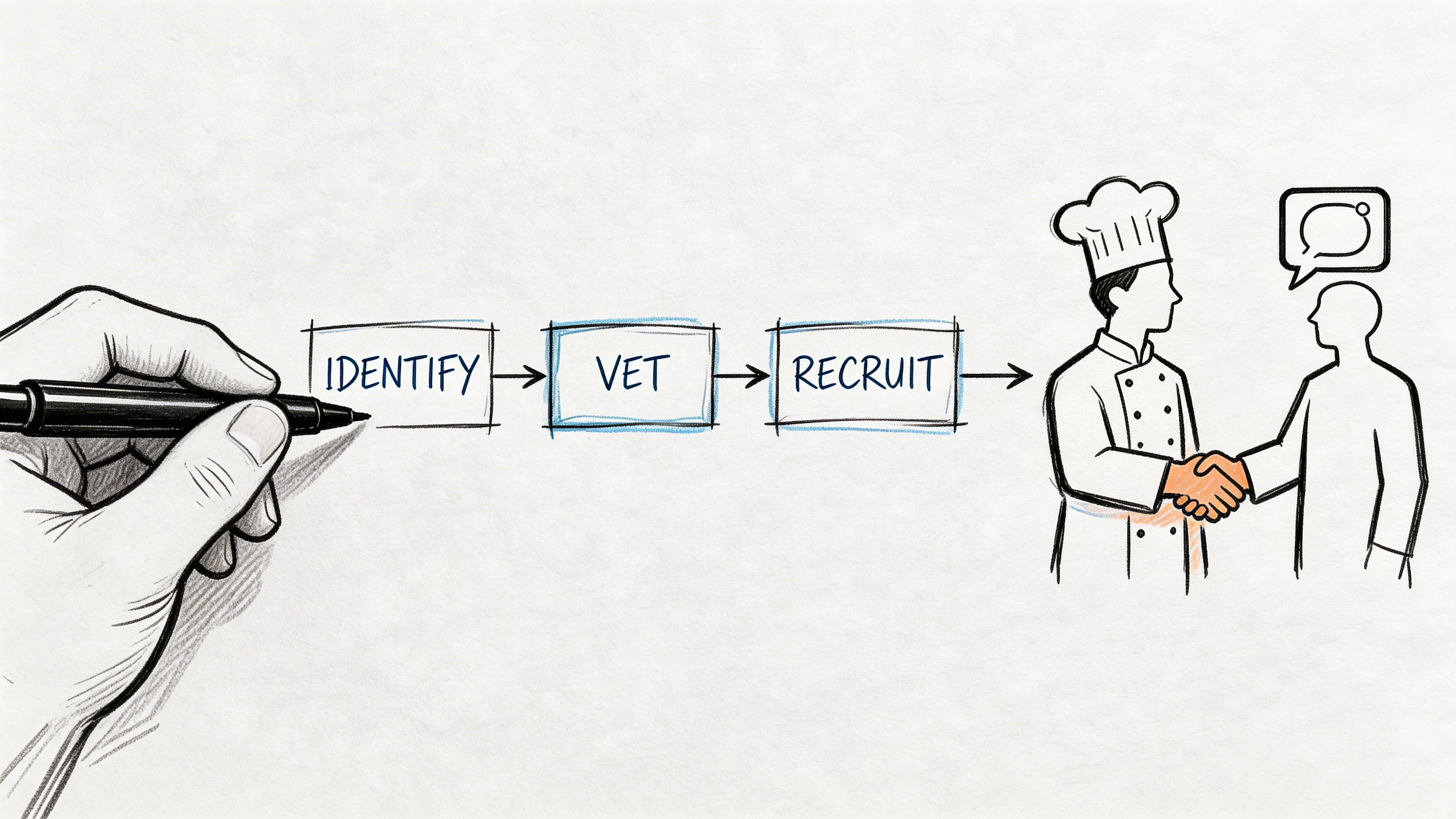
What to look for before you ever send a DM
Start with evidence that the creator already fits your world.
That might be someone who has posted about your restaurant unprompted. It might be a local food account that regularly covers venues in your postcode. It might be a lifestyle creator whose audience clearly overlaps with your dinner, brunch, or family trade.
For practical sourcing, local hashtag searches and location tags still work. So do creator discovery platforms filtered by city, category, and audience profile. If you need a more tactical shortlist process, this guide on how to find local food influencers in your city is useful: https://sup.co/blog/how-to-find-local-food-influencers-in-your-city
Vet for quality, not appearances
Follower count doesn’t tell you whether someone can influence an actual table booking.
Check these five things:
Audience geography
If most followers are outside your catchment area, the content may look good and still do nothing for covers.Comment quality
Real local intent shows up in comments like “need to try this”, “adding for Friday”, or “is this near the station?”Content style
Some creators shoot beautiful static images but weak short-form video. Others are brilliant on camera but poor at showing food detail.Brand history
If every second post is a promotion, trust tends to drop. You want creators whose sponsored work still feels natural.Operational fit
Can they follow a brief, meet a deadline, disclose properly, and send over content files when asked?
A simple outreach message that gets better replies
Most restaurant outreach fails because it’s either too vague or too needy.
Keep it personal, specific, and easy to answer.
A workable approach:
Mention a recent post you liked
Say why their audience fits your venue
Offer a clear collaboration type
Explain the action you want
Keep the first ask small
Example:
Hi [Name], I liked your recent post on neighbourhood brunch spots in Leeds. Your audience looks closely aligned with the guests we want to reach for our weekday lunch trade. We’re building a small ambassador group for local creators who genuinely enjoy independent food venues. If it’s a fit, we’d love to invite you in, brief you properly, and discuss a tracked partnership rather than a one-off gifted visit.
That reads like a business conversation, not a copy-paste freebie pitch.
Onboarding is where good programmes separate themselves
Once someone joins, don’t just send a booking link and hope for the best.
Give them a real onboarding pack. It should include:
your brand story in plain language
the menu items or service periods you care about
your visual and tone preferences
booking and guesting rules
disclosure requirements
their code or tracked link
who they contact when plans change
A short kickoff call helps if the partnership matters. Even a brief voice note from the GM or marketing lead can improve buy-in because the creator feels included rather than processed.
Later in the relationship, richer creative coaching helps. This walkthrough is worth embedding for teams that want to tighten creator execution without becoming controlling:
Strong onboarding reduces the need for constant chasing later. Most creator management problems are briefing problems in disguise.
Activating and Managing Your Ambassadors for Success
Once the roster is live, the job changes. Recruitment matters, but ongoing management decides whether the programme becomes dependable or drifts into admin-heavy chaos.
The strongest restaurant programmes run on rhythm. Ambassadors know when they’ll hear from you, what a campaign brief looks like, and how success is judged. That consistency creates better work and fewer last-minute surprises.
Run campaigns around real trading moments
The most useful activations are tied to something the restaurant needs.
A few examples that work well operationally:
a brunch push for a quieter Sunday slot
a new cocktail menu with a tracked booking offer
a chef special that needs quick local awareness
a group dining push before key seasonal dates
a soft relaunch after refurbishment
Each activation should have one core action. Book. Order. Redeem. Review. Don’t pile every objective into the same brief.
Brief tightly, then leave room for the creator
Restaurant teams often swing to extremes. Some send no brief at all. Others write a document so rigid that the content loses any sense of personality.
A useful brief usually includes:
what’s being promoted
who it’s for
the must-show menu item or experience
the booking or code mechanic
the disclosure rule
what must not be said
when the content should go live
Then stop. Let the creator make the content in their voice.
If the post sounds like your menu copy, it will probably underperform.
Keep communication simple
You don’t need a complicated community platform to run a good ambassador programme.
For most restaurants, one of these is enough:
a private WhatsApp group for updates and quick reminders
a monthly email with campaign dates and openings
a shared calendar for tasting events and posting windows
a central folder for approved assets, menus, and brand notes
The point is to reduce friction. Ambassadors should never have to hunt for the booking policy, content deadline, or promo code.
Turn UGC into an asset library
Creators produce more than reach. They produce raw marketing material.
Good operators collect:
vertical food close-ups
venue walk-ins
staff interaction clips
cocktails being poured
dishes arriving at table
reaction footage
ambient dining shots
That content becomes useful across organic social, paid ads, digital menus, email, and launch campaigns. If you don’t organise it, you’ll end up paying twice for content you already commissioned once.
For restaurants that want to tighten how they evaluate creators before activation, reviewing examples of strong influencer media kits can help your team spot who presents themselves professionally and who will need more hand-holding.
Treat the best ambassadors like long-term partners
Top creators don’t want to be managed like casual extras forever.
Give them context. Ask for input before a launch. Invite them to preview tastings. Tell them which content drove table bookings. People do better work when they know what mattered.
That’s how an ambassador programme grows from “content support” into a reliable local growth channel.
Tracking Measuring and Scaling Your Programme ROI
If your reporting ends at views, likes, and comments, you don’t have a revenue model. You have a content log.
Restaurants need a measurement setup that connects creator activity to actions diners take. That means unique promo codes, UTM links, and a dashboard that can show what each ambassador contributed.
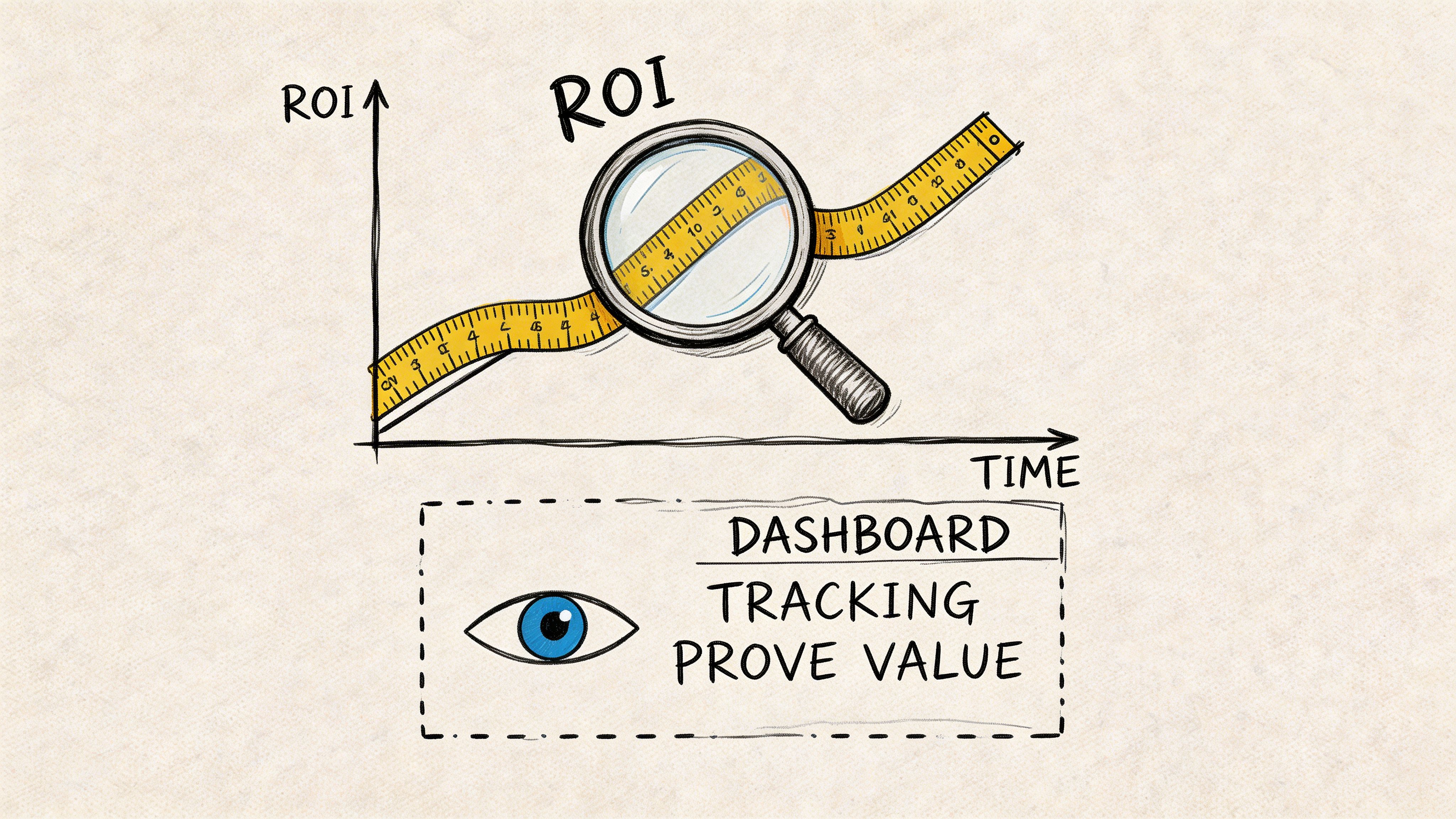
For UK restaurant chains, micro-influencers drive 3.2x higher promo code redemption rates, and using AI platforms for geo-attribution has been shown to boost attributable revenue by 18% during off-peak hours by matching influencers to specific local audiences, according to this restaurant marketing analysis.
What every ambassador should have
Each creator in the programme needs their own tracking setup.
At minimum:
a unique promo code
a UTM-tagged link
a defined offer or action
a location assignment if you operate multiple sites
That sounds basic, but many restaurant teams still reuse codes across creators or across locations. Once that happens, performance data gets muddy fast.
A better setup is simple naming discipline.
Tracking element | Bad setup | Better setup |
|---|---|---|
Promo code | BRUNCH10 | SARAHBRUNCHLEEDS |
UTM source | instagram_sarah | |
UTM campaign | summer | sundaybrunch_leeds_june |
Site tagging | all locations | specific location attached |
Multi-location attribution needs local logic
Chains often make a predictable mistake. They recruit good creators, then point all traffic to one generic page or one broad offer.
That hides what’s happening.
If you run multiple sites, assign ambassadors by geography first. A creator with strong engagement in South Manchester should not be judged on performance tied to a city-centre location unless the campaign is designed that way.
Use local booking links, local codes, and local reporting lines. Otherwise, head office sees “mixed results” when the problem is weak attribution structure.
The metrics that matter in restaurants
A restaurant dashboard should answer four questions:
Who drove bookings or orders?
Which creators generated usable revenue, not just reach?
What happened during the exact service period being promoted?
Which content should be reused or scaled?
That means tracking:
code redemptions
bookings from creator links
attributable revenue
booking timing
site-level performance
repeat use of creator-generated content
review generation where that’s part of the campaign
If you want a sharper view of which metrics deserve dashboard space and which are just noise, this breakdown of influencer metrics is worth using as a reference: https://sup.co/blog/how-to-measure-influencer-marketing-the-metrics-that-actually
A creator who drives fewer views but more redemptions is usually more valuable than a creator who “went viral” with no measurable action.
How to scale without losing control
Scale comes after repeatability.
Keep only the ambassadors who do one or more of these consistently:
drive trackable bookings
create content your brand reuses
follow the brief without constant correction
fit the site’s audience and pricing position
Then expand carefully.
You might scale by:
adding more creators in the same city
moving the model to another location
increasing the budget behind proven ambassadors
reactivating top performers around key trading windows
Don’t scale because the programme feels exciting. Scale because the attribution is clean and the margin case is obvious.
Navigating UK Legal and Operational Essentials
Many restaurant ambassador programmes subtly go wrong.
The campaign launches well. Content looks strong. Then someone notices the post doesn’t disclose the commercial relationship properly, or the tracking process collects data without enough thought, or nobody agreed in writing who can reuse the footage.
Those aren’t side issues. They’re core operating risks.
With 68% of UK consumers distrusting non-transparent sponsored content, ASA compliance matters commercially as well as legally. The risk is real. A London restaurant chain was fined £20,000 in Q1 2026 for undeclared influencer posts, as referenced in this UK compliance discussion.
ASA disclosure is not optional
If there’s payment, free hospitality, a perk, or any other value exchange tied to the post, the disclosure needs to be clear.
In practical restaurant terms, that means your ambassadors should use obvious labels such as #ad where required and place them clearly enough that a viewer can’t miss them. Hidden disclosures, vague wording, or platform tools used badly create avoidable problems.
Your team should check this before a post goes live, not after.
GDPR matters when you start tracking properly
The minute you attach links, codes, forms, booking flows, and attribution data to creator activity, you’re dealing with information flows that need handling properly.
You don’t need to overcomplicate it. You do need to be disciplined.
Focus on:
collecting only the data you need
making sure any forms or tracking processes are transparent
limiting access to campaign data internally
keeping creator and customer information organised and secure
making sure any platform you use fits your data handling standards
The mistake many teams make is assuming influencer tracking sits outside normal customer data responsibilities. It doesn’t.
Put the agreement in writing
Even friendly local partnerships need a written agreement.
A solid restaurant ambassador agreement should cover:
deliverables
posting windows
disclosure obligations
payment or hospitality terms
cancellation rules
content usage rights
exclusivity, if relevant
approval process, if any
what happens if the creator misses the brief
If you need a practical reference point for what to include, this guide to influencer contracts and agreements is a good starting place: https://sup.co/blog/the-complete-guide-to-influencer-contracts-and-agreements
Professional operations build better creator relationships
Creators usually prefer clear rules to fuzzy arrangements.
They want to know what they’re expected to deliver, when they’ll be compensated, whether they can bring a guest, and whether you’ll be reusing their content in paid ads or organic social. Restaurants that handle this cleanly tend to attract better partners and keep them longer.
Clear disclosure, clean paperwork, and sensible data handling don’t slow the programme down. They stop expensive mistakes and make the programme credible.
A restaurant ambassador programme should feel easy to run because the admin has already been thought through. That’s what allows marketing, operations, and front of house to work from the same playbook.
If you want help building a restaurant ambassador programme that’s trackable, Sup gives you the sourcing, outreach, tracking codes, at...sup.co) gives you the sourcing, outreach, tracking codes, attribution, and campaign management needed to turn creator marketing into a repeatable growth channel instead of a spreadsheet-heavy side project.
Matt Greenwell
Share