66.4% of UK marketers say AI has improved their influencer campaign results in 2026, and the average return cited is $5.78 for every $1 invested, outperforming traditional ads by 11x according to Influencer Marketing Hub regional trend data. That changes the conversation.
Influencer marketing used to be tolerated as a useful but messy channel. Teams accepted manual creator research, scattered DMs, delayed reporting, and fuzzy attribution because there wasn’t a better operational model. In 2026, there is.
How AI Is Changing Influencer Marketing in 2026 is less about replacing marketers and more about replacing waste. The strongest shift isn’t in content generation. It’s in how brands discover creators, predict likely outcomes, automate repetitive execution, and connect posts to revenue with far more confidence than spreadsheet-led workflows ever allowed.
The important part is this. AI has made influencer marketing more measurable, but not automatically better. Brands still waste budget when they pick creators on follower count, automate outreach without guardrails, or treat views as proof of performance. The teams getting results are using AI in a narrower, more disciplined way. They apply it to decisions that benefit from pattern recognition and speed, then keep humans involved where judgment matters.
That’s the practical lens worth using. Not “AI for everything”. AI for the parts of influencer marketing that have always slowed teams down or clouded ROI.
The Unstoppable Shift to AI in Influencer Marketing
The UK market has crossed the point where AI in influencer marketing looks optional only on paper. In practice, it’s already a working layer inside campaign planning, creator selection, workflow management, and reporting.
Manual operations are now the bottleneck
A manual influencer programme breaks in predictable places. The team spends too long finding creators. Vetting becomes inconsistent. Outreach depends on whether someone remembered to follow up. Reporting gets stitched together after the campaign has already ended. That model can still run small tests, but it struggles to scale without waste.
AI changes the economics of the channel. It turns creator discovery from a search problem into a matching problem. It turns campaign setup from a coordination problem into a system problem. And it turns measurement from a debate into a dashboard.
That’s why the current shift matters. It isn’t just about saving time. It’s about making influencer marketing behave more like a repeatable growth channel.
High-performing teams use AI where it has leverage
The strongest operators don’t hand strategy to a black box. They use AI where volume and complexity overwhelm humans.
That usually means:
Discovery at scale: Screening large creator pools faster than any team could manually.
Pattern recognition: Spotting audience fit, content themes, and prior performance signals.
Workflow automation: Handling repetitive admin that slows launches.
Attribution: Connecting content activity to clicks, sales, bookings, or redemptions.
If you’re reviewing your current stack, this roundup of 12 Best AI Tools for Social Media Marketing in 2026 is a useful reference point because it helps separate broad social AI tools from the smaller set that support measurable campaign execution.
Practical rule: If a task is repetitive, data-heavy, and easy to standardise, AI usually helps. If a task affects brand judgment, creator fit, or disclosure risk, a human still needs to sign off.
What’s changed on the ground
The old question was whether influencer marketing could be measured properly. The new question is whether your current process is too slow and too manual to compete with brands that already use AI to tighten selection and reporting.
That’s the key shift. The channel hasn’t become easier. It has become more operationally serious.
The Seven Pillars of AI-Driven Influencer Marketing
By 2025, 86% of U.S. marketers planned to partner with influencers, according to Sprout Social’s influencer marketing statistics roundup. In practice, that level of adoption changes the standard for execution. AI is no longer a side tool for experimental teams. It is becoming part of the operating model for brands that need faster selection, tighter reporting, and cleaner control over risk.
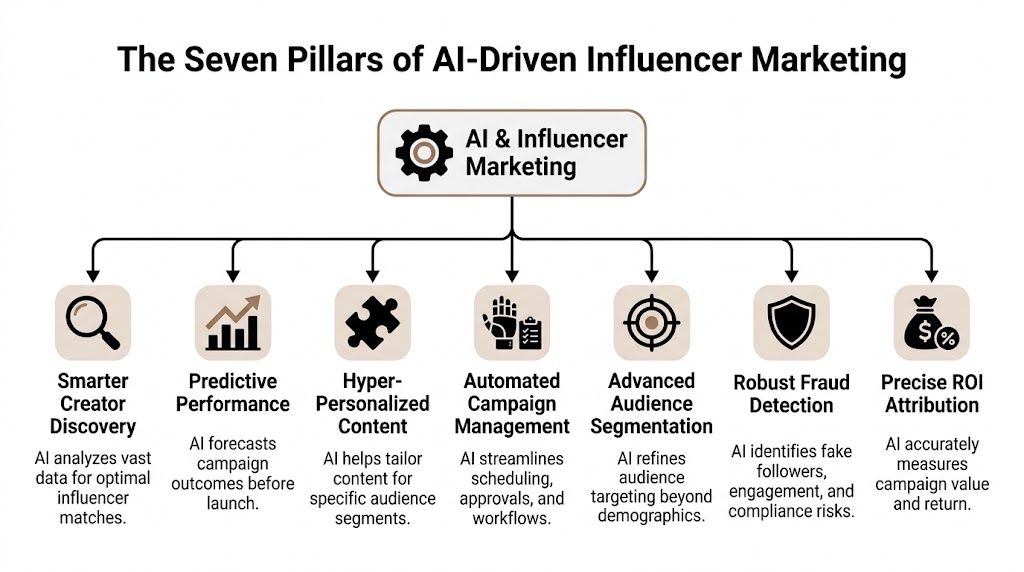
What matters is how AI gets applied across the full campaign system. Strong teams do not buy one tool and expect results. They build around a set of functions that improve selection, execution, measurement, and compliance.
The seven pillars
1. Smarter creator discovery
AI shortens the research cycle by filtering creators against niche fit, audience quality, location, past brand alignment, and content patterns. That gives teams a stronger starting list than manual hashtag searches or spreadsheet research.
The gain is speed. The trade-off is that automated discovery can overvalue easy-to-measure signals and miss contextual fit, especially in local campaigns or regulated sectors.
2. Predictive performance
The next layer is probability. AI models estimate which creators are more likely to drive clicks, conversions, redemptions, or store visits based on historical patterns.
Used well, this reduces wasted outreach and weak partnerships. Used badly, it creates false confidence. Historical performance helps with prioritisation, but it does not replace testing, creative judgment, or market context.
3. Hyper-personalised content support
AI can improve briefs by identifying message angles, product hooks, timing patterns, and audience-specific themes. This is useful when a campaign needs regional relevance or multiple creator segments without writing every brief from scratch.
It should stay at the support layer. Creator content still performs best when the voice feels native to the platform and credible to the audience.
4. Automated campaign management
Admin work slows more campaigns than strategy does. Outreach tracking, follow-ups, approvals, usage rights, scheduling, and asset collection are repetitive tasks that AI can handle well.
This is often where teams see the first operational return because less time gets lost to coordination. For a practical example, this breakdown of how restaurants are using AI to run influencer campaigns shows how automation helps local operators run more campaigns without adding the same amount of manual overhead.
5. Advanced audience segmentation
Audience fit now goes well beyond age bands and broad interests. AI can group audiences by behavioural patterns, purchase signals, content affinity, and local relevance.
That matters in the UK market, where postcode-level relevance, city-specific trends, and catchment area logic often determine whether a creator drives traffic or just generates impressions.
6. Fraud detection and compliance screening
This pillar gets less attention than discovery, but it protects budget. AI can flag suspicious engagement spikes, poor audience quality, fake follower patterns, and creator histories that need a closer review.
For UK brands, the compliance side matters just as much. Disclosure wording, brand safety, usage rights, and sector-specific claims still need human review. Hybrid AI-human platforms tend to be safer here because software can screen at scale, while experienced teams handle the decisions that create legal or reputational exposure.
7. Precise ROI attribution
This is the pillar that determines whether the channel earns more budget. AI helps connect content output to commercial signals such as tracked clicks, promo code use, bookings, sales, and repeat purchase behaviour.
That matters because reach and engagement rarely settle an internal budget discussion. Revenue, customer acquisition cost, and incremental lift usually do.
Why the pillars matter together
These pillars work as an operating system, not a menu of isolated features.
Discovery improves the initial pool.
Prediction helps prioritise who is worth testing.
Content support strengthens briefing without flattening creator voice.
Automation reduces launch delays and admin drag.
Segmentation improves audience relevance.
Fraud and compliance screening reduce wasted spend and avoidable risk.
Attribution shows whether the programme is producing return.
The practical point is simple. AI improves influencer marketing most when it supports the full chain from creator selection to ROI reporting, with human oversight on brand fit and compliance. That is how teams scale safely instead of just adding more software.
Smarter Creator Discovery with Predictive Analytics
Creator discovery used to be a research task. In 2026, it’s closer to media buying. The question is no longer “Who looks relevant?” It’s “Who is most likely to perform for this objective in this market?”
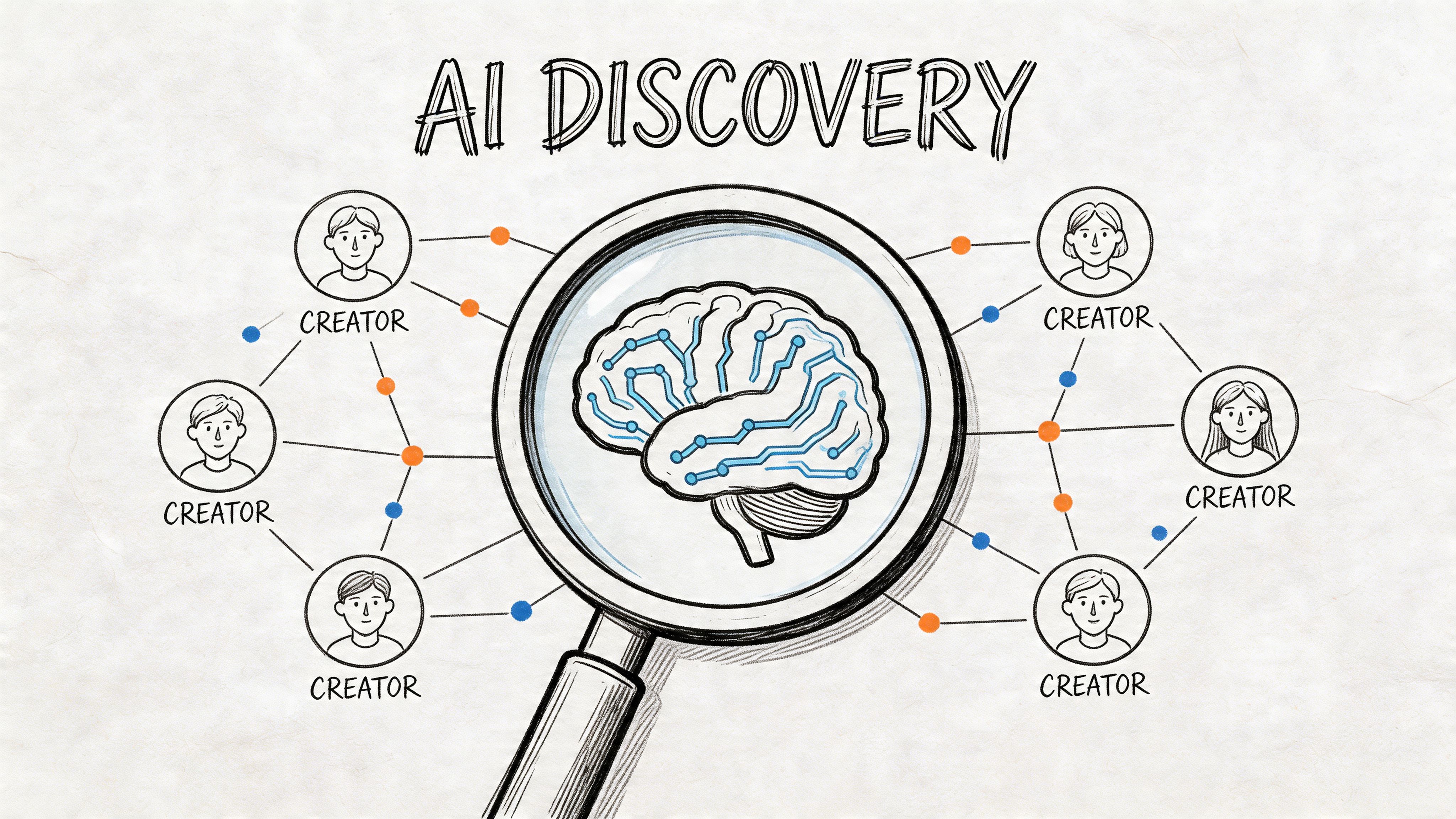
The biggest difference is that AI doesn’t evaluate creators the way marketers used to. It doesn’t get distracted by polished feeds or raw follower count. It looks for patterns.
What predictive discovery actually changes
According to CreatorIQ’s 2026 trend summary, AI-powered predictive performance analytics can forecast outcomes with 87% accuracy, and it helps UK brands prioritise micro-influencers with 10k to 50k followers that deliver 3.2x higher conversion rates than macro-influencers.
That’s the reason micro and nano creators have become more strategically important. They often fit tighter audience niches, stronger local contexts, and more specific intent patterns. AI makes those fits easier to find.
A good way to think about predictive discovery is as a screening layer, not an oracle. It narrows the pool before your team invests time in briefs, negotiations, and approvals.
What to look for in AI-assisted creator matching
When a platform or process claims to use AI for discovery, the useful questions are practical:
Audience relevance: Does it look beyond follower count into actual audience fit?
Content consistency: Does it evaluate whether the creator repeatedly posts in the category you care about?
Commercial suitability: Can it estimate likely conversion potential, not just engagement?
Local precision: Can it identify creators by city, neighbourhood, or niche context?
Historical signals: Does it use prior performance data to rank likely fit?
If those answers are vague, the “AI” is probably just a faster search bar.
A strong creator shortlist should feel narrower, not bigger. Better discovery removes options. It doesn’t flood the team with more profiles to review.
Why manual discovery misses the best fits
Manual creator research tends to overvalue what is easy to see. Follower count. Aesthetic quality. Surface-level engagement. These are poor substitutes for campaign fit.
A restaurant brand launching in a specific part of a city may get stronger results from a small local creator with high trust and repeat audience interaction than from a broad lifestyle account with a larger following. The same logic applies to ecommerce brands selling to a narrow niche.
That’s where AI earns its keep. It can scan for these non-obvious matches faster and more consistently than a person manually checking profiles.
For operators in hospitality, this walkthrough on how restaurants are using AI to run influencer campaigns is useful because it shows how local creator sourcing and measurable campaign setup fit together in practice.
Where human judgement still matters
Predictive discovery is excellent at narrowing candidates. It’s weaker at brand nuance.
A strategist still needs to decide:
Does this creator feel right for the brand voice?
Will the content land credibly with the audience?
Are there any reputation or disclosure issues not visible in the data?
That’s why the best use of AI in creator discovery is assisted selection, not automatic selection.
This is a good place to see the process in action.
AI gets you to a sharper shortlist. Marketers still decide who deserves the brief.
Automating Campaign Workflows to Reclaim Your Time
Most influencer programmes don’t become inefficient because the strategy is complicated. They become inefficient because every campaign creates a pile of admin.
Outreach has to be written. Replies have to be tracked. Reminders have to be sent. Assets have to be approved. Codes have to be assigned. Payment status has to be updated. None of that is strategic work, but all of it determines whether a campaign runs cleanly.
Where manual workflows break down
The manual method usually looks familiar. A marketer builds a shortlist, drafts messages, tracks responses in a spreadsheet, chases creators in DMs, copies status updates into another sheet, and tries to remember who posted and who still hasn’t.
That process can work with a very small programme. It falls apart once campaigns need to run across multiple locations, product lines, or client accounts.
Here’s the practical comparison.
Manual vs AI-assisted campaign workflow
Task | Manual Method (Estimated Time) | AI-Assisted Method (Estimated Time) |
|---|---|---|
Creator shortlist prep | Hours of profile review and note-taking | Faster filtering and ranked selection |
Outreach drafting | Rewriting messages for each creator | Personalised templates and automated sequences |
Follow-ups | Manual reminders across inboxes and DMs | Triggered follow-up workflows |
Campaign setup | Spreadsheet tracking, link creation, status updates | Centralised setup in one workflow |
Content approvals | Chasing assets in messages and email | Structured approval steps |
Reporting | Manual collection after posting | Ongoing dashboard-based reporting |
The table is deliberately qualitative because time varies by team and process. What doesn’t vary is the pattern. AI removes the tasks that eat hours without improving strategic quality.
What good automation should handle
Useful automation in influencer marketing usually covers five things:
Outreach sequencing: Personalised first contact and follow-ups without manual chasing.
Status visibility: A clear record of who replied, who accepted, and who posted.
Asset handling: Easier collection of content, links, and usage rights.
Tracking setup: Promo codes and links created as part of the workflow, not as an afterthought.
Admin reduction: Less copying, pasting, and spreadsheet maintenance.
For teams also reviewing broader creative systems, this guide to AI tools for social media content creation is helpful because workflow gains often depend on how content production and campaign execution connect.
What doesn’t work
Automation creates problems when brands use it to impersonally blast creators or remove all human involvement.
Three mistakes show up often:
Over-automated outreach: Creators can tell when messages are generic.
No exception handling: Campaigns always need human intervention for edge cases.
Automation without process design: Bad workflows just run faster.
The point of automation is to remove repetitive labour, not to remove accountability.
Choosing the right operating model
If you’re comparing platforms or managed options, focus less on feature lists and more on operating friction. This piece on how to choose between influencer marketing platforms is a sensible filter because it forces the right question. Will this reduce admin, or will it just move admin into a different interface?
One practical option in this category is Sup, which combines AI sourcing with a human team to launch and manage creator campaigns, including outreach, scheduling, tracking codes, and reporting. That model is useful for brands that want automation in the workflow without giving up review and control.
The primary gain from AI-assisted operations isn’t that the campaign “feels modern”. It’s that your team gets time back for creator selection, commercial analysis, and creative direction.
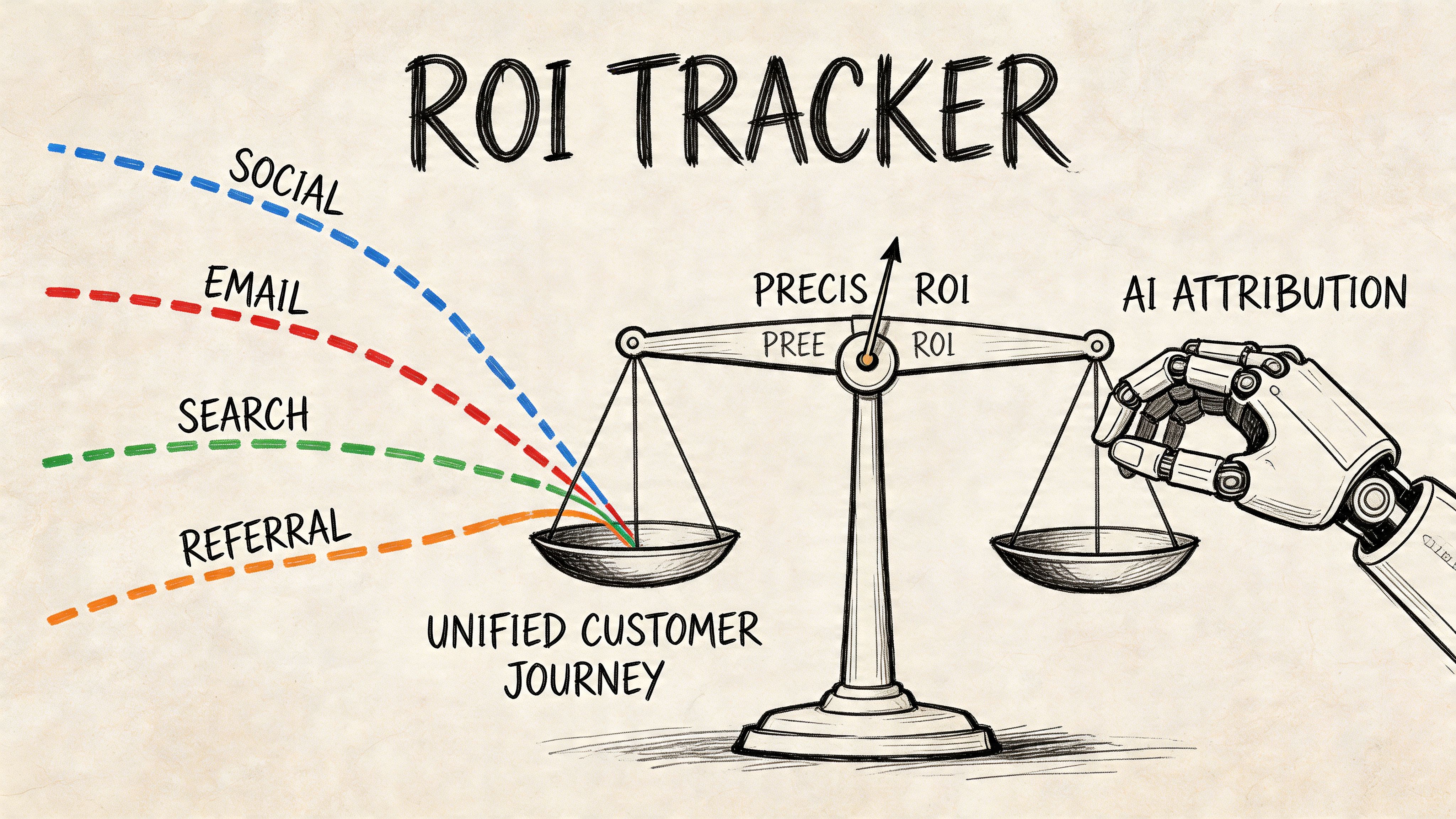
Measuring True ROI with AI-Powered Attribution
Brands that measure influencer activity against revenue, bookings, or redemptions make better budget decisions than brands still reporting on views alone. That sounds obvious, but in practice, attribution is still where many influencer programmes break down.
The operational problem is simple. Content goes live across multiple creators and platforms, traffic arrives through different paths, and conversions often happen later or somewhere else. If the team is still stitching that together in spreadsheets, reporting becomes slow, inconsistent, and easy to challenge.
What AI attribution does better than manual reporting
AI improves attribution by connecting signals that usually sit in separate systems. Social engagement, link clicks, promo code use, site behaviour, and purchase data can be matched at campaign level and, in stronger setups, at creator level.
That matters because manual reporting usually fails at the exact point where finance asks for confidence. A team exports platform metrics, matches codes by hand, checks analytics in a separate tab, and still ends up debating whether a sale should count. AI reduces that ambiguity. It does not remove the need for judgement, but it gives marketers a far cleaner base for that judgement.
In UK campaigns, that distinction matters a lot. A creator can drive strong awareness while another drives lower reach but higher-margin conversions. If reporting only shows engagement, budget moves to the wrong place.
The mechanics behind a measurable campaign
A sound attribution setup usually combines several inputs:
UTM links to track visits and on-site behaviour
Promo codes to connect purchases or redemptions to a creator
Pixel or analytics integrations to capture downstream actions
Post matching logic to tie specific content to campaign records
The technology behind that can include pattern matching, content recognition, and multi-touch modelling. The technical detail matters less than the reporting standard you get from it. The output should be clear enough for a marketer, a finance lead, and a local operator to read the same report and reach the same conclusion.
Four questions should be answered every time:
Which creator drove attention?
Which creator drove traffic?
Which creator drove conversion?
What revenue can be attributed with reasonable confidence?
Reasonable confidence is the key phrase. AI attribution is not magic, and it is not perfect. It still depends on clean tracking, consistent campaign setup, and human review when conversion paths are messy. Hybrid AI-human models tend to perform better here because they combine automated signal matching with someone checking whether the conclusion makes commercial sense.
Vanity metrics versus business metrics
This is still where weak reporting slips through.
Vanity metrics | Business metrics |
|---|---|
Views | Clicks |
Likes | Code redemptions |
Comments | Bookings |
Reach | Conversions |
Shares | Attributed revenue |
The left column shows whether the content got attention. The right column shows whether the campaign contributed to the commercial outcome you were paying for.
Both matter. They just answer different questions.
A creator with high engagement and low conversion may still be useful for awareness or content volume. That does not automatically justify giving them more performance budget next month. AI attribution helps separate those roles so teams stop rewarding surface performance as if it were sales impact.
What good reporting should look like
A strong dashboard pulls campaign performance into one view instead of splitting it across social platforms, spreadsheets, affiliate tools, and finance notes. It should let the team compare creators, offers, regions, formats, and time periods without rebuilding the report every week.
For teams tightening their measurement process, this guide on influencer marketing ROI and how to measure what actually works is a useful reference because it focuses on the metrics that affect budget decisions.
The practical benefit of AI attribution is better budget control. Once you can see which creators drive clicks, which ones convert, which offers work by audience, and where the drop-off happens, you can scale with more confidence and less wasted spend.
Navigating Compliance and Fraud in the AI Era
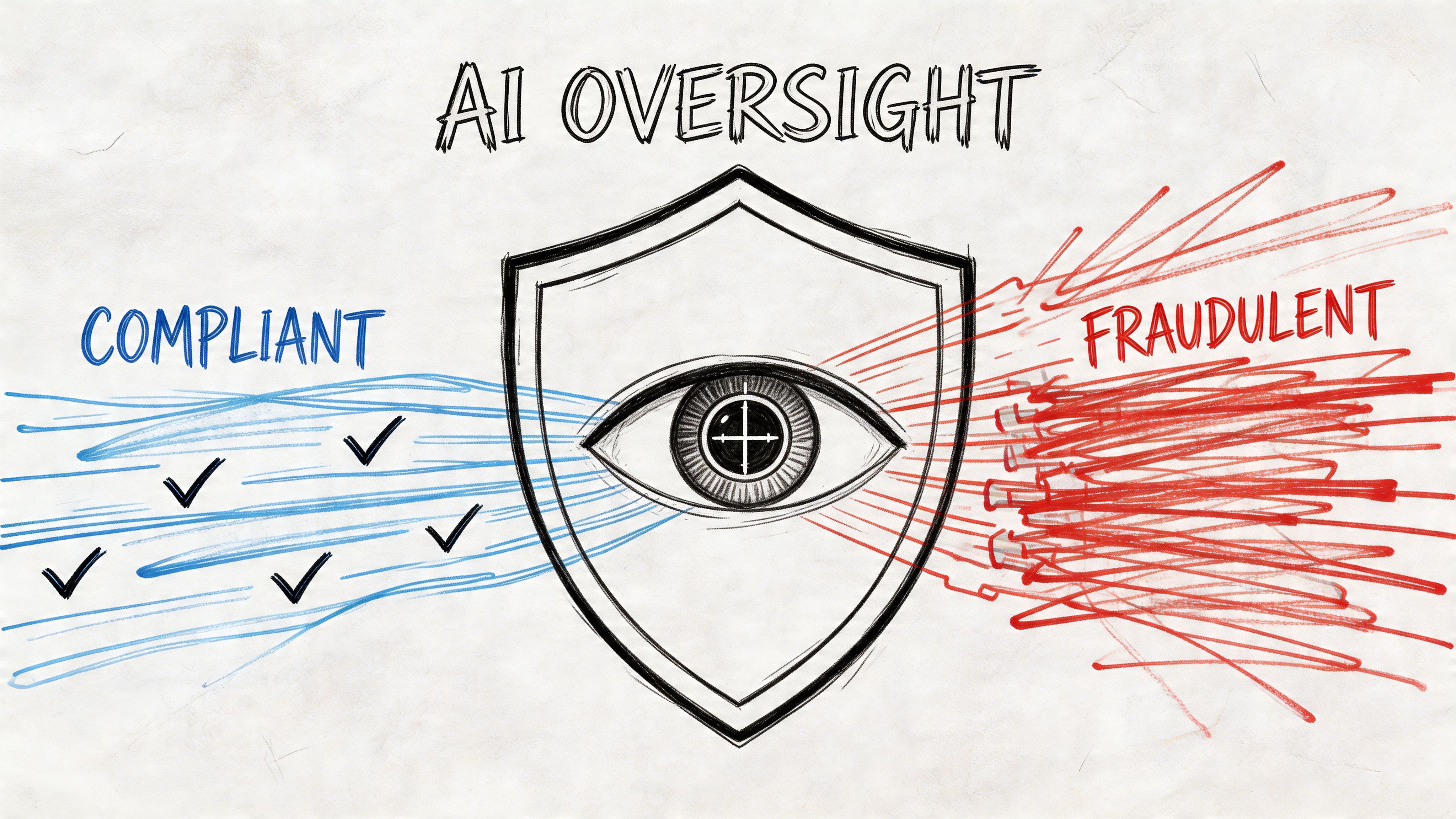
According to eMarketer’s coverage of brands using agencies for AI strategy, the ASA intensified enforcement from Q1 2026, and 28% of complaints against influencer campaigns involved undisclosed AI elements. That number matters because AI now affects more than creator discovery or reporting. It shapes content production, audience analysis, approval workflows, and campaign decisions that can create regulatory exposure fast.
Scale cuts both ways.
AI helps brands review more creators, process more content, and run more campaigns without adding headcount at the same rate. It also lets small mistakes spread across dozens of partnerships before anyone spots them. I see this most often in UK programmes that have added AI tools faster than they have updated approval rules, disclosure checks, or data governance.
Compliance risk now sits inside the workflow
The main issue is not whether a team uses AI. The issue is whether anyone can explain how AI was used, what data informed the decision, and who signed off on the final output.
That creates a few recurring risk areas:
AI-assisted content with weak disclosure: If AI materially shaped the creative and the disclosure is vague, the brand carries the risk with the creator.
Black-box creator selection: If a platform scores or prioritises creators and the team cannot explain the basis, internal governance gets weak fast.
Approval automation without legal review: Faster workflows do not mean compliant workflows.
Loose handling of audience and creator data: Data collection often expands before policy, retention, or access controls catch up.
These are operational problems. They need operational fixes.
Fraud still drains budget quietly
Fraud has not disappeared because AI got better. In some cases, it has become harder to spot manually. Inflated engagement, purchased followers, bot-heavy audiences, and suspicious spikes in growth can still make the wrong creator look commercially attractive in a surface-level dashboard.
AI is useful as a screening layer because it can flag anomalies early and apply the same checks across a large creator pool. That improves speed and consistency. It does not remove the need for judgement.
A creator might show unusual audience growth because a video took off for legitimate reasons. Another might pass a basic authenticity screen and still deliver poor commercial quality because their audience is broad, low-intent, or geographically irrelevant to a UK campaign. Fraud detection works best when AI handles pattern recognition and experienced marketers review edge cases before budget is committed.
Human oversight is not admin overhead. It is what stops efficient systems from making expensive mistakes.
The safer model is hybrid
Brands that scale safely tend to split responsibilities clearly.
Use AI where consistency matters
AI is well suited to:
Large-scale creator screening
Pattern detection across engagement and audience data
Workflow checkpoints
Early fraud flagging
Documentation and audit trails
Keep people accountable where judgement matters
Human teams should still own:
Disclosure review
Brand and reputational fit
High-risk creator approvals
Escalation decisions
Interpretation of UK regulatory requirements
This model is slower than full automation in a demo environment. It is usually faster where it counts, because it reduces rework, legal fire drills, and wasted spend on the wrong creators.
For UK brands, that is the practical standard in 2026. Use AI to scale screening and control process quality. Keep humans responsible for compliance decisions, fraud judgement, and final approval. That is how teams get the efficiency gains without taking on avoidable risk.
Your Roadmap for AI-Driven Influencer Growth in 2026
The brands that will get the most from AI in influencer marketing aren’t the ones chasing every new feature. They’re the ones building a disciplined operating model around measurable outcomes.
The temptation is to start with tools. The better starting point is commercial clarity. What are you trying to drive? More first purchases. More repeat orders. More local bookings. More store visits. More reviews. AI becomes useful when it supports a defined business outcome.
Start with an audit, not a platform demo
Before changing your workflow, audit the one you already have.
Ask direct questions:
Where does the team spend manual time every week?
Which campaign decisions are still based on instinct alone?
Can you connect creator activity to revenue with confidence?
Where are compliance reviews weak or inconsistent?
Which part of the programme breaks first when volume increases?
This audit usually reveals the same pattern. Discovery is too slow. Admin is too manual. Reporting arrives too late. Attribution is incomplete. AI can help all four, but not if the underlying process is vague.
Build by business type
Different organisations should apply AI differently.
Ecommerce and DTC brands
For ecommerce teams, the priority is tighter attribution and better creator selection. The most useful improvements are usually:
Better forecasting: Rank creators by likely conversion fit, not just category relevance.
Code and UTM discipline: Make every campaign measurable from the start.
Content reuse systems: Keep UGC organised for paid and organic use.
Mid-campaign optimisation: Reallocate budget based on real performance signals.
Restaurants and hospitality groups
Hospitality brands need local relevance more than broad reach. The creator with the biggest audience often isn’t the creator who drives covers or footfall.
The right setup focuses on neighbourhood fit, local content style, trackable offers, and review generation. AI helps by narrowing local creator pools and structuring campaign operations so teams don’t drown in venue-level coordination.
Agencies and multi-location chains
These teams need operational consistency. Their problem isn’t usually whether influencer marketing works. It’s whether they can run many campaigns without turning the account team into an admin department.
That means prioritising:
Standardised workflows
Cross-client visibility
Approval controls
Repeatable reporting
Clear attribution frameworks
Prepare for the next trust shift
One underexplored issue deserves more attention. According to Modash’s influencer marketing trends coverage, AI chatbots such as ChatGPT are influencing 41% of purchase decisions over human influencers among UK consumers aged 18 to 34.
That matters because it changes where trust can originate. A buyer may discover a product through a creator, validate it through search or AI assistance, and convert later without the creator getting obvious credit. Attribution models need to adapt to that reality.
It also means brands should stop assuming creators are the only layer of influence. They now operate inside a wider decision environment where AI-generated recommendations, summaries, and comparisons shape buying behaviour.
The winning model is AI plus human judgement
The most durable approach is straightforward.
Use AI to compress data-heavy work.
Use humans to make brand, compliance, and relationship decisions.
Measure against commercial outcomes, not platform applause.
Treat influencer marketing as an operating system, not a one-off tactic.
That’s how AI is changing influencer marketing in 2026. It’s making the channel more accountable, more scalable, and less forgiving of sloppy process.
Brands that adapt will run cleaner campaigns with better visibility into what works. Brands that don’t will keep paying for activity they can’t properly evaluate.
If you want a practical way to apply that hybrid model, Sup helps brands and agencies run influencer campaigns with AI-supported discovery, managed execution, and real-time attribution across Instagram and TikTok. It’s built for teams that need measurable creator ROI without handling every DM, spreadsheet, and reporting task manually.

Matt Greenwell
Share