If you’re in PR, you already have most of the skills needed to run a killer influencer marketing service. This isn't about chasing the latest trend; it's a logical next step that builds on what you already do best—managing reputations and telling great stories. It’s about turning creator partnerships into a core part of your agency’s growth.
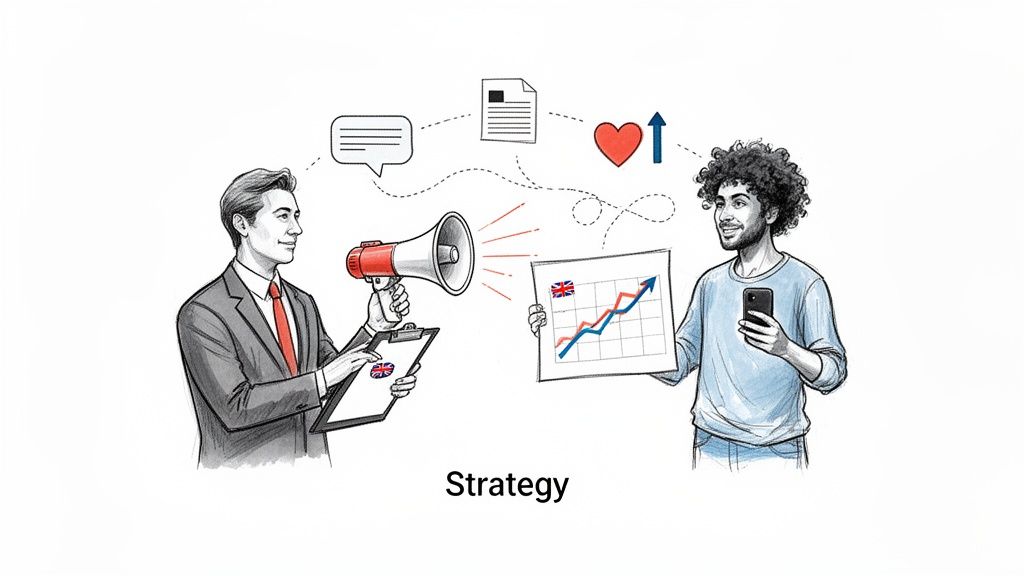
Why This Is a Natural Fit for Your Agency
For decades, PR pros have been masters of earned media. We've built relationships with journalists to secure that priceless third-party endorsement for our clients. Influencer marketing works on the exact same foundation.
The only real difference? Instead of pitching a magazine editor, you're collaborating with trusted creators who command their own loyal audiences. The core skills are completely transferable.
Storytelling: You know how to shape a brand’s narrative. Influencers are your new storytellers, and you’re perfectly placed to guide their creative process so it feels authentic, not forced.
Relationship Building: Your agency is built on strong, long-term media contacts. That same knack for nurturing connections is what separates a good influencer campaign from a great one. It’s about moving beyond one-off posts to build lasting partnerships.
Reputation Management: You’re an expert at vetting opportunities and protecting a brand's image. This is absolutely critical for finding the right influencers and ensuring their content aligns perfectly with your client's values.
The Numbers Don't Lie
The financial argument for making this move is compelling. Here in the UK, the influencer marketing industry is booming. Spending shot up from £540 million in 2019 to £1.45 billion in 2023, and it’s on track to hit a staggering £2.9 billion by 2026.
Think about that. With 83% of brands already calling their influencer campaigns highly effective and more than half of young consumers buying products based on a creator's recommendation, sitting on the sidelines is no longer an option. You're leaving serious money on the table.
When you see influencer marketing as a modern form of third-party validation, it becomes clear why PR agencies are in a prime position to lead. Your expertise in building genuine credibility gives you a huge advantage over marketing agencies that often treat it as just another paid ad channel.
As you start building out this service, you'll find these partnerships often evolve into long-term ambassador programmes. A great way to blend old and new is to announce these key relationships formally. Using tools like brand ambassador press release templates helps bridge the gap between traditional PR and your new influencer offering.
Ultimately, adding influencer marketing isn’t just bolting on a new service. It’s about future-proofing your agency. It allows you to deliver more integrated campaigns, strengthen your client relationships, and open up a powerful revenue stream that plays directly to your strengths.
How to Structure and Price Your Influencer Service Packages
Alright, let's get down to brass tacks. You see the value in adding influencer marketing to your PR arsenal, but how do you actually build it out? This is where the rubber meets the road—designing service packages that are clear, compelling, and, most importantly, profitable.
A common mistake I see agencies make is offering a vague, one-size-fits-all "influencer marketing service." Don't do that. Instead, your goal is to create distinct, tiered packages that make it easy for clients to choose the right fit for their budget and goals.
Your best bet for early wins? Your existing PR clients. They already know and trust you, which cuts through a huge amount of sales friction. Frame this new offering not as some random add-on, but as a natural, powerful extension of the brand-building work you're already doing.
Defining Your Service Tiers
A tiered approach demystifies your offering. It shows clients a clear path from their first campaign to a fully integrated strategy, making it much easier for you to upsell them later as they see a return on their investment.
Think about it in three main buckets:
The One-Off Project: This is your foot in the door. It's perfect for clients who are curious about influencer marketing but aren't ready to commit long-term. A product launch, a seasonal push, or a specific event are all great candidates for a project-based package.
The Monthly Retainer: For clients who want a consistent, "always-on" presence, a retainer is the way to go. This model allows you to build genuine, long-term relationships with a core group of creators. This is where your classic PR skills in nurturing relationships will give you a serious advantage.
The Integrated Partnership: This is the top-tier offering. Here, influencer marketing becomes a core thread woven throughout the client's entire communications strategy—from press trips and media events to major brand announcements. It cements your agency's role as a strategic partner, not just another vendor.
Real-World Pricing Models to Consider
Pricing can feel like a shot in the dark, but it doesn’t have to be. Your fees should always reflect the strategic value and hands-on expertise you provide, covering everything from creator sourcing and negotiations to campaign management and reporting.
Here are a few proven models that work well in the real world:
Flat Project Fee: Simple and straightforward. You charge a single, all-in fee for a one-off campaign. For example, a £5,000 project could cover sourcing 10 micro-influencers for a launch, managing the entire content process, and delivering a final performance report.
Monthly Retainer: A fixed fee each month for ongoing work. This might start around £2,500/month for a foundational programme and go up to £10,000+/month for a comprehensive, multi-platform strategy with a larger roster of creators. The scope is always clearly defined upfront.
Retainer Plus Performance Bonus: A hybrid model that really aligns your goals with the client's. You charge a base monthly retainer and then earn a bonus for smashing pre-agreed KPIs, like hitting a certain number of sales, driving a specific volume of sign-ups, or achieving a target engagement rate.
A quick but crucial tip: Always be transparent about your fees versus the creator payments. Clearly outline how the budget is allocated between your management time and the fees paid directly to influencers. This builds immense trust right from the start.
In the UK market especially, the smart money is on micro-influencers. An impressive 93% of marketers are now partnering with creators who have between 10,000 and 100,000 followers. Why? Because 64% of marketing teams find their authentic engagement more valuable than a celebrity's fleeting endorsement. This approach is particularly effective for e-commerce and hospitality brands where trust is everything.
As you start managing multiple client campaigns, things can get complicated fast. If you're thinking about how to scale efficiently without hiring a massive team, you might find some useful frameworks in our guide on white label influencer marketing for agencies.
To help you visualise this, here’s a sample breakdown of how you could structure your packages.
Sample Influencer Marketing Service Tiers for PR Agencies
This table lays out three potential service packages, giving you a clear idea of what to include, who it’s for, and how you might price it.
Service Tier | Includes | Best For | Pricing Model |
|---|---|---|---|
Campaign Starter | One-off campaign strategy, sourcing up to 10 creators, content coordination, and a post-campaign report. | Clients new to influencer marketing or with a specific launch. | Flat Project Fee (£3,000 - £7,000) |
Ongoing Partnership | Monthly strategy, continuous creator sourcing, full campaign management, and detailed performance reports. | Brands seeking sustained growth and community building. | Monthly Retainer (£2,500 - £8,000/month) |
Integrated Retainer | Everything in the Ongoing tier, plus integration with all PR activities and a dedicated account manager. | Established brands wanting a holistic communication strategy. | Premium Retainer (£8,000+/month) + Bonuses |
Ultimately, by creating these clear, well-defined packages, you're not just selling a service—you're providing a solution. This makes it far easier for clients to understand the value and say "yes," setting your new offering up for success right out of the gate.
Building Your Campaign Engine and Tech Stack
So, you’ve defined your service packages. Now comes the part where you build the machine that actually runs it all. This is what separates agencies scrambling with one-off projects from those scaling profitable, long-term programmes. It's time to ditch the chaotic spreadsheets and build a professional workflow.
The whole campaign lifecycle can seem a bit much at first glance, but it’s really just a series of logical stages. Your goal is to create a standardised process for each one. This ensures every campaign, no matter its size, runs smoothly and predictably, which is absolutely crucial for maintaining quality as you grow.
The Anatomy of a Successful Campaign
Think of your campaign process like a well-oiled assembly line. Every station has a specific job, from the initial briefing all the way to the final report. When you master each stage, you guarantee a high-quality result, every single time.
A typical campaign journey looks something like this:
Client Briefing & Goal Setting: This is your foundation. You need to get crystal clear on what the client actually wants to achieve. Is it brand awareness? Direct sales? Generating a library of content? This first chat shapes every decision that follows.
Creator Sourcing & Vetting: Based on that brief, you’ll start identifying and checking out potential influencers. This is about so much more than just follower counts; you’re looking for genuine brand alignment, the right audience demographics, and a solid track record.
Outreach & Negotiation: Here’s where your PR skills really come into play. You’ll be reaching out to your shortlisted creators with a personalised pitch, negotiating rates, and getting the partnership formalised in a clear contract.
Creative Briefing & Content Approvals: You’ll arm your creators with a comprehensive creative brief. This document lays out the campaign's key messages, all the deliverables, and the essential 'dos and don'ts'. Then, you manage the content approval process to make sure everything is perfectly on-brand before it goes live.
Campaign Execution & Monitoring: As the content starts rolling out, your job is to monitor performance, track engagement, and make sure creators are holding up their end of the bargain.
Reporting & Analysis: Once the campaign wraps up, you’ll put together a detailed report for the client. This is where you analyse performance against those initial goals and, most importantly, showcase the return on their investment.
This process gives you a solid, repeatable structure for every campaign you launch. To see how this translates into structuring your services from a high level, think about the key steps of defining your tiers, scope, and price.
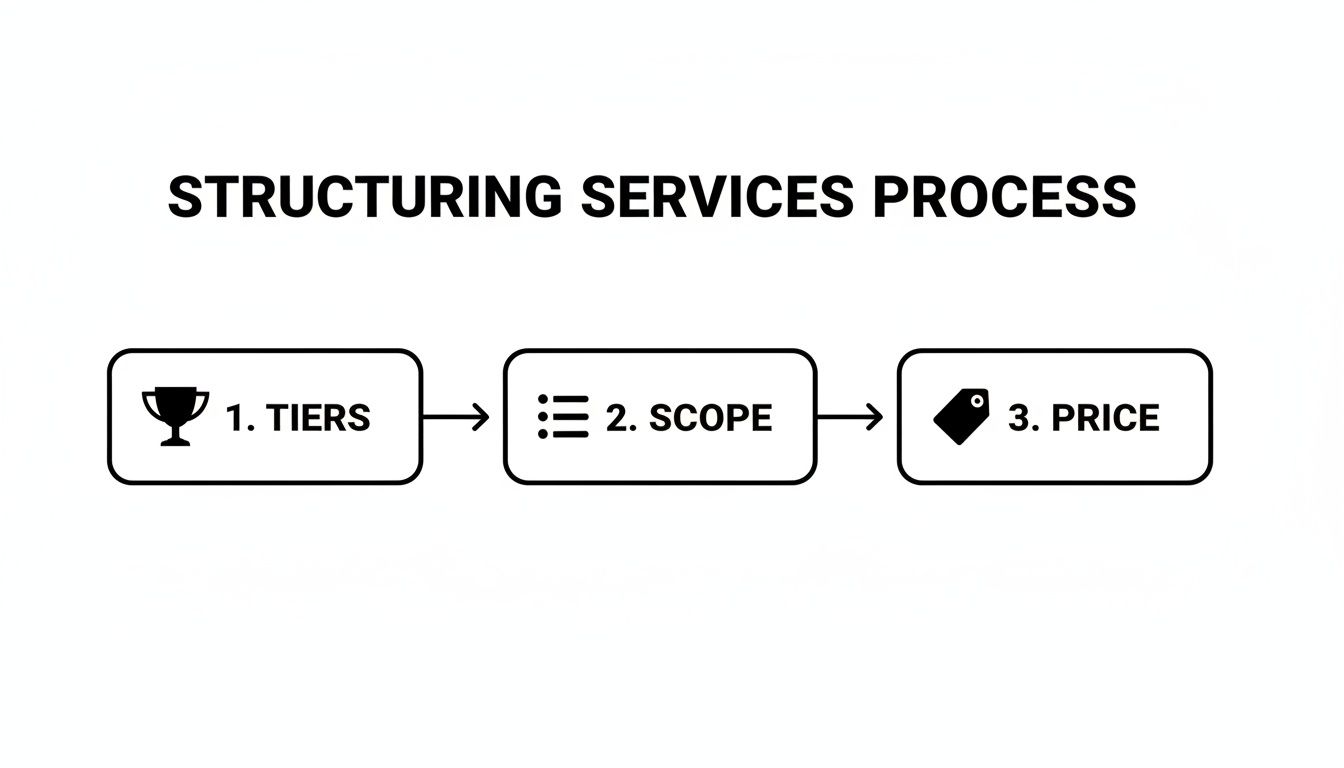
The flowchart above shows a simple but powerful way to package your services, ensuring clients know exactly what they’re getting at each price point.
Escaping Spreadsheet Prison with a Modern Tech Stack
Let’s be honest: trying to manage all this with a patchwork of spreadsheets, emails, and DMs is a recipe for disaster. It’s incredibly time-consuming, riddled with potential for error, and simply impossible to scale. This is where a modern tech stack becomes your agency's most valuable asset.
Influencer marketing platforms are built to do the heavy lifting for you. They aren't just a 'nice-to-have'—they are essential for running a professional and profitable service. The right technology can single-handedly transform your workflow from chaotic to controlled.
A dedicated platform is your central command centre. It brings discovery, outreach, communication, content management, payments, and reporting all under one roof. This frees up your team to focus on strategy and relationships instead of getting bogged down in administrative grunt work.
The data absolutely backs this up. In the UK, influencer marketing is now a mainstream strategy, with a massive 84% of brands and agencies planning to increase their creator collaborations in the next year. Technology is a key driver here; one-in-three UK firms—the highest rate in Europe—already use platforms to streamline workflows and prove ROI. This has helped push the market spend to a recent high of £896 million.
Essential Components of Your Tech Stack
You don't need a dozen different tools to get started. A single, powerful platform can often handle the entire campaign lifecycle. When you're weighing up your options, look for these core capabilities:
Creator Discovery & Vetting: A searchable database of influencers with detailed analytics on their audience, engagement rates, and past work. This can cut your sourcing time down from days to mere minutes.
Campaign Management: A central hub to build campaign briefs, send out personalised outreach at scale, track all your communications, and manage content approvals in one place.
Attribution & Tracking: The ability to generate unique discount codes and UTM links for every creator. This is non-negotiable for proving ROI to your clients.
Payment Processing: An automated system that handles all your creator payments, ensuring everyone gets paid correctly and on time without you having to chase a single invoice.
Content Library: A repository that automatically gathers all the user-generated content (UGC) from your campaigns. This makes it incredibly easy to repurpose great content for other marketing channels.
For an agency juggling multiple clients, the time savings are enormous. A solid tech stack means you can take on a much higher volume of campaigns without having to expand your team. In fact, many agencies have found they can effectively scale their influencer campaigns without hiring simply by adopting the right technology.
By combining a structured campaign process with a powerful tech stack, you're building an efficient, scalable, and profitable influencer marketing service that will deliver consistent results for your clients.
Mastering Measurement and Proving ROI to Clients
Let’s get straight to it—this is the part your clients really care about. After all the hard work of building a strategy, sourcing creators, and getting amazing content live, the big question always comes: “What was our return on investment?” If you can't answer that with confidence, your new service offering will struggle.
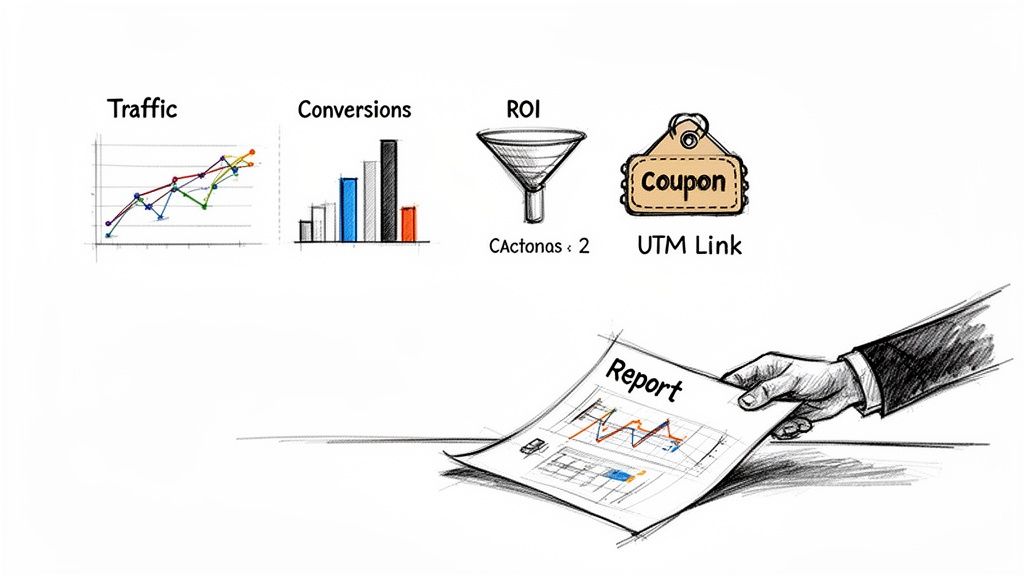
Simply pointing to likes and follower growth isn't enough anymore. Vague talk about "brand awareness" won't convince a finance director to sign off on next quarter's budget. To win and keep retainer clients, you need a rock-solid system for attribution. This is how you draw a direct line from a creator’s post to a tangible business outcome, whether that's website traffic, a new lead, or a sale.
Building Your Attribution Toolkit
The secret is creating a clear data trail. You need to follow the customer from the moment they see an influencer's post all the way to the client’s checkout page. The good news is, the tools for this are surprisingly straightforward and incredibly effective.
Here’s the bread and butter of a strong attribution setup:
UTM Parameters: These are just little tags you add to the end of a URL. By giving each creator a unique UTM link, you can jump into the client's Google Analytics and say, "This influencer drove exactly 5,200 visitors and 83 conversions." It's black-and-white data.
Unique Discount Codes: This is probably the cleanest way to track sales. Assign a specific code like "CHLOE20" to each creator. Every time a customer uses that code, it’s a direct, undeniable sale attributed to that influencer.
Affiliate Links: This is a slightly more advanced method where creators earn a commission on sales. These links have tracking built right in, which makes it simple to see exactly how much revenue each person generates.
Using these tools isn't optional; it's fundamental. This is what shifts the conversation from subjective "buzz" to objective, data-driven results that prove your worth.
Proving direct ROI is the ultimate goal, but don’t discount the power of top-of-funnel metrics. Metrics like reach, impressions, and engagement rate are vital for demonstrating how you're building brand awareness and warming up new audiences for future conversions.
Aligning Metrics with Campaign Goals
The KPIs you track have to be a perfect match for the campaign's objectives. A campaign designed to boost brand visibility will look very different from one aiming to drive immediate e-commerce sales, and your reporting should reflect that.
For instance, if a client’s main goal is to generate a library of high-quality user-generated content (UGC), your success metrics would be the number of unique assets created and the content usage rights you’ve secured. But for a direct-response campaign? You’ll be laser-focused on click-through rate (CTR), cost per acquisition (CPA), and of course, total revenue generated.
Getting this alignment right from the start is crucial for telling a powerful story with your data. This table breaks down how to map common client goals to the right KPIs.
Mapping Campaign Goals to Key Performance Indicators (KPIs)
Client Goal | Primary KPIs | Tracking Method |
|---|---|---|
Brand Awareness | Impressions, Reach, Engagement Rate, Follower Growth | Platform Analytics |
Website Traffic | Clicks, Click-Through Rate (CTR), Landing Page Views | UTM Links |
Lead Generation | Form Submissions, Email Sign-ups, Cost Per Lead (CPL) | UTMs, Dedicated Landing Pages |
Direct Sales | Conversions, Revenue, Return on Ad Spend (ROAS), Code Redemptions | Discount Codes, Affiliate Links |
Content Generation | Number of Posts, Stories, and Videos Created; Usage Rights Secured | Manual Tracking, Platform Library |
This structured approach ensures you’re always measuring what truly matters to the client. It provides the evidence you need to build compelling reports that don't just present numbers, but tell a clear story of success.
Your ability to illustrate that journey—from a creator’s story to a customer’s purchase—is what turns a one-off project into a long-term partnership. To go even deeper, check out our guide on how to measure influencer marketing ROI for more advanced strategies.
So, you’ve launched your influencer marketing service and the initial campaigns are showing promise. Excellent. Now the real work begins. The focus sharpens from just getting started to building something that lasts. This means getting two things right: staying on the right side of the law and setting up your operations to scale without falling apart.
Getting a handle on the rules from the UK’s Advertising Standards Authority (ASA) and the Competition and Markets Authority (CMA) isn’t optional. These bodies are very clear: if money or product has changed hands, the resulting content is an advert and must be labelled as such. Your job is to make sure both your clients and creators understand this isn't a grey area. It's black and white.
It’s about making the commercial nature of the post blindingly obvious to anyone who scrolls past it.
Getting Compliance Right in Your Contracts
Your creator contract is your most important tool for ensuring everyone follows the rules. It’s where you spell out expectations so there’s no confusion later. Trust me, a bit of ambiguity in a contract can spiral into a major headache, from an unhappy client to a letter from the regulators.
Make sure every single contract you issue has rock-solid clauses covering:
Mandatory Disclosures: Be incredibly specific. State exactly how and where creators must flag the partnership. This means using clear, unambiguous labels like
#ador#sponsored, and making sure they’re placed prominently, not buried in a sea of other hashtags. The platform's own 'paid partnership' tool is often the best bet.Content Ownership: Who owns the content after it's posted? The client will almost certainly want to repurpose it for their own website, social media, or even digital ads. Define exactly how long they can use it and on which platforms.
Approvals and Exclusivity: Map out the approval workflow clearly. Also, include an exclusivity clause that prevents the creator from working with your client’s direct competitors for a set period. This protects the client’s campaign and keeps their message undiluted.
You are the expert here. Clients and creators look to you for guidance. Taking a firm, educational stance on compliance from day one doesn't just keep everyone safe—it shows your professionalism and makes your agency a trusted partner.
Building an Engine for Growth
There's a world of difference between juggling a couple of influencer campaigns and managing a dozen at once. To grow, you have to move beyond brute force and start thinking about efficiency. Without repeatable processes, your team will drown in admin, and your profit margins will shrink.
This is where your Standard Operating Procedures (SOPs) come in. Think of them not as rigid rules, but as your agency's playbook for success. Document everything. Create clear, step-by-step guides for every part of your process, from how you write that first outreach email to how you compile the final performance report for a client.
Having these SOPs in place means that whether it’s a senior team member or a new hire running a campaign, the quality and consistency are always there. It’s how you deliver predictable results, time and time again.
As you bring on more clients, you'll hit a fork in the road with staffing. Do you train your existing PR team or hire a dedicated influencer specialist?
Upskilling your current account managers is often the quickest path. They already have the client relationships and know your agency’s way of working. Giving them focused training on influencer strategy and tools can rapidly build your capacity.
Hiring a specialist injects a huge amount of expertise directly into your team. This person can refine your strategy, build out your processes, and act as a mentor, really accelerating how sophisticated your offering becomes.
Using Technology to Scale Smart
Let’s be honest, you can't run a serious influencer division from a spreadsheet. As you scale, technology is what will keep your team sane and your operations smooth. A good influencer marketing platform automates the grunt work.
These tools can handle everything from creator discovery and outreach to contract management, payments, and performance tracking. This frees up your team’s time to focus on what really matters: strategy, creative ideas, and building relationships. To really prove the value of your work, you’ll need to master measurement, tracking core metrics like the ones detailed in this guide to 8 Social Media Engagement Metrics for 2025.
By combining smart, documented processes with the right technology, you build a system that doesn't just handle growth, but thrives on it. This is your blueprint for turning a new service line into a powerful, profitable, and compliant part of your agency’s future.
Frequently Asked Questions
Thinking of adding influencer marketing to your PR agency's services? It’s a smart move, but it's normal to have a few big questions swirling around before you dive in. Let's get into the nitty-gritty of what agency leaders like you are asking.
How Much Initial Investment Do We Need?
The good news is, you don’t need a massive war chest to get started. You can scale your investment as you grow.
Your first move should be upskilling your existing team. Their core PR skills are already a huge asset. The main new cost will be a solid influencer marketing platform, which might run from a few hundred to a couple of thousand pounds a month. Honestly, this pays for itself almost immediately by saving you from the soul-destroying grind of manual tracking and outreach.
To keep those initial outgoings lean, you can:
Start with smaller, project-based campaigns to build your portfolio and create compelling case studies.
Bake the platform subscription cost directly into your client pricing model from day one.
Lean heavily on the outreach and relationship-building skills your PR team already has in spades.
How Can We Differentiate from Marketing Agencies?
This is where your PR DNA really shines. Many marketing agencies approach influencers with a simple media-buy mindset—it's just another paid channel. You can, and should, do it differently.
Your superpower is authenticity and storytelling. You're not just buying posts. You're building genuine partnerships that weave creators into a client's wider communications narrative. It's a far more strategic game, and savvy clients know it.
Frame your offering around your deep expertise in reputation management, media relations, and crafting stories that stick. This isn’t a transactional service; it’s a strategic one. That’s your edge.
How Do We Handle Creator Relationships and Payments?
Getting this right is absolutely crucial for your reputation. Treat creators like the professional partners they are, not just hired guns. That means crystal-clear communication, robust contracts that set clear expectations, and respecting their creative input.
Now, let's talk about the admin side of things. Chasing invoices and managing payments can become a full-time job and a major source of friction. This is another reason why a dedicated influencer marketing platform is a non-negotiable. The right tool automates payments, guaranteeing creators get paid correctly and on time. This single feature helps you build an amazing reputation in the creator community and frees your team to focus on what they do best: strategy and relationships.
What if Our Clients Are Sceptical About the Value?
Scepticism almost always boils down to one thing: a perceived lack of ROI. The antidote is airtight tracking and attribution, right from the very first campaign.
Before you even begin, sit down with the client and agree on what success actually looks like. Use trackable UTM links, unique discount codes, and platform analytics to draw a clear, undeniable line from specific influencer activity to tangible business outcomes.
When you can walk into a review meeting and show a report that says, "This campaign generated £15,000 in sales from a £5,000 investment," scepticism vanishes. It’s replaced with excitement and one simple question: "When can we do the next one?"
Ready to turn influencer marketing into a repeatable, ROI-proven growth channel for your agency and clients? Sup combines smart technology with a human team to launch, manage, and attribute creator campaigns, saving you up to 95% of the time. Learn how Sup can help you scale your new service offering.

Matt Greenwell
Share