Let's be honest: you’ve perfected your flat white, the decor is on point, and your brownies are legendary. But in a market packed with coffee shops on every corner, just having a great product isn't always enough to keep the tables full.
Old-school marketing like flyers and local paper ads just doesn’t have the same pull it used to. This is where working with local influencers comes in. It’s not just a trendy marketing tactic; it’s the modern-day version of word-of-mouth, and it’s how you get noticed.
Why Influencers Are Your New Secret Weapon
Think about it. When a local food blogger you follow posts a story about a new café’s incredible brunch, it doesn’t feel like an advertisement. It feels like a genuine tip from a friend. That’s the magic of it. For younger customers, especially Gen Z and Millennials, their Instagram and TikTok feeds are their primary source for discovering new places to eat, drink, and hang out.
This is all about authenticity. The recommendation feels personal, and that trust is what ultimately drives people through your door.
Turning Trust Into Footfall
This is where online buzz turns into actual customers. What you're building is powerful social proof. Seeing a creator they admire enjoying a coffee in your shop gives their followers the confidence to come and try it for themselves.
Imagine a potential customer scrolling through their phone. They see a local influencer they trust raving about your weekend brunch special. The post doesn't just show the food; it captures the cosy vibe of your interior and the happy chatter of other customers. In that single post, you’ve managed to:
Grab Attention: Your café is now on the radar of hundreds, maybe thousands, of local people who might have walked past without a second glance.
Create a Craving: That shot of a perfectly gooey cinnamon bun or a steaming latte makes your offerings look completely irresistible.
Inspire Action: The post often prompts immediate action. Followers might save it for later, tap to see your location on a map, or even head over that same day.
The concept is simple, but incredibly effective: People trust people far more than they trust brands. An influencer’s endorsement is like a personal referral, but delivered at a scale that can directly impact where their followers decide to spend their money.
Competing in a Crowded Market
The UK coffee shop scene is absolutely booming. With the branded sector alone reaching 12,313 outlets after a recent surge, standing out has never been more challenging for independent cafés.
Influencer marketing is the great equaliser. Even a small, neighbourhood coffee shop can create a massive amount of buzz by partnering with just a few local nano-influencers (those with 1k-10k followers).
The opportunity is huge. The UK influencer marketing industry is on track to be worth £2.9 billion by 2026. And when you consider that up to 79% of UK consumers have bought something based on an influencer's recommendation, the connection becomes crystal clear. For a cafe, this means turning a creator's post about your avocado toast directly into a new, loyal customer.
If you want to dig into the numbers, you can explore more UK influencer marketing statistics. It all proves that this approach is one of the most effective ways to turn online engagement into real-world revenue and build a community that keeps your café busy.
Designing Your First Influencer Campaign
Let's be honest, diving into influencer marketing without a clear plan is like trying to pull the perfect espresso shot with unroasted beans. You’ll go through the motions, but the result will be disappointing. Before you even think about sliding into a creator’s DMs, you need a solid blueprint. We need to move past fuzzy goals like "get more customers" and build a concrete strategy that guides every single decision.
First things first: what does success actually look like for your coffee shop? Think about what your business truly needs right now. Is it about getting more bums on seats for your weekend brunch service? Maybe you're trying to liven up those quiet mid-week afternoons. Or perhaps you've just perfected a new seasonal drink—that signature lavender-infused latte—and you want it to be the talk of the town.
Your goals have to be specific and measurable. Otherwise, you're just throwing money (and free coffee) into the wind.
Setting Clear Campaign Goals
Defining your objectives is the single most important thing you'll do. It shapes your budget, the influencers you choose, and how you'll measure whether any of this is actually working.
Instead of just "more footfall," get specific. Here are a few examples of what a clear goal might look like for a cafe:
Boost Weekend Brunch: Increase table bookings by 20% over the next four weekends.
Conquer the Mid-Week Slump: Bring in 50 new customers between Tuesday and Thursday over the next month.
Launch a New Product: Sell 100 of your new 'Sunrise Matcha' specials in the first week.
Grow Your Community: Gain 500 new, local followers on your cafe’s Instagram account this quarter.
It all boils down to trust. A local creator who loves your coffee isn't just posting an ad; they're giving a genuine recommendation to their friends. That's what gets people to leave their house and come find you.
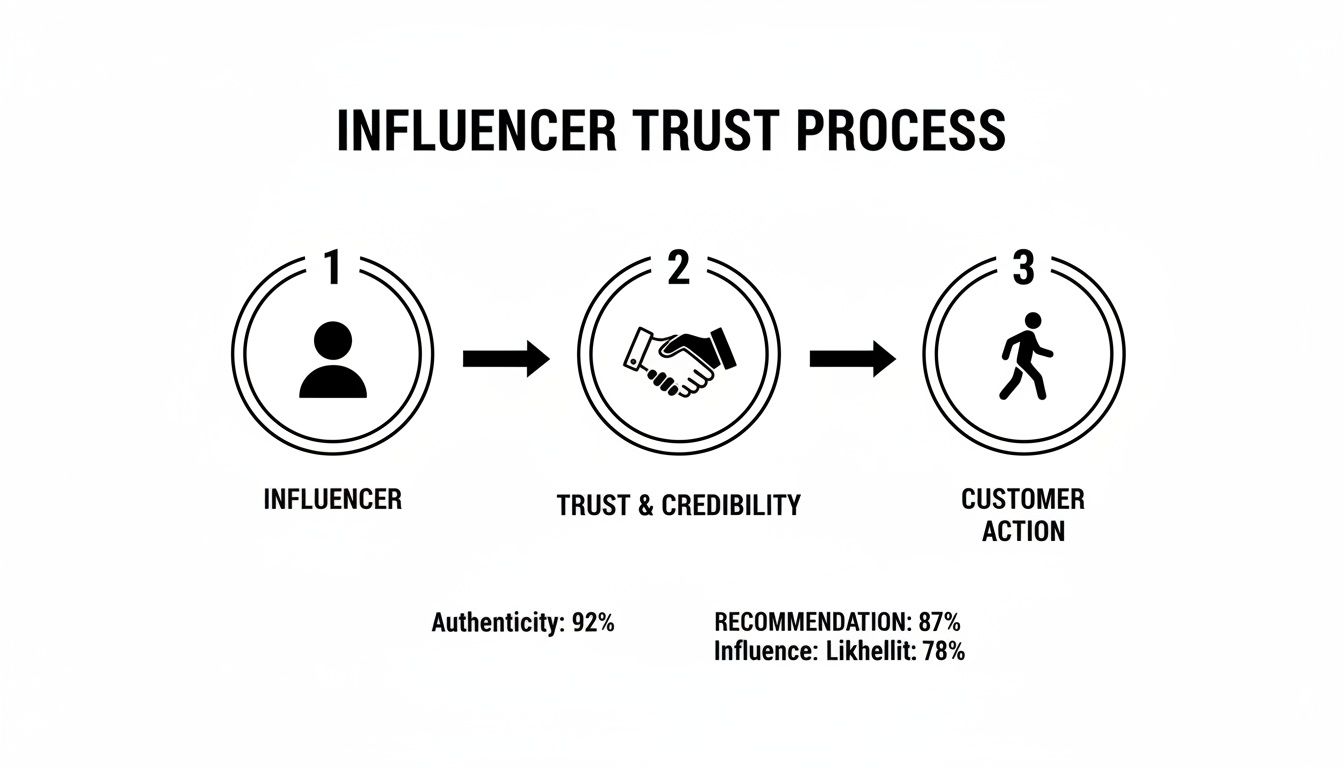
Without that established credibility, a post is just noise. With it, it’s a powerful invitation.
Establishing a Realistic Budget
Your budget will dictate the kind of collaborations you can run. The good news for most independent coffee shops is that you don't need a massive pot of cash to see real results. You generally have three paths to choose from.
Gifted Experiences: This is the best place to start. You offer complimentary food and drinks in exchange for content. It's a perfect fit for working with nano-influencers (1k-10k followers) who are often keen to partner with local businesses they already love.
A Hybrid Approach: Here, you might offer the gifted meal plus a small fee, say £50–£150, to cover the creator’s time. This is a great way to secure more specific content, like a high-quality Instagram Reel, rather than just a few Stories.
Paid Partnerships: When you're ready to work with micro-influencers (10k-100k followers) who have a proven ability to drive sales, a flat fee is the norm. This could be anywhere from £150–£500+ and ensures you get dedicated, high-effort content that’s perfectly aligned with your campaign goals.
My advice? Start small. Set aside a test budget of £200–£400 for your first month. This is enough to partner with two or three nano-influencers, letting you see what kind of content works best and what your initial return looks like before you commit more.
Defining Your Ideal Influencer Profile
Not every influencer with a pretty feed is the right fit for your cafe. The magic happens when you find creators whose audience and personal brand are a natural match for yours. Believe me, their followers can spot a forced, inauthentic partnership a mile away.
Take a moment to sketch out a persona for your ideal creator.
Their Values: Do they genuinely get excited about specialty coffee? Do they champion local, independent businesses? If your cafe is all about sustainability, you want someone who shares that ethos.
Their Vibe: Does their content’s aesthetic match your brand? If you’ve curated a bright, minimalist, modern space, a creator with a dark, moody feed probably isn't the right visual storyteller for you.
Their Audience: This is the most crucial part. Are their followers your potential customers? Check their analytics. An influencer based in London with a huge following in Manchester won't do much for your Bristol-based coffee shop. You need local followers.
Of course, influencer marketing is just one piece of the puzzle. To really make an impact, your campaign should work alongside other effective coffee shop promotion ideas like local events or loyalty programmes.
Building out this initial plan is a huge step, and if you're looking for an even deeper dive, our comprehensive guide on how to run a restaurant influencer campaign covers every single detail from start to finish.
Finding and Vetting the Right Local Influencers
Let's get one thing straight: the success of your entire influencer campaign hinges on who you choose to partner with. This isn't about chasing the biggest follower count you can find. It’s about connecting with creators whose audience is genuinely full of your next regulars.
For a local coffee shop, the real magic happens with smaller, more connected creators. Forget the big-name celebrities; your focus should be on nano-influencers (1k–10k followers) and micro-influencers (10k–100k followers). These are the people whose recommendations feel like a tip from a trusted friend, not a slick advertisement. Their followers are often hyper-local and incredibly loyal.
To help you decide where to focus your efforts, here’s a quick breakdown of the different influencer tiers and what they can offer a local cafe.
Influencer Tier Breakdown For Coffee Shops
Influencer Tier | Follower Range | Typical Cost | Best For |
|---|---|---|---|
Nano-Influencer | 1k–10k | Gifted items or small fee (£50-£250) | Driving genuine, local footfall. Their audience has high trust and engagement. |
Micro-Influencer | 10k–100k | £250-£1,000+ per post | A mix of local buzz and broader brand awareness. Great for event promotion. |
Macro-Influencer | 100k–1M | £1,000-£10,000+ per post | Large-scale brand awareness, but often less targeted for a single location. |
Mega-Influencer | 1M+ | £10,000++ | Not recommended for local coffee shops; the cost is prohibitive and the audience is too broad. |
As you can see, the sweet spot for most coffee shops is right in that nano-to-micro range. You get authentic content and a direct line to a relevant, local audience without blowing your budget.
Starting Your Search for Local Creators
So, where do you find these local gems without spending all day scrolling? The trick is to search like a customer would.
Get onto Instagram and TikTok and start exploring hashtags. Don't just stick to the obvious ones like #coffee. You need to get specific and local.
Location-based food tags: Think
#[YourCity]Foodie(like#ManchesterFoodie),#[YourTown]Eats(like#BristolEats), or even hyper-local tags like#[YourNeighbourhood]Coffee.Broader local tags: Widen your net with tags like
#[YourCity]Lifeor#[YourCity]Blogger. These will often bring up lifestyle creators who focus on local experiences and hidden spots.Geotag searches: This is a goldmine. Go to your cafe's location page on Instagram and see who has already tagged themselves there. These people are your warmest leads—they already like your place!
Don't forget about a simple Google search, either. Queries like "best coffee in [Your City] blog" or "food influencers in [Your County]" can uncover dedicated food bloggers with strong local credibility. We dive even deeper into this in our guide on how to find local food influencers in your city.
Vetting Influencers The Smart Way
Once you’ve got a shortlist, it's time to do your homework. This is where you look beyond the follower count and check the metrics that actually matter for your cafe.
Check their engagement rate: A huge follower count means nothing if nobody is paying attention. A solid engagement rate (likes + comments ÷ followers) is around 3-6%, but for nano-influencers, it can easily be 10% or higher. This shows a genuinely interested audience.
Analyse their audience: Don't be afraid to ask for a screenshot of their audience analytics. You need to see that their followers are actually based in your city or region. A creator in London with a massive following in the US won't help you fill seats.
Review their content and vibe: Does their visual style match your cafe's aesthetic? If you run a bright, minimalist spot, a creator with a dark, moody feed might not be the right fit. Look for high-quality photos and captions that tell a real story.
Scan past partnerships: See how they've worked with other local businesses. Did they properly disclose the partnership (using #ad or #gifted)? More importantly, did the content feel natural or was it a bit forced?
The goal is to find someone who would be a genuine fan of your cafe, even if they weren't being paid. Authenticity is everything. Their passion will shine through and feel real to their followers.
This isn't just a hunch; the data backs it up. In the UK's creator economy, 47% of marketers now prioritise these genuine micro and nano creators simply because they get better results.
With 83% of brands finding influencer marketing effective and half of British consumers buying products after seeing an influencer post, the potential ROI is massive. This figure jumps to an incredible 79% for 18-29-year-olds—a core demographic for almost every coffee shop.
Creating A Flawless On-Site Experience
You’ve done the outreach and signed the agreement. Now comes the moment that really matters: the influencer’s visit. This is where all your planning turns into the beautiful, authentic content you're after. A seamless on-site experience doesn't happen by accident; it's the result of thoughtful preparation designed to make the creator feel genuinely welcome and inspired.
The aim is simple: remove any friction so the influencer can just relax and do what they do best—capture the unique vibe of your coffee shop. When their visit is smooth and enjoyable, their content will naturally reflect that positive energy, showing off your brand in the best possible light. This is your chance to turn a collaboration into a real content goldmine.
Staging The Perfect Visit
Every detail matters when an influencer walks through your door, from the lighting to how your team greets them. It's all part of the experience.
First up, timing is crucial. I always recommend suggesting a visit during your quieter hours, like a mid-morning on a Tuesday or Wednesday. This gives the creator space to get the perfect shots without a crowd in the background and means they won't feel rushed. It's also when you’re most likely to have gorgeous natural light flooding your space—an absolute gift for any photographer. A Toast survey found that 40% of people have tried a new restaurant after seeing food photos on social media, so you can't afford to have subpar visuals.
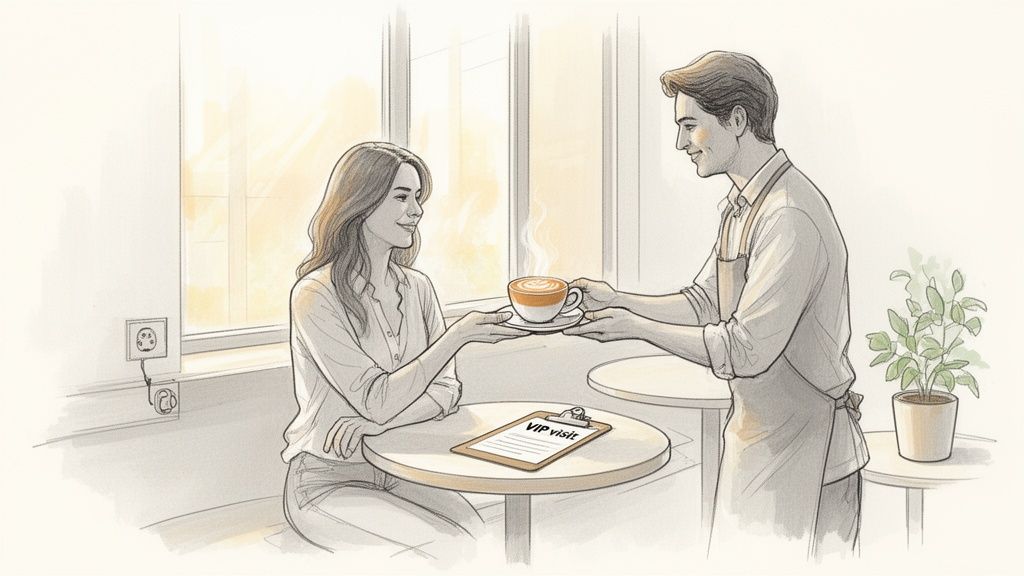
Next, get your team in the loop. A quick heads-up for your baristas about who's coming and when is all it takes. This simple step ensures the creator gets a warm, personal welcome, making them feel like a true VIP, not just another customer with a phone.
Pro Tip: Put together a small welcome kit. It doesn't have to be extravagant. A handwritten note, a bag of your signature house roast, and a menu with a few of your most photogenic items circled is a fantastic touch that sets a brilliant tone right from the start.
Structuring Different On-Site Collaborations
Not every influencer visit will look the same. The on-site experience should be shaped by the type of collaboration you’ve agreed on. Here are a few common ways this plays out for coffee shops:
The Complimentary Experience: This is the most popular starting point. The influencer pops in for coffee and a bite to eat on the house, in exchange for creating some content. Your job is to be the perfect host, making sure their order is spot-on and they have everything they need.
The Content Creation Day: For a bigger partnership, you could host a ‘creator day’. This is where you might invite a handful of non-competing local influencers at the same time. It creates a really fun, collaborative buzz and can generate a huge amount of diverse content from different points of view.
The Instagram Stories Takeover: Here, the influencer takes over your café’s Instagram account for a couple of hours. You'll want to have the Wi-Fi password ready, offer them a power bank for their phone, and give them a quick tour of any 'backstage' areas, like your gleaming espresso machine, to help them create engaging behind-the-scenes content.
Remember, every visual element helps tell your story. Using high-quality promotional coffee mugs that reflect your brand’s aesthetic ensures your identity shines through in their photos and videos.
Your Pre-Visit Checklist
To make sure the visit goes off without a hitch, run through this quick checklist before the influencer is due to arrive. It’s all about anticipating their needs and avoiding any last-minute stress.
Confirm the Story: Send a final, friendly message to gently remind them of the key things you'd love them to feature. Is it your new single-origin filter coffee? Your incredible vegan pastries? Your dog-friendly patio? Make it easy for them to highlight what makes you special.
Prep Your Stars: Have your most visually stunning food and drinks ready to go. We're talking vibrant latte art, pastries with beautiful textures, and colourful brunch dishes that pop on camera.
Set the Scene: Reserve a table that has the best light and an attractive background. Make sure it's spotless and, if you can, position it near a power outlet.
Brief the Team: Make sure the staff on shift know the influencer's name and what the plan is. A simple, "Welcome, [Name]! We're so excited you could make it," makes a massive difference.
Sort the Bill Discreetly: The experience should feel completely effortless for them, which means no bill at the end. Make sure your team knows to handle it internally to avoid any potential awkwardness.
How to Actually Measure Your Campaign ROI
An influencer campaign can bring a flurry of likes and some beautiful photos for your feed, but how do you prove it’s actually growing your business? Let's be honest, vanity metrics like followers and comments don't pay the bills.
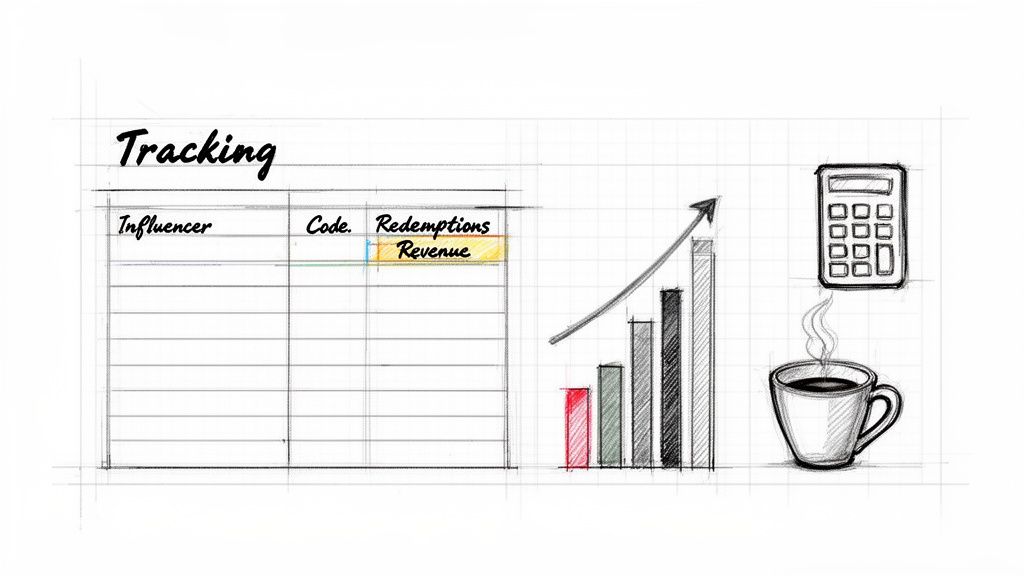
True success is measured in footfall, sales, and a tangible return on what you’ve spent. To get there, you need a solid system for tracking who is sending customers your way. Without attribution, you’re just guessing. This is where unique promo codes and trackable links become your most valuable tools, turning that online buzz into cold, hard data.
Setting Up Trackable Offers
The most straightforward way I’ve found to measure in-store purchases is by giving each influencer their own unique discount code. It doesn't need to be complicated. Something simple like "LAURA10" for 10% off is easy for customers to remember and for your team to punch into the till.
Your point-of-sale (POS) system is your best friend here. Most modern systems let you create and track specific discount codes. At the end of the campaign, you can just run a report to see exactly how many times each code was used. This gives you a direct line of sight into which influencers are driving real-world sales.
For anything you sell online, like coffee bean subscriptions or merchandise, you'll want to use UTM links. Think of these as special URLs that tell you exactly where your website traffic came from. When an influencer shares their unique UTM link in their bio or Instagram Stories, anyone who clicks it is tagged.
You can then see all this data in Google Analytics, which shows you not just how many people visited your site, but how many of them actually completed a purchase. It’s the digital version of tracking a promo code.
Essential KPIs For Cafe Influencer Campaigns
To really understand what's working, you need to focus on the right Key Performance Indicators (KPIs). For a coffee shop, it comes down to a handful of core metrics that paint a clear picture of performance.
Here’s a breakdown of the essential KPIs you should be tracking for any influencer campaign.
KPI | What It Measures | How To Track It |
|---|---|---|
Code Redemptions | The number of in-store sales directly driven by an influencer. | Unique discount codes entered into your POS system. |
Website Clicks | The volume of traffic an influencer sends to your website or booking page. | Clicks on the unique UTM link provided to the influencer. |
Online Conversions | The number of online sales (beans, merch) from influencer traffic. | Goal completions in Google Analytics from UTM-tagged traffic. |
Cost Per Acquisition (CPA) | The average cost to acquire one new customer through the campaign. | Total Campaign Cost ÷ Number of Code Redemptions. |
Engagement Rate | The percentage of an influencer's audience that interacts with the content. | (Likes + Comments) ÷ Follower Count x 100. |
Tracking these metrics helps you move from, "I think it worked," to "I know it worked, and here's exactly how much we made." It’s about building a clear, undeniable picture of performance.
The financial return can tell a powerful story. In the UK, influencer marketing is proving its worth, with an average return of £5.78 for every £1 spent, and 59% of marketers reporting massive jumps in engagement. As the coffee market grows, platforms like Instagram are fuelling a world where 51% of UK users have purchased items promoted by influencers, trusting them far more than traditional ads. To see how these trends are shaping the specialty coffee scene, you can explore detailed insights on the market's social commerce shift.
Calculating Your Return on Investment
Once you have your data, calculating your return on investment (ROI) is pretty straightforward. This is the ultimate measure of whether your campaign was a financial success.
The formula is simple:
ROI = [(Revenue from Campaign - Cost of Campaign) ÷ Cost of Campaign] x 100
Let’s walk through a real-world example to see it in action.
Campaign Cost: You gifted a meal worth £40 and paid an influencer a £100 fee. Your total outlay is £140.
Campaign Revenue: Their unique code, "SOPHIE15", was used 25 times for an average order value of £12. That’s £300 in total revenue directly from their efforts.
Now, let’s plug those numbers into the formula:
ROI = [(£300 - £140) ÷ £140] x 100 = 114%
For every £1 you spent on this collaboration, you generated £2.14 back. An ROI of 114% is a fantastic result that clearly justifies the investment. It also tells you this is a partnership you should definitely nurture for the future.
This kind of clear, data-backed analysis empowers you to double down on what works and refine your strategy for even better results next time. If you want to get even more granular on this topic, check out our guide on measuring influencer marketing ROI that actually works.
Your Influencer Marketing Questions, Answered
Diving into influencer marketing can feel a little daunting, especially when you're busy running a cafe. We get it. Here are some straightforward answers to the questions we hear most often from coffee shop owners just like you.
How Much Should I Budget for Influencer Marketing?
The great news is you don't need a massive budget to get started. In fact, many coffee shops see fantastic results by starting with 'gifted' collaborations. This is where you simply offer complimentary food and drinks—usually valued around £30-£70—in exchange for a post. It's the perfect way to work with nano-influencers who have between 1,000 and 10,000 followers and a genuinely local audience.
Once you’re more comfortable, you might decide to pay a small fee, perhaps £100-£300 per post. This usually secures you a bit more, like a dedicated Instagram Reel from a more established micro-influencer, giving you a high-quality video you can reuse.
Our advice? Start small. Set aside a test budget of £200-£500 for the first month. This lets you partner with a handful of different creators, see who brings in the best crowd, and figure out what works before you commit more.
What Kind of Content Actually Works for Cafes?
For a coffee shop, it’s all about authenticity. Forget the slick, polished adverts. People want to see content that feels real and tells a little story about the experience you offer.
We consistently see these formats perform the best:
Satisfying "How It's Made" Videos: Think of a quick, mesmerising Instagram Reel or TikTok of your barista pouring perfect latte art, or someone assembling your signature breakfast sandwich. These clips are incredibly shareable.
Aesthetic "Photo Dumps": A carousel post on Instagram is perfect for this. It lets an influencer show off your sun-drenched window seat, a close-up of your best-selling cake, and the general vibe of your space. It’s a visual tour.
Honest, In-the-Moment Stories: Nothing beats a genuine review on Instagram Stories. An influencer chatting to their camera about how good your coffee is, often with a link to your menu or a tag to your location, feels personal and trustworthy.
The key is to give your partners creative freedom but guide them with a simple brief. Mention the things that make you special, like your house-roasted beans, dog-friendly patio, or those new vegan pastries everyone’s been asking about.
How Do I Know If an Influencer Post Is Bringing People In?
This is the million-dollar question for any local business, and thankfully, it’s easier to answer than you think. The most reliable method is giving each influencer a unique discount code they can share verbally—something simple like, "Mention 'CHLOE10' at the till for 10% off your order."
Your point-of-sale system can then track how many times that code is used, giving you concrete data on who drove actual sales. Another great tactic is running a limited-time offer, like "Show this post for a free pastry with any coffee this weekend." You can then compare that weekend's sales and footfall to a typical weekend.
And never underestimate the power of just asking! A simple "How did you hear about us?" at the till can give you some brilliant, direct feedback.
What Are the Legal Rules I Need to Follow in the UK?
In the UK, the main thing to remember is transparency. The Advertising Standards Authority (ASA) requires that any paid or gifted content must be clearly identified as an ad. It's a non-negotiable.
This usually means the influencer must include a clear marker like #ad, #gifted, or #sponsored right at the beginning of their post's caption. As the business owner, it’s your responsibility to make sure your partners are doing this correctly.
We always recommend using a simple agreement. It doesn’t have to be complicated, but it should outline what you expect, what you’re providing, content usage rights, and the absolute requirement for proper disclosure. This protects both you and the creator, ensuring everything stays above board.
Ready to stop guessing and start measuring your influencer campaigns? Sup is a done-with-you growth engine that finds local creators, automates your outreach, and tracks every sale with unique codes. Turn your influencer programme into a repeatable, ROI-proven channel at https://www.sup.co.

Matt Greenwell
Share