
Your Instagram DMs are full, the payment trail is unclear, and campaign reporting lives in a spreadsheet nobody wants to defend in a meeting. That is usually when a UK brand stops looking for another creator database and starts looking for a platform it can use to run campaigns.
The hard part is not finding options. It is choosing the right operating model. Some teams want self-serve software because they have in-house people who can handle sourcing, outreach, approvals, tracking, and reporting. Others need a managed service because the primary bottleneck is execution time, not access to features. A third group sits in the middle and wants done-with-you support, where the software is there but the operational load does not fall entirely on the brand team.
That distinction matters more than feature grids suggest.
In practice, the best choice comes down to cost, control, and how much work your team still owns after signing the contract. A lower software fee can look attractive until someone on the team is spending half the week chasing creators, fixing links, approving content, and reconciling payments. If you are also reworking process, this guide on improving your influencer strategy on taap.bio is a useful companion to platform demos.
This guide reviews UK influencer marketing platforms through that lens first: Self-Serve (SaaS), Managed Service, and Done-With-You (DWY). That makes it easier to match the platform to the way your team works, rather than buying a tool with impressive filters and discovering the workflow still depends on manual effort.
1. Sup
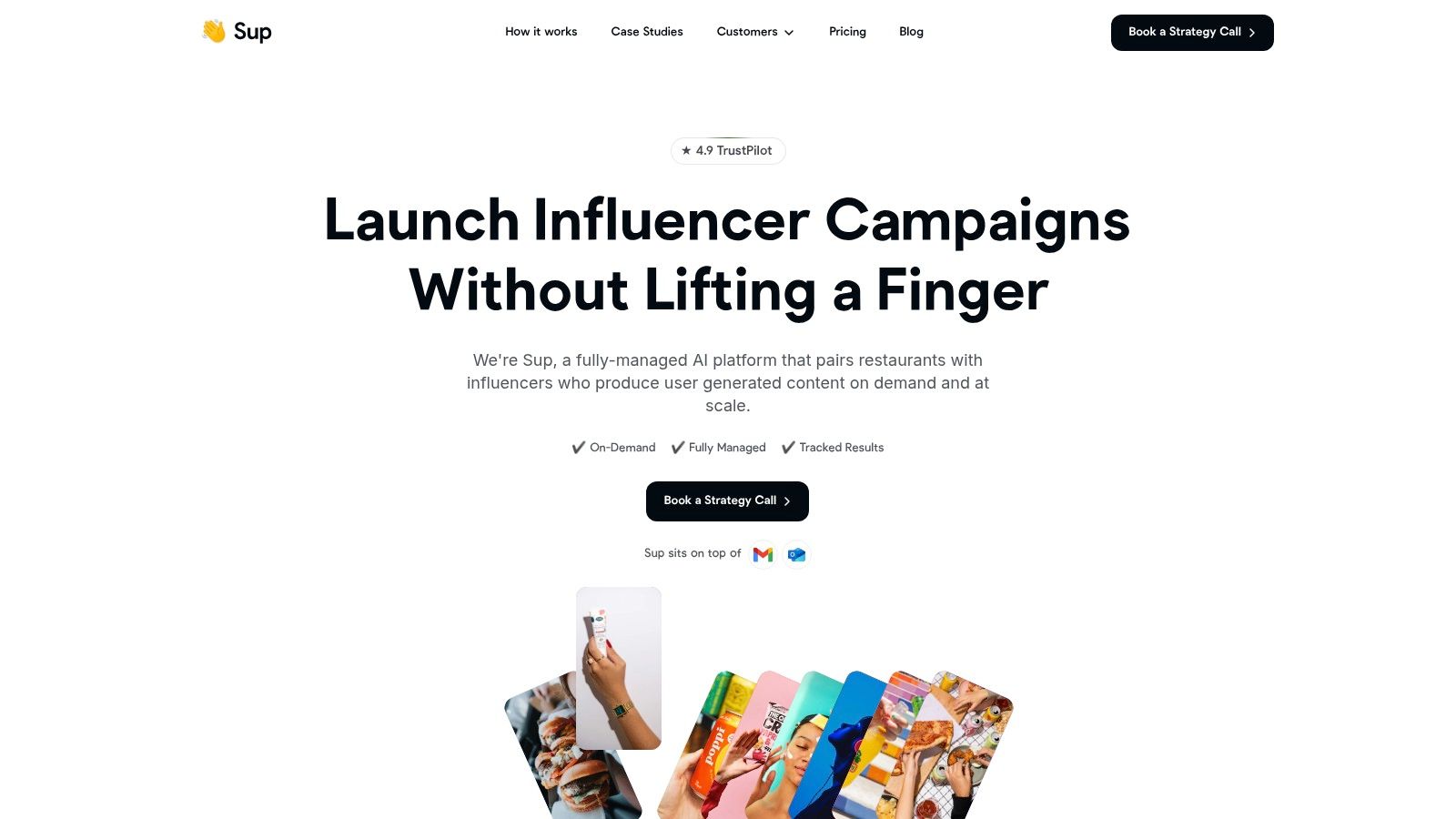
A common UK marketing scenario looks like this. The team knows influencer could drive bookings, footfall, or first orders, but nobody has the hours to source creators, write outreach, chase content, build tracking links, and sort payments. Sup is built for that gap.
It sits in the done-with-you category rather than pure self-serve SaaS or full agency outsourcing. That distinction matters. You still get platform visibility, but the execution load does not stay parked with your internal team.
Where Sup fits best
Sup makes the most sense for brands that need campaigns live quickly and care more about throughput than custom talent strategy. I would shortlist it for restaurants, ecommerce brands, agencies, and multi-location operators running repeated local campaigns across the UK.
The practical appeal is speed with less manual handling. Setup is short, and the workflow is designed so the brand team is not managing outreach and follow-up one creator at a time. For teams still comparing delivery models, this guide on how to choose between influencer marketing platforms is worth reading before a demo.
This is usually the trade-off. Self-serve software gives more hands-on control, but it also gives your team the admin. Managed service removes more work, but often at a higher cost and with less day-to-day flexibility. Sup sits in the middle for brands that want execution support without giving up visibility.
If one marketing manager is still holding creator sourcing, approvals, links, reporting, and payouts together in a spreadsheet, the issue is not feature depth. It is operating capacity.
What it does well
Sup handles the campaign mechanics that consume time first. That includes creator sourcing, outreach, follow-ups, scheduling, payments, promo code setup, UTM tracking, and a content library for reuse later.
That operating model is especially useful in local campaigns. A hospitality group opening new locations does not need a huge creator database alone. It needs the right nearby creators contacted quickly, the content brief managed properly, and performance tracked in a way finance and regional teams can understand.
A few strengths stand out in practice:
Lower admin load: Teams spend less time in inboxes, reminders, and back-and-forth creator coordination.
Built-in attribution: Promo codes and UTM links make it easier to tie campaigns to bookings, clicks, conversions, or revenue.
Good fit for multi-site brands: Local rollout is easier when campaigns need to be repeated across different UK locations.
Content reuse: Storing creator assets in one place helps if you want to reuse UGC in paid social or organic posts.
That last point matters more than it gets credit for. Brands that treat influencer only as a one-off awareness channel usually miss the extra value in content reuse. If your wider goal includes leveraging AI for social media growth, having usable creator assets organised from the start makes downstream content production much easier.
Trade-offs to know before you book a demo
Sup is not a fit for every influencer programme. It is stronger for commercial, measurable Instagram and TikTok campaigns than for celebrity partnerships, complex ambassador deals, or B2B creator programmes where the sales cycle is longer and the content needs heavier subject-matter input.
Pricing is not public, so qualification happens through a strategy call. That is normal for a done-with-you model, but it does mean buyers should arrive with a clear brief. Know your campaign volume, target locations, channels, approval process, and what success means before the call. Without that, it is hard to compare Sup fairly against self-serve tools that look cheaper on paper but require much more internal work.
2. Influencer
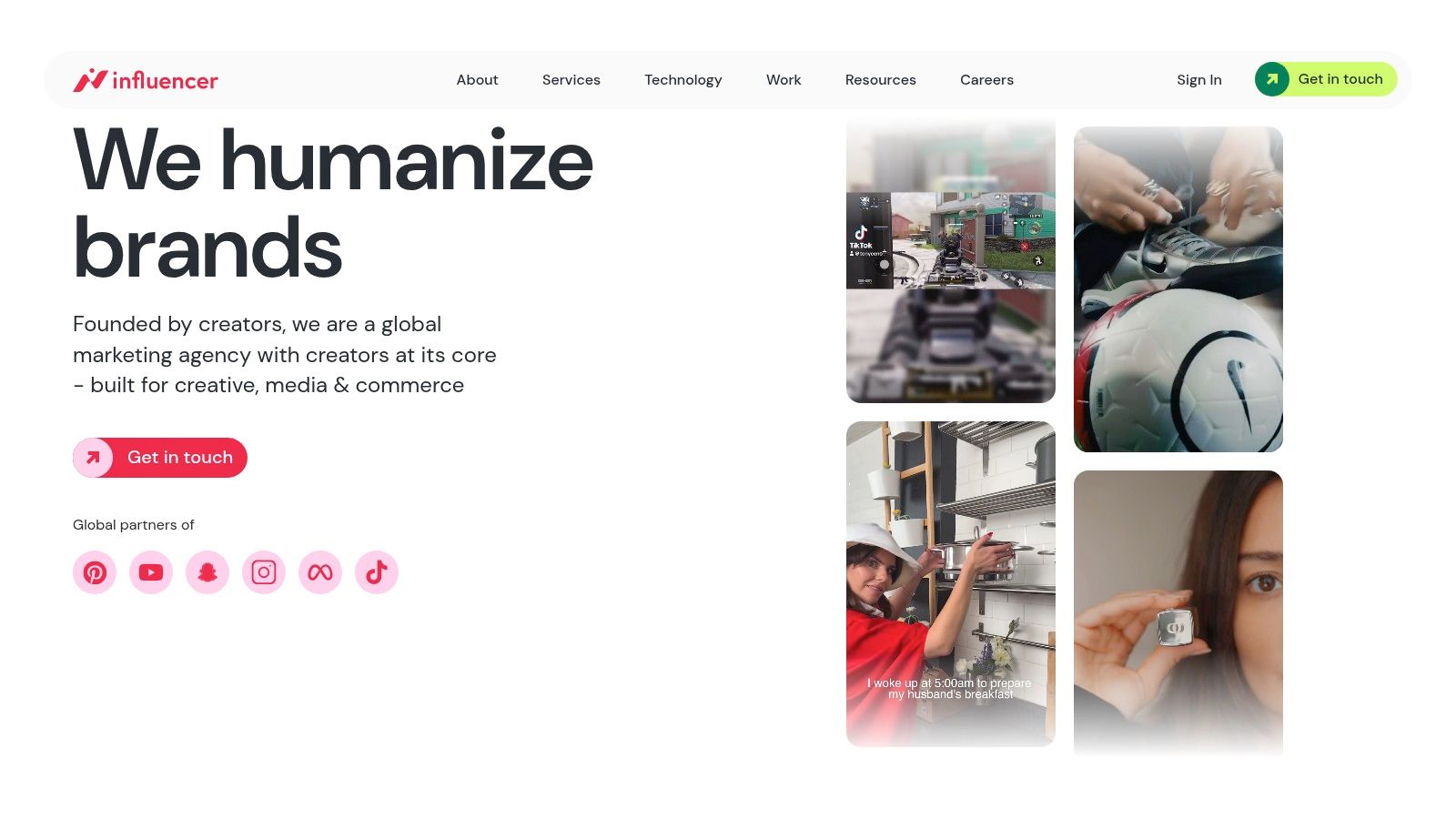
Influencer is one of the easier platforms to recommend to enterprise teams that don't want pure self-serve. London roots matter here, but the bigger advantage is operational maturity. Its Waves platform covers discovery, approvals, contracts, rights, payouts, and reporting, while the service layer helps teams avoid getting stuck in execution.
This is a strong fit when procurement, legal, and brand teams all need a say. The workflow structure feels built for organisations where influencer activity has to pass through more than one stakeholder group.
Why the model works
Influencer sits in the managed-service camp, with software wrapped around it. That's useful if you don't want to run every campaign detail yourself, but still want visibility and approval control.
The platform tracks 60+ metrics, according to the product notes in the brief, which is the kind of reporting depth larger teams usually ask for. It also handles usage rights and compliance in a more organised way than lighter tools.
The real test with managed-service platforms is simple. Ask who still owns approvals, reporting interpretation, and talent troubleshooting after launch.
If your team wants a breakdown of operating models before committing, this guide on how to choose between influencer marketing platforms is a useful companion. For a broader view of AI-led brand building around creator content, this article on leveraging AI for social media growth adds helpful context.
Trade-offs
Best for service-led buyers: Great if you want support plus software.
Less ideal for tinkerers: Not the best fit if you want a cheap, pure self-serve stack.
Pricing needs scoping: There's no public pricing, so you'll need a conversation before you know if it fits.
For brands with complex approvals and a preference for guided execution, Influencer is a serious contender.
3. Sprout Social Influencer Marketing (Tagger by Sprout Social)
Sprout's influencer product makes the most sense when your social team already lives inside Sprout Social or wants influencer workflows tied directly to publishing, analytics, and listening. That integration is its biggest advantage.
Many influencer tools still operate like a separate island. Sprout avoids that problem. If your paid social, community, and brand teams already collaborate in one social stack, keeping creator work there can reduce internal friction.
Best fit
This sits firmly in the self-serve SaaS category, though it's enterprise-leaning. Teams get AI-assisted discovery, brand-fit scoring, outreach, contracting, approvals, and ROI dashboards. There's also a Creator Hub, plus brand-safety reporting and support for boosting partnership ads.
For companies managing multiple business units or regions, the governance side is often more valuable than the discovery engine. Multi-workspace structures and approval controls become a practical advantage once programmes scale.
Trade-offs
Integrated stack: Strong if you want influencer marketing connected to the rest of social operations.
Governance: Better than many mid-market tools for large team structures.
Cost creep: Custom influencer pricing plus wider Sprout seat costs can get expensive.
This is usually a smarter buy for brands standardising their social operation than for a small team running a few campaigns a quarter. If that sounds like your setup, look at Sprout Social Influencer Marketing.
4. Traackr
A UK team running creator activity across several markets hits a different set of problems fast. One country needs stricter approval flows. Another wants local benchmarking. Finance wants cleaner reporting. Legal wants confidence on brand safety. Traackr is built for that kind of environment.
It fits the enterprise end of the market, but the more useful way to frame it is operational model. This is not a light self-serve SaaS tool for a lean team testing a few creator partnerships each quarter. It sits closer to a done-with-you enterprise setup, where the platform matters, but so do rollout, training, reporting standards, and internal adoption.
Where Traackr makes sense
Traackr earns attention from brands that care less about finding creators quickly and more about running a controlled programme that stands up to scrutiny. Its value shows up in areas like cross-market measurement, creator vetting, benchmarking, and reporting consistency.
That matters for sectors with more oversight, including finance, healthcare, and reputation-sensitive consumer brands. In those cases, the question is rarely "can we launch?" It is "can we run this repeatedly, defend the spend, and keep stakeholders aligned?"
I have seen teams underestimate that shift. Once influencer marketing moves beyond one market or one brand manager, process starts to matter almost as much as creator selection.
Practical trade-offs
Better fit for structured teams: Stronger when regional leads, legal, finance, and brand teams all need visibility.
More control, more setup: You usually get stronger governance, but you also take on onboarding and change management.
Analytics over speed: Useful for teams under pressure to prove value, less appealing if the priority is getting campaigns live fast.
Higher operating commitment: The platform cost is only part of the decision. Internal time matters too, especially if you are comparing software with the real cost of running influencer campaigns in-house.
Traackr is a sensible choice for UK businesses that need discipline, consistency, and clearer measurement across a complex programme. For teams that want hands-on support without building that operational layer themselves, a managed service will often be the better fit. For highly structured programmes, Traackr is designed for that level of control.
5. CreatorIQ
CreatorIQ is often the answer when a large brand wants a system of record for creator marketing. Not just campaign management. Not just discovery. A full operational layer that touches recruitment, forecasting, payments, measurement, and integrations with other business systems.
That's why it appeals to big organisations and agencies with formal processes. It's not lightweight, and it doesn't pretend to be.
When CreatorIQ makes sense
If your team needs influencer activity to connect with ecommerce, affiliate, BI, and finance tools, CreatorIQ usually gets attention early. It's designed for companies where creator marketing needs to plug into wider reporting and governance infrastructure.
The platform notes in the brief mention broad integrations, advanced reporting, and modules for recruiting, conversion, payouts, safety, and benchmarking. That stack is useful when influencer marketing has moved beyond experimentation and needs to behave like a disciplined channel.
Where it can go wrong
The common mistake is buying CreatorIQ too early. Smaller brands often overestimate how much platform depth they will use. If your team still struggles with briefing creators on time, an enterprise operating system won't fix that by itself.
For a grounded view of resourcing and internal overhead, this article on the real cost of running influencer campaigns in-house is worth reading before procurement starts.
Best for scale: Strong choice for large brands and agencies with complex workflows.
Integration-heavy: Useful when creator data needs to travel across teams and systems.
Overkill for lean teams: Too much platform for simple gifting or occasional paid posts.
If you need infrastructure more than agility, CreatorIQ is one of the most complete options.
6. Brandwatch Influence
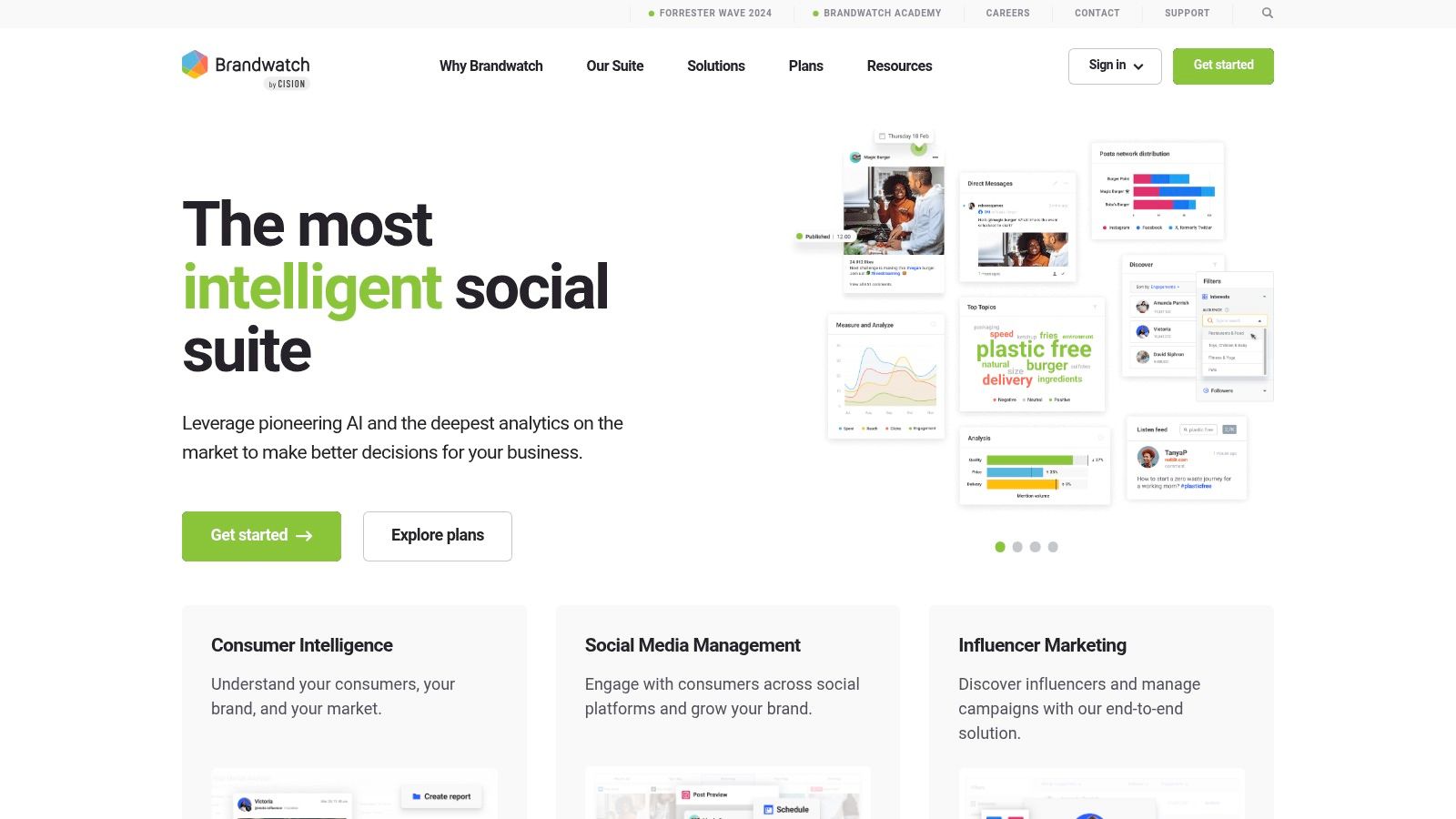
Brandwatch Influence is most compelling when influencer marketing isn't a standalone function in your company. It works best when it sits alongside social listening, brand monitoring, and wider reporting.
That unified view is practical. Teams can connect creator activity with broader social signals instead of treating influencer work as an isolated channel.
Why some UK teams prefer it
Brandwatch has UK roots and fits neatly into enterprise procurement environments. For organisations already using Brandwatch products, adding influencer workflows can be simpler than introducing a new specialist vendor.
Its value comes from combining discovery, CRM, and campaign tracking with an established social intelligence environment. If your brand team already relies on listening data, that connection can improve creator selection and reporting quality.
Trade-offs
Best in ecosystem: Stronger if you already use Brandwatch.
Listening plus influence: Useful for teams that want one social data environment.
Can feel heavy: Less attractive if you only need basic creator discovery and outreach.
This isn't the nimblest option for a small ecommerce brand. It's better for organisations that want creator programmes tied to the rest of their social intelligence stack. Explore Brandwatch.
7. Upfluence
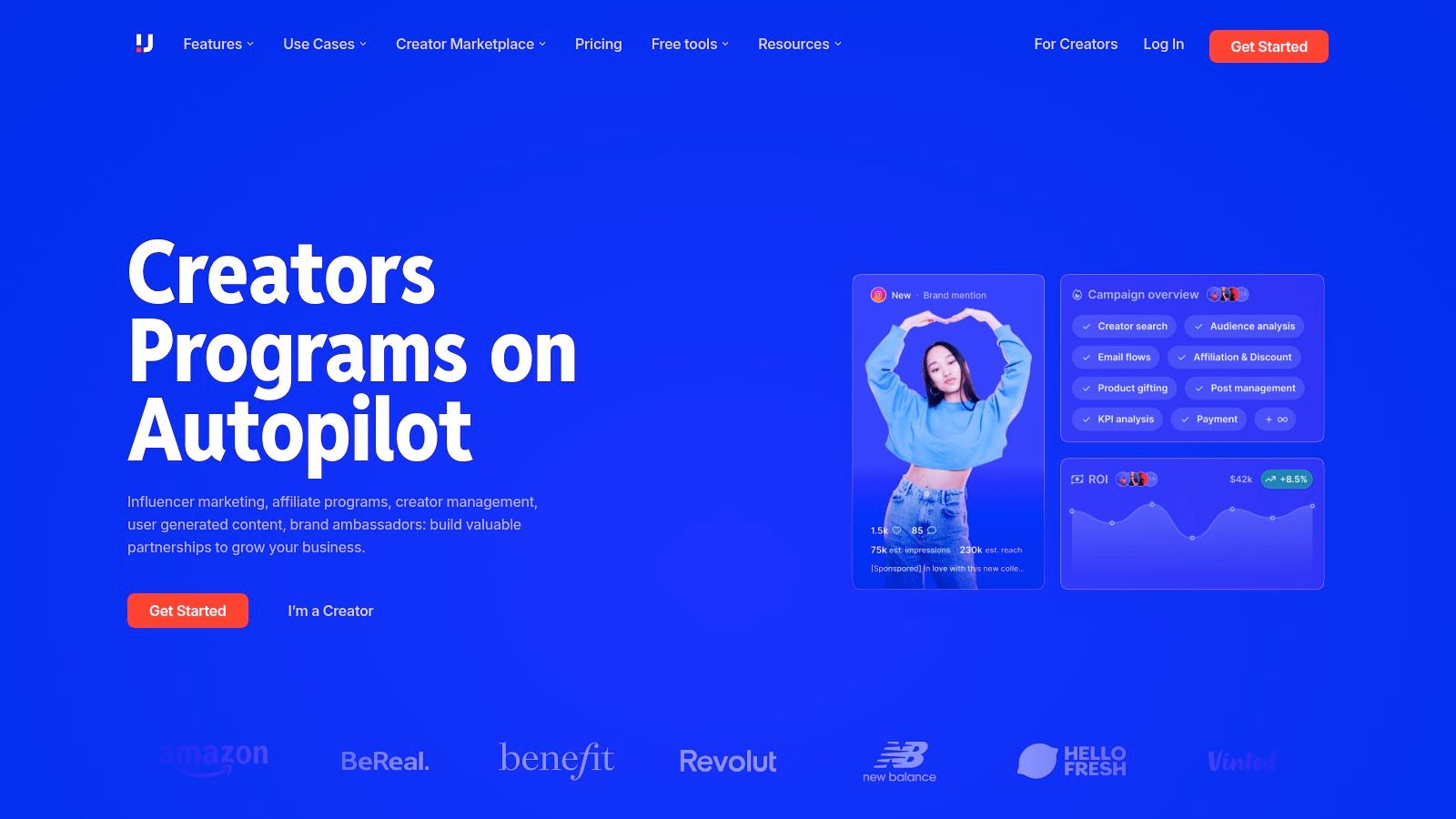
Upfluence tends to click with ecommerce teams fast because the commerce angle is obvious. It isn't just about finding creators. It's about tracking sales, handling codes, seeding products, and managing payouts in the same environment.
That makes it practical for DTC brands that want to treat influencer activity as a revenue channel, not just a brand play. It's one of the more commercially minded platforms in this group.
Where it's strongest
Upfluence works well for mid-market brands that have outgrown spreadsheets but don't need full enterprise infrastructure. Discovery, outreach, CRM, ecommerce integrations, payments, and content analytics are all there.
The ecommerce integrations are the part buyers should test carefully in demo calls. If your Shopify, WooCommerce, or lifecycle marketing setup is central to your programme, Upfluence particularly earns attention.
The best ecommerce influencer platforms don't just track posts. They make seeding, codes, and sales attribution easier for the operations team too.
Before choosing any commerce-led platform, it helps to pressure test the financial side. This resource on influencer marketing budget planning and how much you should spend is useful for framing that discussion.
Trade-offs
Strong for DTC: Sales tracking and ecommerce integrations are a real plus.
Good all-in-one workflow: Discovery through payment in one system.
Contract commitment: Custom pricing and longer minimum terms are common.
For UK retail and ecommerce brands that want a self-serve growth platform with commercial depth, Upfluence deserves a close look.
8. Aspire (formerly AspireIQ)
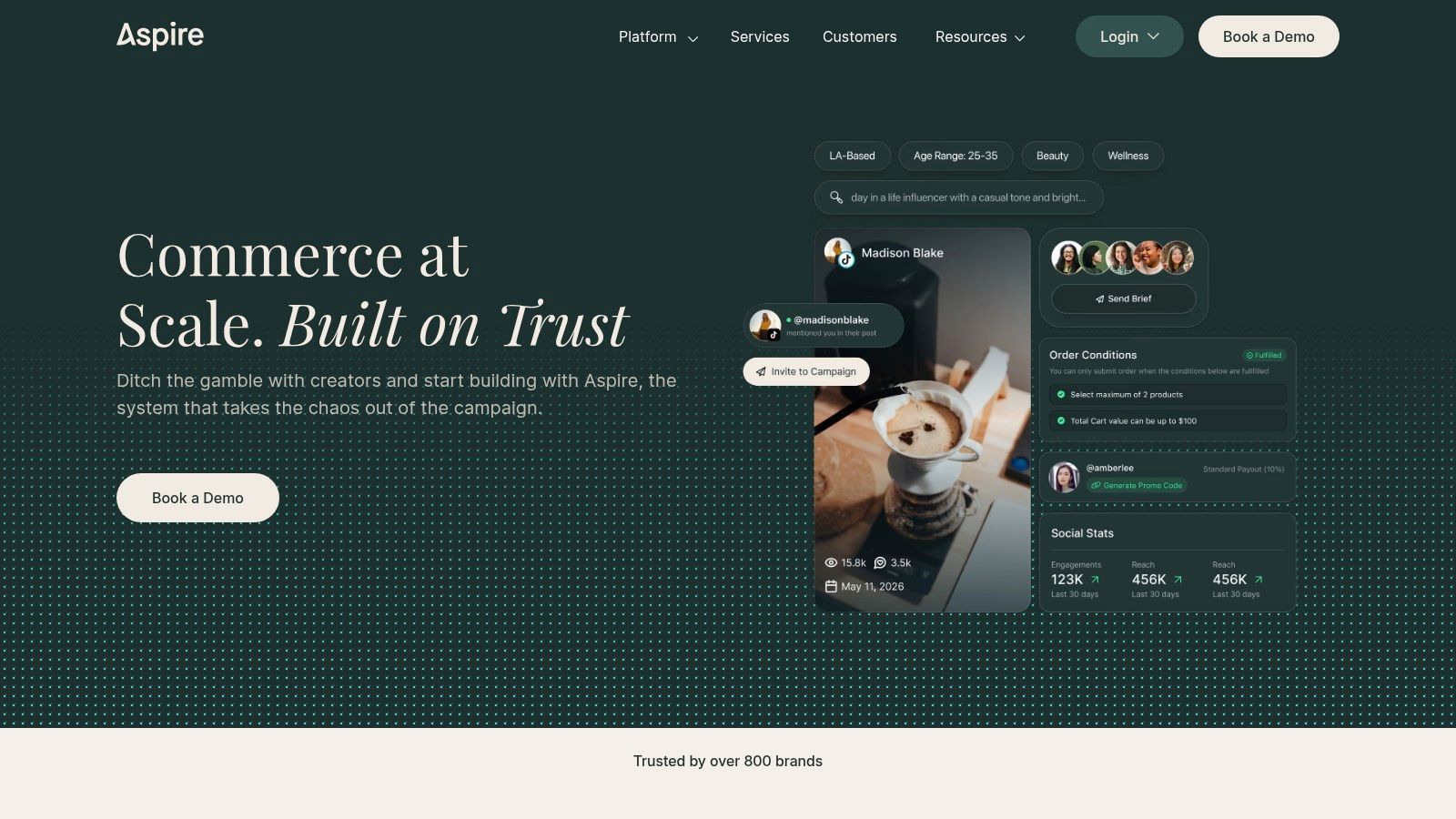
Aspire is one of the better picks for brands running mixed creator programmes. If you're blending gifting, affiliate, UGC, and paid collaborations, it's built for that kind of evolution.
Some platforms feel narrowly optimised for one style of campaign. Aspire is broader. That can be a strength if your team is still figuring out which collaboration model scales best.
Practical strengths
Aspire combines discovery, marketplace access, workflows, seeding, affiliate support, and ROI measurement. That makes it especially useful for ecommerce brands moving from ad hoc gifting into more structured creator programmes.
The marketplace component can speed up sourcing, but it doesn't remove the need for judgement. Teams still need to brief carefully and filter for fit, not just availability.
Trade-offs
Flexible programme types: Useful across seeding, affiliates, and paid campaigns.
Good for UGC pipelines: Helpful if repurposable content matters as much as reach.
Needs adoption: Full value comes when the team uses the workflow properly.
Aspire is often a good middle-ground choice for performance-minded brands that want more than a basic influencer CRM. See Aspire.
9. Modash
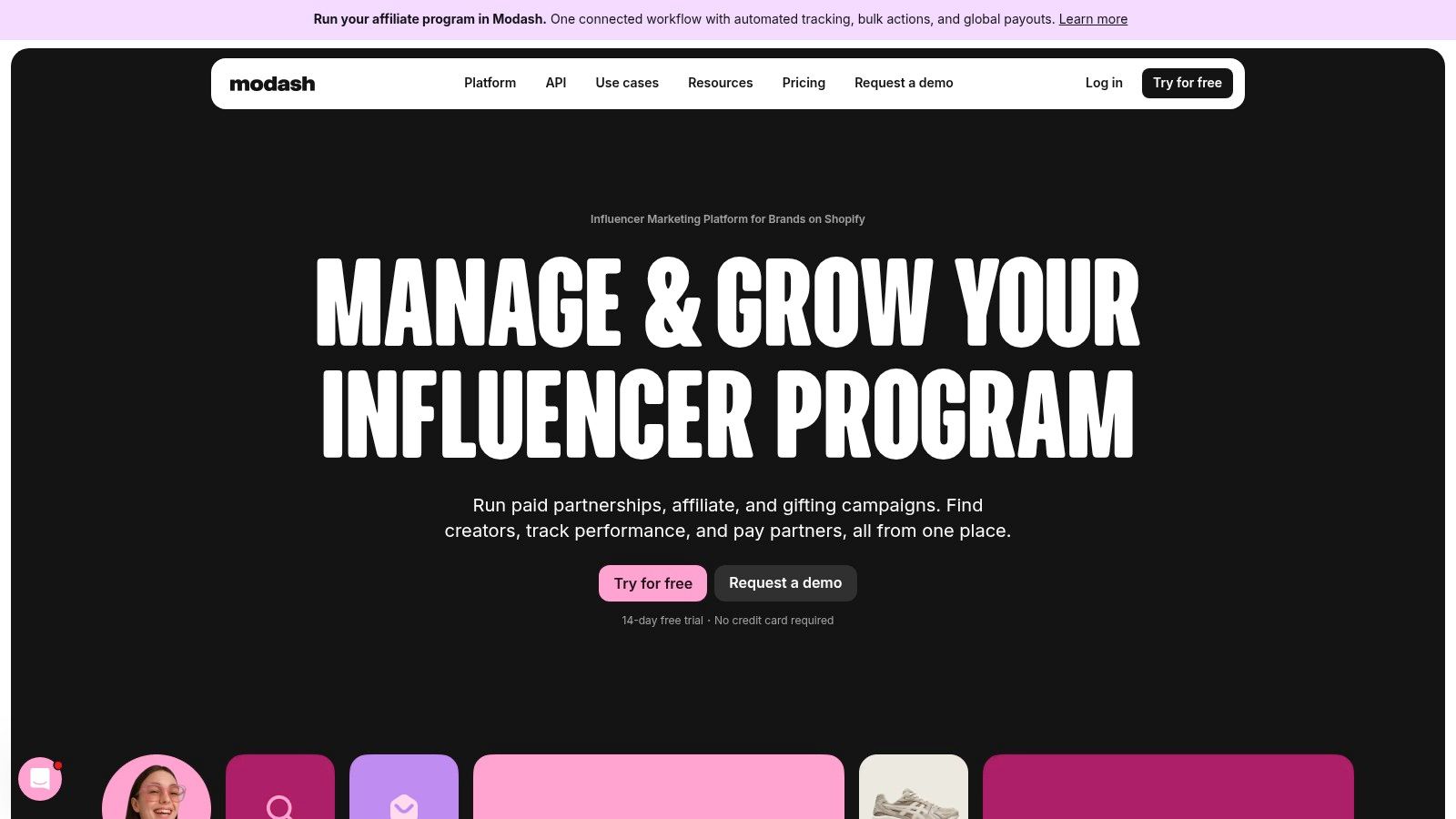
Modash is one of the easiest tools on this list to recommend to lean teams because the pricing is transparent and the product is fully self-serve. That removes a lot of buying friction.
It suits brands that want to move quickly without sitting through a long enterprise sales cycle. If you value published pricing, monthly options, and hands-on control, Modash is an obvious shortlist candidate.
Why SMB and mid-market teams like it
The toolkit covers discovery, audience checks, outreach, tracking, content downloads, Shopify integration, affiliate links, and global payouts. That's enough for many growing programmes without the overhead of an enterprise suite.
This is especially appealing when internal capability already exists. If your team can run outreach and creator management competently, Modash gives you the system without forcing you into a managed model.
The trade-off is straightforward
Transparent buying process: Published pricing is a real advantage.
Strong self-serve discovery: Good for teams that like doing the work themselves.
Less enterprise depth: Not the best fit for complex governance or heavily layered approvals.
Modash is a practical answer for brands that want a clear, usable influencer marketing platform UK teams can pick up quickly. Visit Modash.
10. Takumi
Takumi sits closer to managed service than pure software, and that's exactly why some brands choose it. It's a better match for teams that want measurable creator campaigns without building internal process from scratch.
UK heritage helps, but the more important factor is the model. Takumi combines tech, creator vetting, quality control, and managed delivery in a way that reduces operational strain on the client side.
Where it fits
This is a sensible option for brands that care a lot about creative quality and want campaign support rather than dashboard ownership alone. If your internal team is small, but your standards are high, that balance can work well.
Takumi is also attractive when speed matters. Managed models often move faster than self-serve tools once the brief is agreed, because the vendor is doing more of the execution.
Trade-offs
Managed convenience: Good for teams that don't want to run creator operations alone.
Creative control support: Vetting and quality management are part of the offer.
Less self-serve freedom: Not ideal if you want a platform-first buying experience.
For brands that want a service-led route into creator campaigns, Takumi remains a credible UK-market option.
Top 10 UK Influencer Marketing Platforms, Comparison
Product | Core features ✨ | Quality & UX ★ | Pricing & Value 💰 | Target audience 👥 | USP / Best fit 🏆 |
|---|---|---|---|---|---|
Sup 🏆 | ✨ AI + human-managed sourcing, outreach, promo codes, UTM attribution, UGC library (IG & TikTok micro/nano) | ★ 4.9 Trustpilot; ~15–20min setup; real‑time dashboard | 💰 Starter & Growth (quote); high ROI, ~95% time saved vs manual | 👥 Restaurants, e‑commerce, agencies, multi‑location chains, local teams | 🏆 Done‑with‑you local scale + full attribution from content → revenue |
Influencer | ✨ Waves OS: discovery, approvals, contracts, payouts, reporting | ★ Strong enterprise workflows; UK cultural/local expertise | 💰 Quote-based; managed service value | 👥 Brands needing UK-focused managed campaigns | 🏆 UK-led managed service with mature approvals & compliance |
Sprout Social (Tagger) | ✨ AI discovery, brand‑fit scoring, campaign workflows; creator hub | ★ Integrated with publishing, listening & enterprise governance | 💰 Custom-quoted; module can be premium for small teams | 👥 Teams wanting influencer ops within social management stack | 🏆 Best when you want influencer + social publishing unified |
Traackr | ✨ Discovery, audience analysis, attribution, benchmarking | ★ Enterprise-grade analytics & compliance for regulated sectors | 💰 Enterprise pricing; onboarding/change management | 👥 Global brands, regulated industries, enterprise teams | 🏆 Deep measurement, benchmarking & compliance playbooks |
CreatorIQ | ✨ Recruit/Convert/Pay, SafeIQ, 20M+ profiles, broad integrations | ★ Robust governance, advanced reporting & security | 💰 Enterprise-level, custom quoting | 👥 Large brands/agencies needing scale & integrations | 🏆 System of record for creator programs with wide ecosystem ties |
Brandwatch Influence | ✨ Discovery + CRM + campaign tracking tied to social listening | ★ Unified social intelligence; procurement-friendly (UK) | 💰 Quote-based; best value with Brandwatch bundle | 👥 Organisations already using Brandwatch / enterprise buyers | 🏆 Listening + influencer workflows in one unified platform |
Upfluence | ✨ Discovery, outreach, Upfluence Pay, ecommerce & affiliate integrations | ★ End‑to‑end workflow with payments; commerce-focused | 💰 Custom quote; often 12‑month minimums | 👥 DTC, retail & mid-market brands focused on revenue | 🏆 Strong ecommerce integration and affiliate/sales tracking |
Aspire | ✨ Marketplace, seeding, affiliate/ads, Shopify + ROI measurement | ★ Broad toolset for seeding + paid, mature measurement | 💰 Annual quote; value with onboarding & adoption | 👥 Ecommerce brands scaling UGC, seeding & performance programs | 🏆 Mix of seeding, affiliates and paid collaborations for ROI |
Modash | ✨ Large discovery (350M+), audience checks, outreach, tracking | ★ Practical self‑serve UX for SMBs; clear limits & tools | 💰 Published plans; monthly options & free trial | 👥 SMBs & mid-market teams wanting transparent pricing | 🏆 Transparent pricing + strong discovery for lean teams |
Takumi | ✨ Tech-enabled managed service, creator vetting, content QC | ★ High creative quality, ROI-oriented reporting, fast activation | 💰 Quote-based managed model | 👥 Brands wanting managed, creative-first campaigns | 🏆 UK heritage + creative-quality management for performance |
From Platform to Performance Making Your Choice
A UK marketing team buys a platform after a polished demo. Six weeks later, nothing has shipped because legal is still reviewing contracts, the social manager is stuck doing outreach by hand, and finance still cannot see how creator spend ties back to revenue. That is the actual buying test. The right choice depends less on feature volume and more on how the work gets done after signature.
For UK brands, the practical decision usually sits across three operating models: self-serve SaaS, managed service, and done-with-you. Each solves a different problem. Self-serve gives your team control and lower software costs, but it asks for real execution capacity. Managed service removes day-to-day workload, but you give up some speed, flexibility, and direct creator learning. Done-with-you sits in the middle. You keep visibility and some control, while getting support on setup, execution, and reporting.
That distinction matters because discovery is rarely the true blocker anymore. Teams can usually build a shortlist of creators. The harder part is turning that shortlist into approved briefs, live campaigns, paid creators, usable reporting, and a process the team can repeat next month without rebuilding everything from scratch.
A simple way to decide:
Choose self-serve SaaS if your team already has process discipline, internal ownership, and time to run outreach, negotiation, approvals, and reporting.
Choose managed service if you care more about output than building in-house capability, and you are comfortable paying for execution.
Choose done-with-you if you want faster activation and clearer attribution, but still want hands-on visibility into performance.
In practice, enterprise teams often prioritise governance, permissions, procurement fit, and integration with the rest of the martech stack. That usually pushes them toward CreatorIQ, Traackr, Sprout Social Influencer Marketing, or Brandwatch. Ecommerce and DTC brands tend to care more about affiliate tracking, Shopify connections, creator seeding, and sales visibility, which is why Upfluence, Aspire, and Modash come up so often. Smaller teams with limited bandwidth usually feel the pain in execution, not strategy. They need campaigns live, tracked properly, and kept off spreadsheets.
A platform is only useful if it removes the bottleneck your team already has.
Consumer demand is not the main question at this point. As noted earlier, UK buyers respond to creator-led promotion. The issue for many brands is operational consistency. If briefs take too long, approvals sit with three stakeholders, or reporting arrives too late to inform the next campaign, the channel underperforms even when creator selection is solid.
Use demos to pressure-test your real workflow. Bring your finance lead. Ask how payments are handled, how usage rights are tracked, what the approval chain looks like, and how quickly your team can get from shortlist to live content. Ask who owns outreach. Ask who fixes broken tracking. Ask what happens when a creator misses a deadline.
If you want a middle option between clunky self-serve software and full outsourcing, Sup is worth a close look. It fits brands that need creator campaigns launched quickly, measured properly, and managed with support, without losing visibility into performance.

Matt Greenwell
Share