£5.78 back for every £1 spent should get any UK brand manager's attention. Instagram influencer marketing has moved well beyond a test budget line. It now sits in the same commercial conversation as paid social, affiliate, and email because the upside is clear when the programme is set up properly.
The problem is execution.
Brand teams still waste money in predictable ways. They pick creators on follower count alone. They approve content before agreeing tracking, usage rights, or reporting. Then they try to judge performance on likes, saves, and comments, even when the actual goal was bookings, first orders, repeat customers, or in-store footfall.
I see the same mistakes across both local businesses and ecommerce brands in the UK. A Manchester restaurant pays for reach from a London lifestyle creator whose audience will never visit. A skincare brand sends product to ten creators, gets polished content back, then cannot tell which post drove sales because every link points to the homepage and nobody set up codes properly. The spend disappears fast when attribution is loose.
A better approach is operational, not flashy.
Use creators who match your customer geography, price point, and buying context. Vet audience quality before approving spend. Set terms clearly, including content usage and deliverables. Build tracking in before the brief goes out, with links, codes, landing pages, and a simple reporting framework tied to revenue. That is how this channel becomes a repeatable growth engine instead of a monthly gamble.
Why UK Instagram Influencers Are a Key Growth Channel
£1 in the right UK creator partnership can return several pounds in sales. The problem is not whether the channel works. The problem is whether your team can turn creator activity into trackable revenue instead of a folder full of decent-looking content.
That distinction matters. Instagram sits close to purchase intent in a way many channels do not. People use it to check whether a skincare product looks credible on real skin, whether a restaurant is worth the trip, or whether a fashion brand fits their body type and price point. In practice, that means UK creators can influence both discovery and conversion, especially for ecommerce brands, hospitality groups, clinics, salons, gyms, and other businesses that sell on trust.
The best programmes treat creators as three things at once. They are a distribution channel, a source of proof, and a content engine your paid team can often reuse with permission. That is why smart brands keep increasing spend here. One solid creator can drive first-click discovery, last-click sales, and a bank of usable assets for retargeting.
The commercial upside is clear, but only if the setup is disciplined.
A Birmingham dental clinic will often get more booked consultations from a handful of credible local creators than from a broad national lifestyle push. A Shopify beauty brand can use creators to answer objections a PDP cannot handle on its own, such as texture, shade match, routine order, or whether the result looks convincing in normal bathroom lighting. A multi-site UK retailer can localise the same campaign across Leeds, Glasgow, and London without rebuilding the message from scratch.
That is why I treat instagram influencers uk as an operating channel, not a one-off awareness tactic. The brands that get consistent returns build a repeatable system around it. They know which creator profiles drive profitable orders, which content formats lower CPA, and which regional audiences convert best.
What does not work is easy to spot:
Paying for broad reach when the business only serves a local catchment area
Choosing creators because the content looks polished, while ignoring whether their audience buys
Running gifted or paid posts without unique links, codes, landing pages, or post-level reporting
Treating every collaboration as a fresh start instead of building a bench of proven partners
Handing creator discovery to junior staff without a clear commercial filter or workflow
Some teams also try to bolt influencer activity onto sales outreach after the fact. If you want creator campaigns to support lead generation as well as ecommerce, tools that get Instagram email data for SDRs can help connect audience interest with outbound follow-up. That only works if consent, targeting, and handoff are set up properly.
A key advantage of UK Instagram influencers is not access to attention alone. It is the ability to build a measurable growth engine that combines local relevance, creator trust, and attribution. Brands that set it up this way can scale spend with far more confidence. Brands that do not usually mistake activity for performance.
Finding the Right UK Influencers for Your Brand
Most brands start in the wrong place. They ask, “Who are the biggest creators in our space?” The better question is, “Who can move the audience we need?”
That's where an Ideal Creator Profile matters. Before you search Instagram, define the overlap between audience fit, content style, geography, and commercial intent.
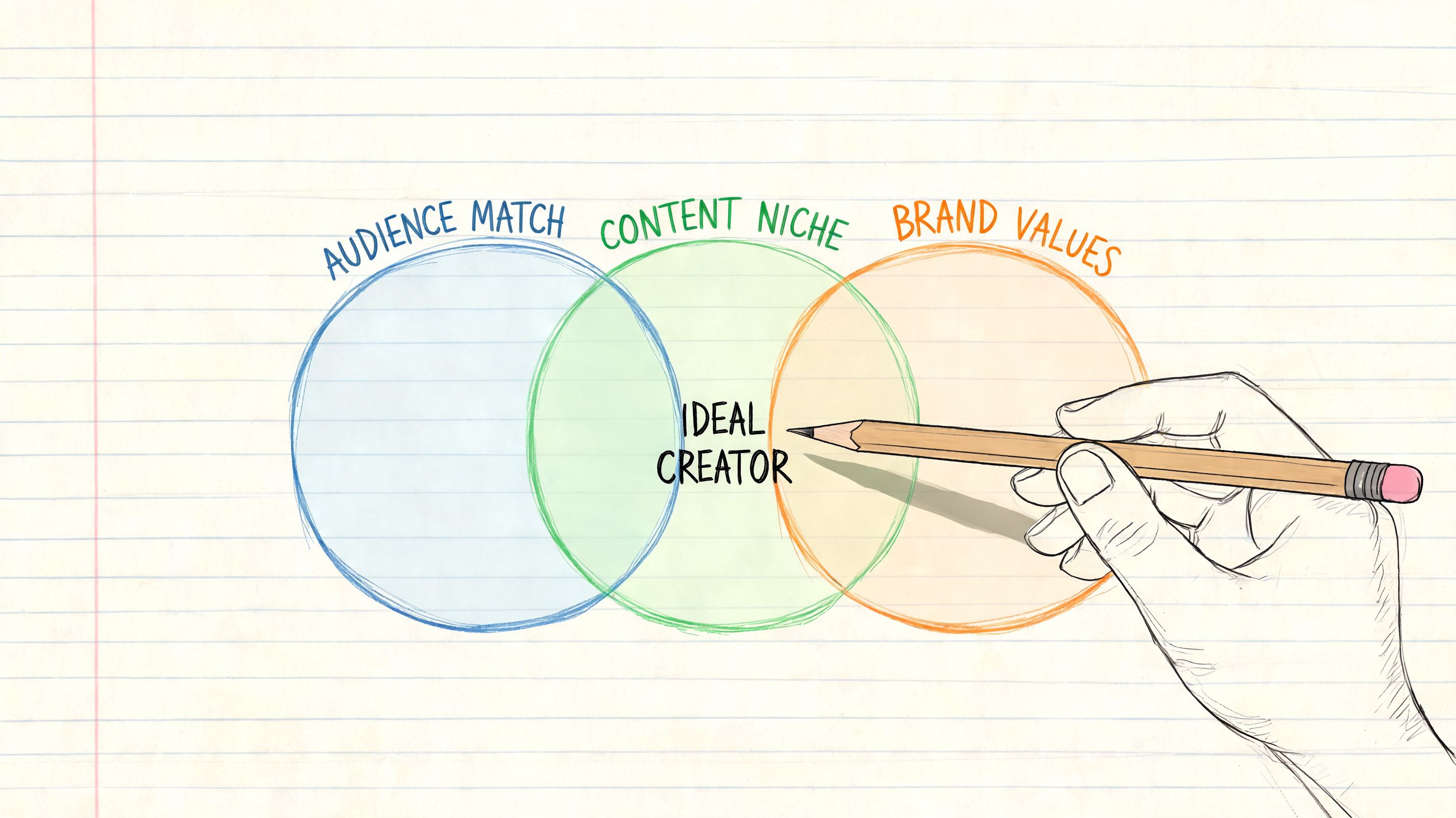
Build the creator profile before you build the list
If your customer is a London-based professional buying premium skincare, a broad lifestyle account with a huge audience but weak UK concentration may look impressive and still perform poorly. If you run a Manchester brunch venue, a local nano creator who posts weekly food content is often the more useful partner.
Instagram's audience in Britain gives you a clear reason to take this seriously. The platform reaches 81.2% of 18 to 34-year-olds in the UK, and Britons spend around 53 minutes per day on it, versus a 33-minute global average, according to UK and global Instagram insights from Our Own Brand. That means attention is there. Your job is to match it precisely.
Use this filter set when building your first list:
Audience location: Prioritise UK-heavy audiences, and narrow further by city or region when footfall matters.
Content niche: Don't settle for “lifestyle” if your business needs food, fitness, beauty, parenting, gaming, or home content specifically.
Commercial fit: Look for creators who can naturally show use, visit, trial, or recommendation.
Tone and brand safety: Review captions, Stories, comments, and previous paid work.
Creator reliability: If they're slow to reply before a campaign, they usually won't become easier later.
How to find creators locally
For local and multi-location brands, geo-searching beats generic discovery every time.
Start with:
Location tags: Search places, venues, shopping areas, and neighbourhoods.
Community hashtags: City-specific food, fashion, fitness, and events tags often surface smaller but relevant creators.
Competitor tagging patterns: Check who's already posting about adjacent brands.
Customer overlap: Some of your best creators already follow, mention, or visit your business.
If your team is doing prospecting at scale, it also helps to use structured data workflows to get Instagram email data for SDRs when you need cleaner outreach beyond DMs, especially for agency or multi-location prospecting.
What works well for a restaurant in Birmingham won't look the same as what works for a DTC beauty brand shipping nationally. That's why the creator list shouldn't be “top UK influencers”. It should be a ranked shortlist against your business objective.
Why smaller creators often make more sense
A lot of newer brand managers still assume micro and nano creators are just the budget option. That's the wrong lens. They're often the precision option.
For hospitality, retail, and local services, smaller creators tend to have:
stronger geographic relevance
more obvious community trust
easier storytelling around a real visit
lower risk when you want to test multiple creators instead of betting on one
This short walkthrough is useful if you want to tighten your search process before outreach:
The best creator for your campaign usually isn't the one with the biggest audience. It's the one whose audience behaves like your buyer.
Vetting UK Creators to Avoid Wasted Spend
A creator can look perfect on the surface and still be the wrong buy. Good feed. Nice Reels. Decent follower count. None of that tells you whether the audience is real, engaged, or commercially useful.
Most wasted spend happens here. Brands confuse aesthetics with quality control.
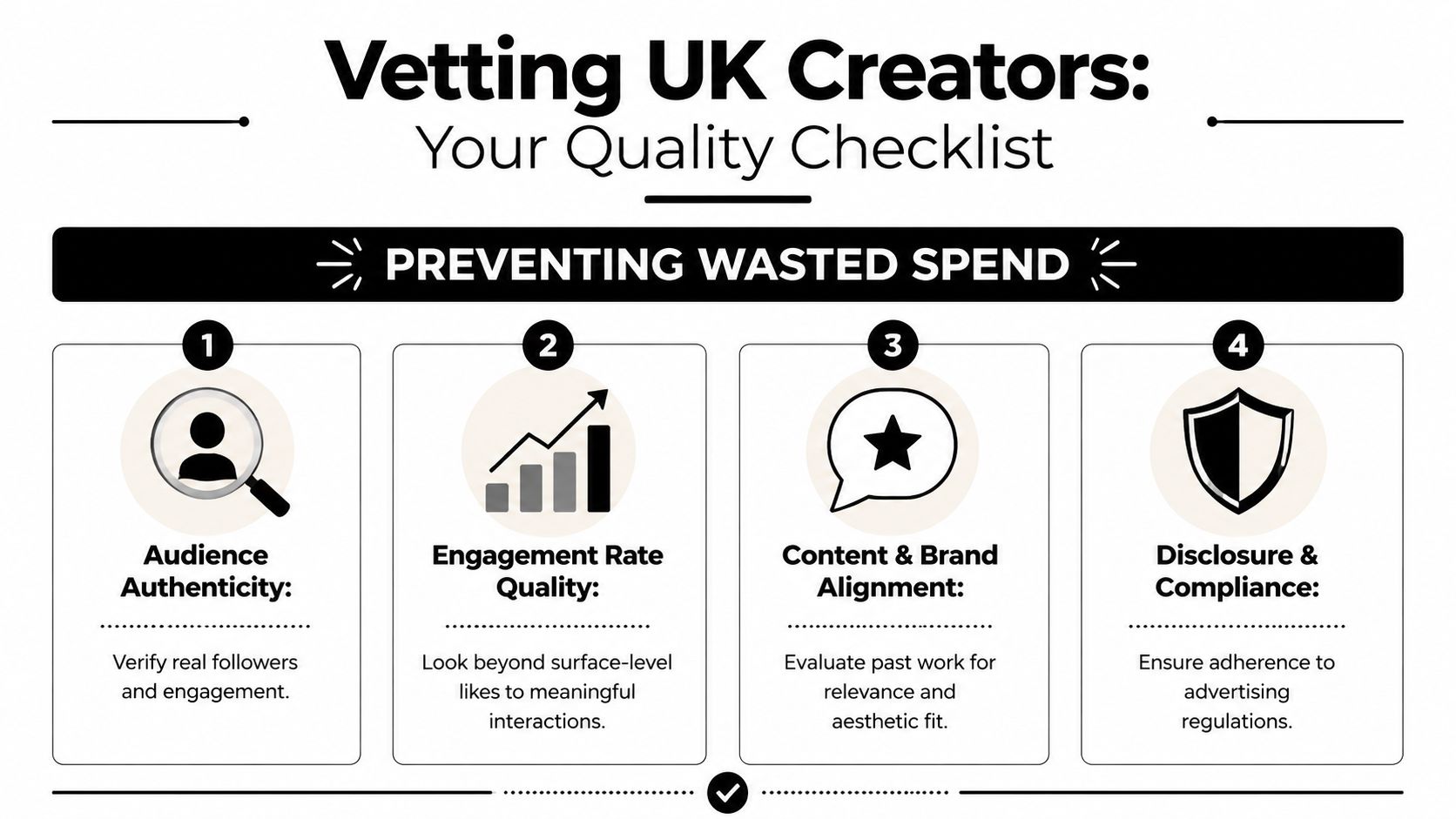
Check audience authenticity first
Start with the hard question. Are you paying to reach people, or paying to inflate someone's media kit?
UK influencer platforms use credibility scoring systems that flag profiles with more than 15% suspicious traffic, and some audits show up to 60% of UK influencers have inflated audiences, according to Heepsy's UK influencer vetting notes. That should make every brand manager slower, not faster.
Look for signs such as:
follower growth that jumps unnaturally
weak comments compared with visible reach
generic comments that don't relate to the content
lots of overseas engagement on a supposedly UK-focused account
recent spikes in followers without a clear content reason
If you want a second check before outreach, a tool like this Instagram engagement calculator can help you compare surface engagement with what looks commercially credible.
Don't judge engagement at face value
Likes are easy to misread. Saves, shares, comments, Story behaviour, and consistency across posts matter more.
A creator with a slightly smaller audience but regular conversation in comments is usually a safer choice than a bigger account with shallow reaction. Look across several weeks, not one standout Reel. One viral post can mask an average profile.
Use a simple review pattern:
Check their latest grid posts for consistency.
Look for creator replies in comments.
Review Story habits if available through media kits or direct discussion.
Ask for recent paid campaign examples, not just best-ever screenshots.
Review content through a buyer lens
Ask one blunt question. Would your target customer trust this person recommending your product or venue?
That means checking:
how naturally they integrate brands
whether they explain, demo, or just pose
whether their audience asks practical questions
whether the creator's tone fits your customer, not just your internal team's taste
Warning sign: If every partnership looks the same, your brand will become background noise too.
Check compliance and past brand behaviour
A creator who's casual about disclosure is a risk. So is one who promotes competitors back-to-back without context.
Review prior sponsorships for:
clear ad disclosure
repeated low-effort paid posts
category conflicts
signs they disappear after posting and don't support campaign momentum
The best vetting process is boring, repeatable, and slightly sceptical. That's exactly why it protects budget.
Outreach, Negotiation, and UK Rate Benchmarks
Most creator outreach fails before price even comes up. The message is vague, the brief is broad, and the brand hasn't thought through what it wants to buy.
Good outreach feels specific. It shows you know who the creator is, why they fit, and what happens next. Good negotiation is the same. It isn't about squeezing price. It's about defining deliverables, rights, timelines, and commercial value clearly enough that nobody has to guess.
Send a tighter first message
Bad outreach sounds mass-produced. Good outreach sounds researched and easy to respond to.
A simple opening script:
Hi [Name], I'm reaching out from [Brand]. We like how you create content around [niche/topic], especially your posts on [specific example]. We're planning a UK campaign focused on [product/venue/offer] and think your audience could be a strong fit. If you're open, I'd love to send a brief with deliverables, timing, and budget so we can see if there's a match.
That works because it answers the creator's first questions immediately. Why me, what is it, and is there a real opportunity here?
If Reels are part of the deal, it also helps to understand how creators think about that format commercially. This guide on how to unlock your Reels earnings potential is useful context because it helps brand managers understand why some creators price short-form video differently from static content.
Negotiate the parts that actually matter
Rate matters. Terms matter more.
Before agreeing anything, lock down:
Deliverables: Number of posts, Reels, Stories, edits, hooks, tags, link placement, and deadlines.
Usage rights: Can you repost organically, use on paid social, add to email, or run as whitelisted content.
Exclusivity: If you need category protection, define the window clearly.
Approval process: Decide whether you need draft review or only factual checks.
Tracking setup: Make links, codes, and landing pages part of the agreement, not an afterthought.
One of the most useful references for budgeting is this guide on how much you should pay Instagram influencers in 2026, especially if your team is comparing one-off creator fees against broader content rights and usage.
Use benchmarks carefully
You were asked for a table of UK rate benchmarks. Here's the practical truth. No verified benchmark figures were provided for post, Reel, or Story pricing by follower tier, so presenting exact prices would mean making them up. Don't do that internally, and don't trust articles that do it casually.
What you can do is structure negotiations with a benchmark framework.
Influencer Tier | Followers | Instagram Post (£) | Instagram Reel (£) | Instagram Story (3 frames, £) |
|---|---|---|---|---|
Nano | <10k | Varies by niche, geography, deliverables, and rights | Usually priced above static when video effort is higher | Often bundled with post or Reel deals |
Micro | 10k to 100k | Varies widely based on audience quality and category fit | Often negotiated separately where editing and concepting are involved | Commonly used as an attribution layer with links or codes |
Macro | >100k | Higher quote range, but not automatically better value | Strong visibility, but cost efficiency depends on audience quality | Useful for reach, less useful if the audience-brand fit is weak |
The negotiation lens should be:
are you paying for reach
are you paying for trust
are you paying for content production
are you paying for usage rights
are you paying for all four at once
That distinction prevents bad deals. A local café shouldn't pay for broad awareness it can't use. A DTC brand may accept a higher fee if the creator also delivers reusable UGC and paid usage rights. An agency may prefer several smaller creators over one larger name if the brief needs city-by-city relevance.
What not to do in rate discussions
These mistakes are common and expensive:
Leading with “What are your rates?” only. You'll get a menu price detached from your actual needs.
Ignoring content rights. Organic reposting and paid usage are not the same thing.
Buying deliverables without a concept. If the creator has freedom but no direction, results get patchy.
Treating every creator the same. A food creator, beauty creator, and gaming creator don't build value in identical ways.
The cleanest deals feel collaborative, but they're documented like procurement.
Setting Up and Measuring Campaign ROI
If you can't track the campaign, you can't defend the budget. That's the standard.
Too many brands still report influencer activity like it's PR. Reach, views, likes, maybe a few screenshots from the creator. That isn't enough when you need to answer a finance lead, a client, or your own monthly trading meeting.
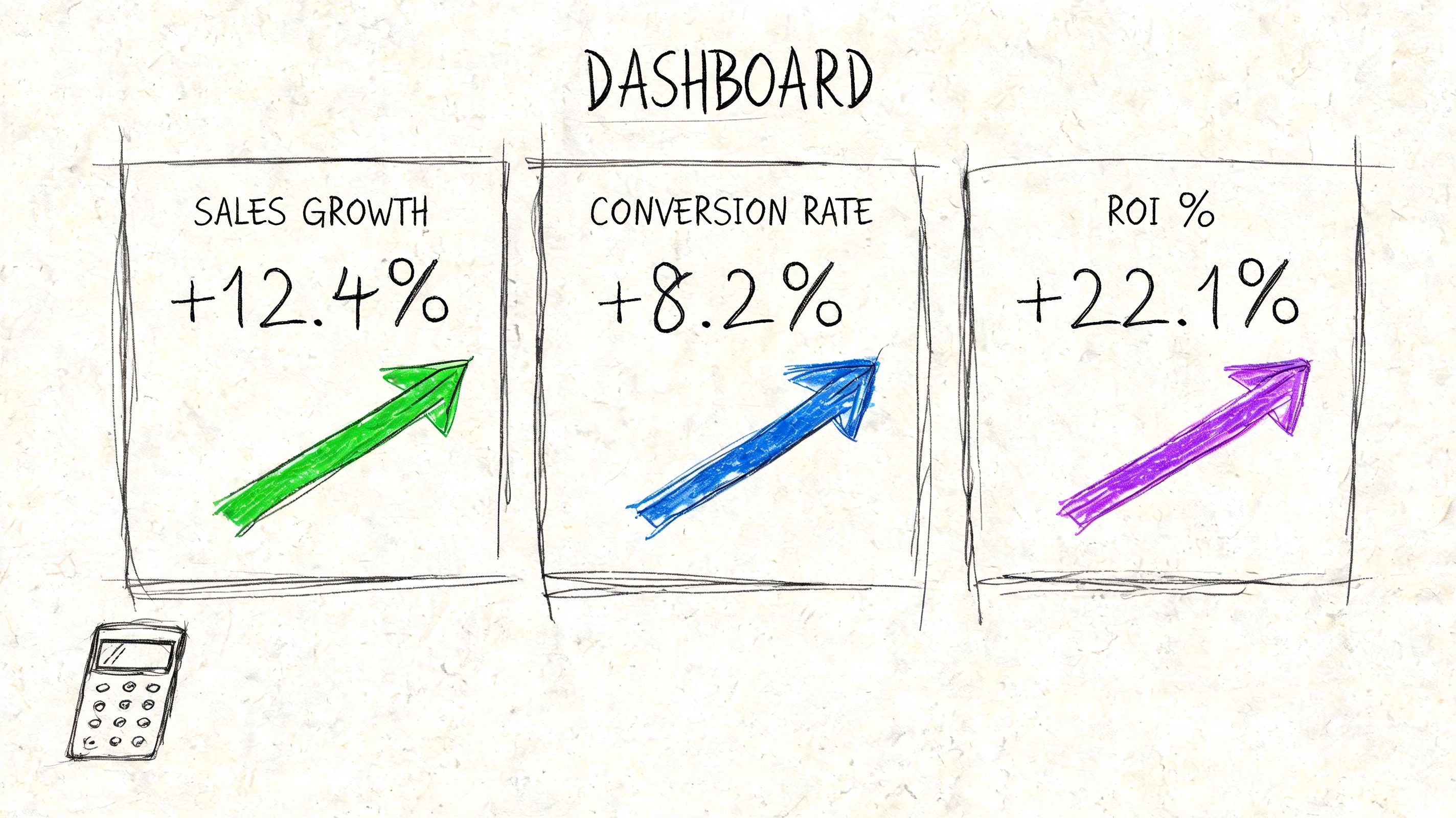
Build attribution into the brief
For UK campaigns, attribution is where Instagram shifts from “awareness channel” to measurable growth lever. In UK hospitality examples, clicks can represent 15 to 20% of views, promo code redemptions can reach 8 to 12%, and 69% of UK consumers have shopped via mobile after seeing influencer content, according to Kolsquare's UK Instagram influencer guide.
That only helps if your setup is clean.
Every brief should include:
the exact landing page
one unique UTM link per creator
one unique promo code per creator
the offer wording
call to action language
posting date and expiry window
who owns reporting after launch
If your team still struggles to route traffic cleanly from profile links, this guide on how to solve your Instagram bio traffic problem is worth reviewing before campaign setup.
Track actions, not just reactions
You want a reporting line that follows the customer path. Not every campaign needs the same endpoint, but every campaign needs a measurable endpoint.
Use this hierarchy:
Exposure metrics: Views, reach, Story opens.
Intent metrics: Link clicks, profile visits, saves, replies, booking page visits.
Commercial metrics: Purchases, bookings, code redemptions, revenue, repeat visits where trackable.
For deeper reporting discipline, this overview of influencer marketing ROI and what actually works is a useful internal reference for aligning marketing and performance teams.
The right question isn't “Did people engage?” It's “What happened after they engaged?”
Common measurement mistakes
The same three errors show up repeatedly:
Using one generic discount code across all creators. You lose creator-level attribution immediately.
Sending all traffic to the homepage. Friction kills intent.
Reviewing too late. If a campaign is live and the first content clearly underperforms, you need room to adjust creative or creator mix while the campaign is still active.
For local businesses, there's one more. Don't ignore offline conversion signals. If a creator campaign drives booking requests, walk-ins, or direct messages, capture that with a code, offer wording, or staff-side reporting process. Otherwise the campaign can perform and still look invisible in the spreadsheet.
Scaling Your UK Influencer Programme
One good campaign proves possibility. A repeatable programme builds an asset.
Most brands never make that jump. They run occasional collaborations, get mixed results, then restart the process from scratch months later. That keeps influencer marketing expensive and hard to evaluate because every campaign has to relearn the basics.
Turn one-off wins into a system
A scalable programme usually has three layers.
First, a core creator bench. These are the people who fit your brand, reply on time, follow the brief, and drive the right kind of action.
Second, a testing lane. Keep bringing in fresh creators by city, niche, or audience segment so the programme doesn't go stale.
Third, a content reuse workflow. The output from creator campaigns shouldn't disappear after one post. Strong UGC can support paid social, email, landing pages, organic social, and sales collateral if your rights are clear from the start.
Many brands leave value on the table. They pay for creator content once and use it once.
Manage cross-platform growth without losing attribution
As programmes grow, Instagram rarely stays isolated. Brands increasingly run Instagram with TikTok, and that creates a reporting problem fast. The audience may overlap, the creator may post on both, and the customer may convert later on another channel.
At scale, you need one tracking structure across the whole programme because cross-platform creator campaigns are rising, Gen Z favours TikTok, and UK Millennials show 27% engagement on Instagram. Without a unified framework, your team ends up guessing which platform moved the sale.
A practical operating model looks like this:
Use channel-specific UTMs: Separate Instagram Story traffic from TikTok bio traffic.
Keep creator-specific codes: Even if one creator posts on multiple platforms, keep attribution clean.
Group reporting by objective: Don't compare awareness creators directly against conversion creators.
Review by cluster: City, niche, and format often reveal more than individual posts alone.
The brands that scale creator marketing well don't just add more creators. They add more structure.
Ambassador programmes versus constant churn
If a creator performs, don't automatically move on.
For many UK brands, especially hospitality groups, beauty brands, and multi-location operators, ambassador-style relationships outperform random one-offs because the audience sees repeated exposure in a believable context. A creator who regularly revisits a venue or reuses a product over time often carries more weight than a single polished launch post.
That doesn't mean every programme should become closed and static. It means you should separate:
proven repeat partners
seasonal or campaign-specific creators
test creators entering the programme
This protects consistency while keeping the pipeline fresh.
For local businesses, the strongest scaling pattern is often simple. Build a city-by-city roster, keep the tracking standardised, reuse the best content, and only expand once the reporting is disciplined enough to compare locations fairly.
If your team wants a cleaner way to source creators, launch campaigns fast, and track results down to clicks, conversions, bookings, and revenue, Sup is built for exactly that. It combines AI with a human team to run done-with-you influencer programmes for ecommerce brands, restaurants, agencies, and multi-location chains, without the usual spreadsheet chaos.

Matt Greenwell
Share