You approve a creator because the feed looks right, the audience size clears the internal benchmark, and the rate feels workable. Then the campaign goes live and the numbers that matter fall flat. Reach looks fine. Clicks are soft. Sales lift is hard to find. That usually happens because the creator matched the brand visually, but not commercially.
Men fashion bloggers are not one channel. They sit in different buyer journeys, influence different product categories, and convert through different formats. A classic menswear publisher can help justify a four-figure tailoring purchase. A grooming-focused creator may be better for repeat-buy products with shorter consideration cycles. A broader men's lifestyle title can widen awareness, but it may not give you the product depth needed to move a premium item.
That distinction matters more as competition increases and more brands put budget into creator partnerships. More options usually mean more wasted spend unless selection criteria get tighter.
This guide looks at seven UK-based names through a brand manager's lens: audience intent, content style, category fit, and the kind of partnership each creator is most likely to support. The goal is simple. Help you choose creators based on conversion potential, not just profile polish.
If your team is building a sharper influencer marketing strategy for fashion and apparel brands, use this shortlist to map creators to specific campaign jobs. Launch support, trust-building, search visibility, affiliate sales, or high-consideration product education all require different partners.
1. Permanent Style
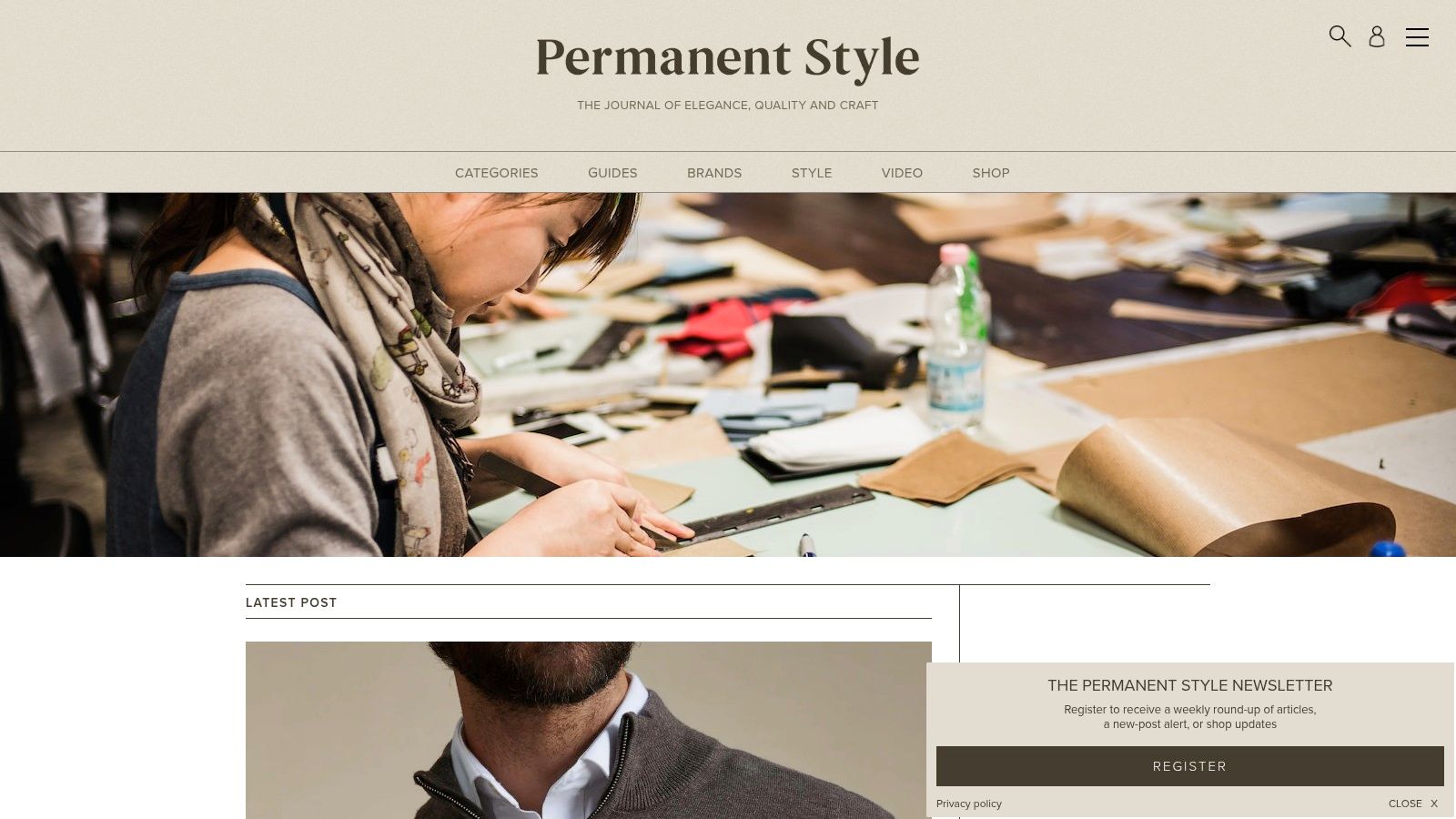
A premium menswear brand usually hits the same problem at some point. The product is objectively good, margins are healthy, and the campaign still stalls because the creator can show the item but cannot justify the price. Permanent Style solves that specific problem better than almost any broad menswear blog.
Simon Crompton's audience is trained to evaluate construction, cloth, fit, provenance, and durability. That changes the job of the partnership. Instead of forcing a luxury product into an awareness-first placement, a brand can use the platform to answer the questions that block purchase.
That makes Permanent Style a strong fit for made-to-measure tailoring, premium shoes, leather goods, knitwear, watches, and refined accessories. Brands in adjacent categories can also benefit if the product has a clear quality story and a buyer who wants reassurance before checkout. For teams planning collaborations in adjacent premium categories, the same logic applies to creator marketing for jewellery and accessories brands.
The commercial upside is depth. A strong feature on Permanent Style can keep shaping consideration long after publication because readers return to detailed guides and reference pieces during the buying process. That is useful if your sales cycle is measured in weeks or months, not hours.
The trade-off is speed.
This is rarely the right partner for trend-led launches, youth positioning, or products that depend on impulse. If the item wins on novelty, scarcity, or short-term hype, the audience-content fit weakens quickly. If the item wins on craftsmanship and longevity, the fit gets much stronger.
A practical shortlist for brand managers:
Best for high-consideration products: The audience is more likely to compare quality signals before buying.
Best for education-led campaigns: Articles can explain materials, factory standards, fit decisions, and price logic in a way short social posts usually cannot.
Best for long-tail influence: Search visibility and archive value matter here.
Weaker for mass-market volume plays: Brands chasing broad reach at low CPM will usually find better options elsewhere.
Use Permanent Style when your product needs context to convert.
Measurement needs a different setup too. Last-click reporting will understate the value of a publisher like this because buyers often research, leave, compare options, and return later through direct traffic, branded search, or a retailer. Teams should plan tracked links, assist-conversion reporting, and post-view analysis before launch. If you only judge the placement on immediate clicks, you will price the partnership incorrectly.
That is also where the broader operating model matters. For premium apparel campaigns, a framework like influencer marketing for fashion and apparel brands helps connect editorial storytelling to revenue signals your team can report on.
2. Man For Himself
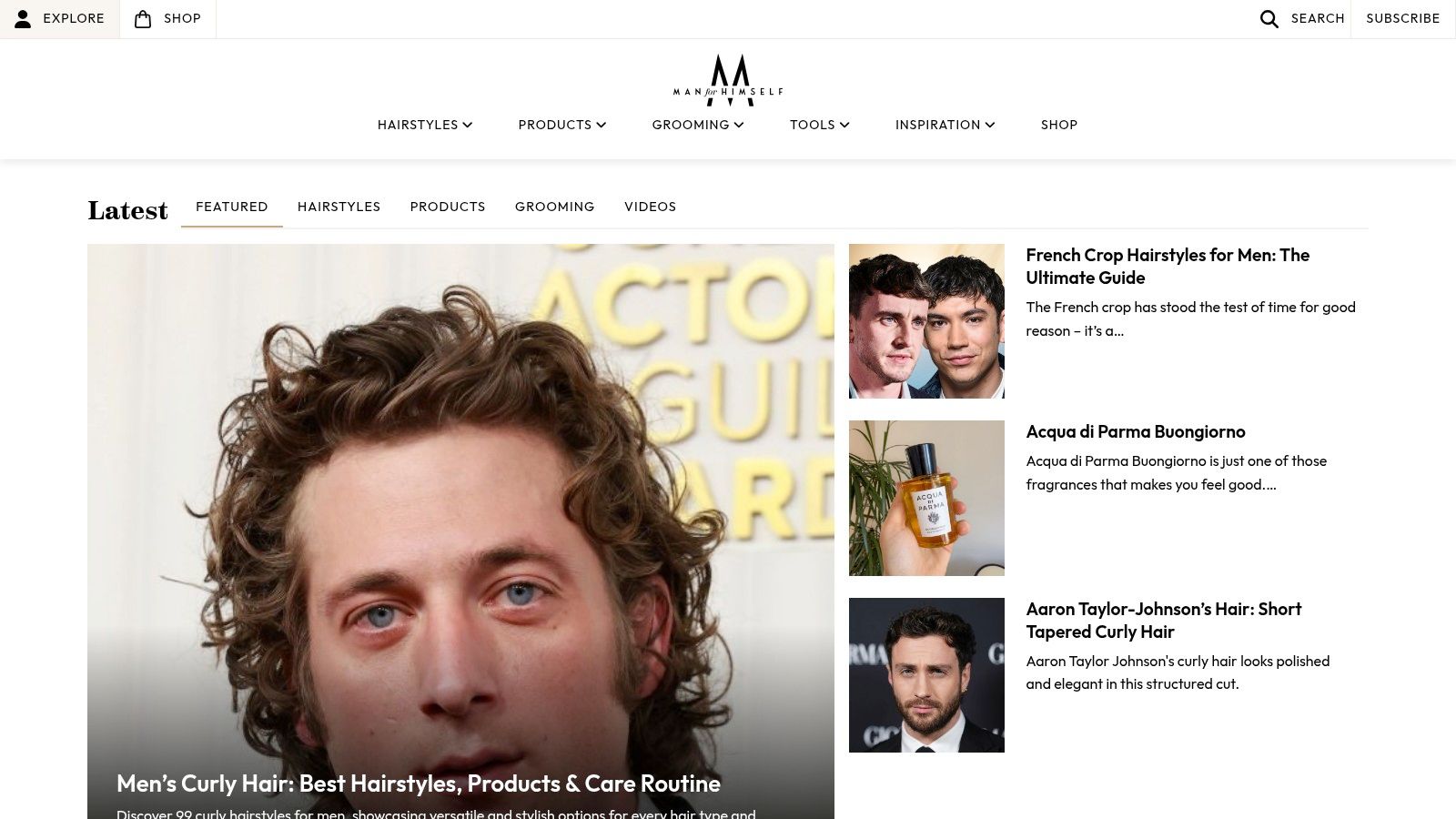
A customer searches how to style thinning hair, fix a beard routine, or choose a fragrance that does not feel generic. They land on Robin James, not because they want fashion inspiration in the abstract, but because they want a specific answer and a product that solves the problem. That intent changes the value of the placement.
Man For Himself is strongest for brands selling self-presentation products with a clear use case. Grooming, haircare, fragrance, jewellery, sunglasses, bags, and accessible accessories fit the environment well because the content already frames the purchase decision. For brand managers, that matters more than broad reach. The audience is warm, the product context is built in, and the path from content to click is usually easier to track.
The commercial edge here is utility. Reviews, tutorials, hairstyle breakdowns, and product explainers create natural placements for affiliate links, tracked URLs, promo codes, and retailer handoffs. A polished campaign can still underperform if the creator only delivers mood and aesthetics. Robin's format gives buyers a reason to act.
That does not make him a universal fit. Formal tailoring, luxury footwear, and heritage menswear labels may struggle if they need status signalling, occasion dressing, or craftsmanship-led storytelling. This audience is more solution-driven than image-driven.
A practical read on collaboration fit:
Strong for routine-based products: Items that become part of daily grooming or finishing rituals usually integrate without friction.
Strong for conversion-focused education: Demonstration content can answer objections before the customer reaches the product page.
Strong for accessories with a clear role: Sunglasses, chains, bags, and fragrance perform better here than statement fashion pieces that need heavy styling context.
Weaker for prestige positioning: Brands selling aspiration first may find the environment too functional.
There is also a channel mix advantage. Robin is not just publishing for social engagement. He operates across search-led content, YouTube, and editorial, which gives brands multiple ways to capture demand at different points in the decision cycle. Teams planning these campaigns should compare blog-first creators with broader Instagram influencer options for product-led campaigns, especially if they need both discoverability and trackable action.
If your category lives in accessories rather than full outfits, creator marketing for jewellery and accessories brands is a better planning lens than generic fashion outreach. Man For Himself shows why. The right creator does not need to be fashion-first. They need to sit close to the buying trigger.
3. Ape to Gentleman
Ape to Gentleman works like a conversion bridge. It doesn't carry the same single-founder authority as a specialist blog, but it does something commercially valuable. It takes broad menswear, grooming, and lifestyle interest and packages it into practical guides that are easy for brands to plug into.
That makes it one of the better fits for mid-tier and premium brands that need a mix of discovery and shopping intent. Capsule wardrobe articles, footwear guides, outerwear explainers, fragrance features, and seasonal shopping content all create multiple entry points for products without forcing the editorial.
Useful when buyers need direction
Some men fashion bloggers win because people follow the person. Ape to Gentleman often wins because readers follow the problem being solved. What coat should I buy? Which shoes work with smart-casual? How do I build a better wardrobe? That editorial structure is commercially efficient.
The upside is obvious. Buyers can move from inspiration to product consideration in the same session. The downside is also real. Magazine-style platforms can blur the line between editorial and sponsored recommendations if the integration isn't handled carefully.
Pick Ape to Gentleman when you need contextual product placement inside buyer-oriented content, not founder-led endorsement.
A practical test helps here. If your product benefits from comparison, explanation, or a “best options for” style framing, this platform is worth exploring. If your campaign depends on a creator's personal story or highly distinctive individual taste, a single-author blog may carry more weight.
For teams thinking heavily about Instagram-led creator discovery, influencers for Instagram is a useful operational complement. Ape to Gentleman can handle the editorial shopping layer, while Instagram creators can handle repeat exposure and content volume around the same campaign theme.
4. MenswearStyle UK
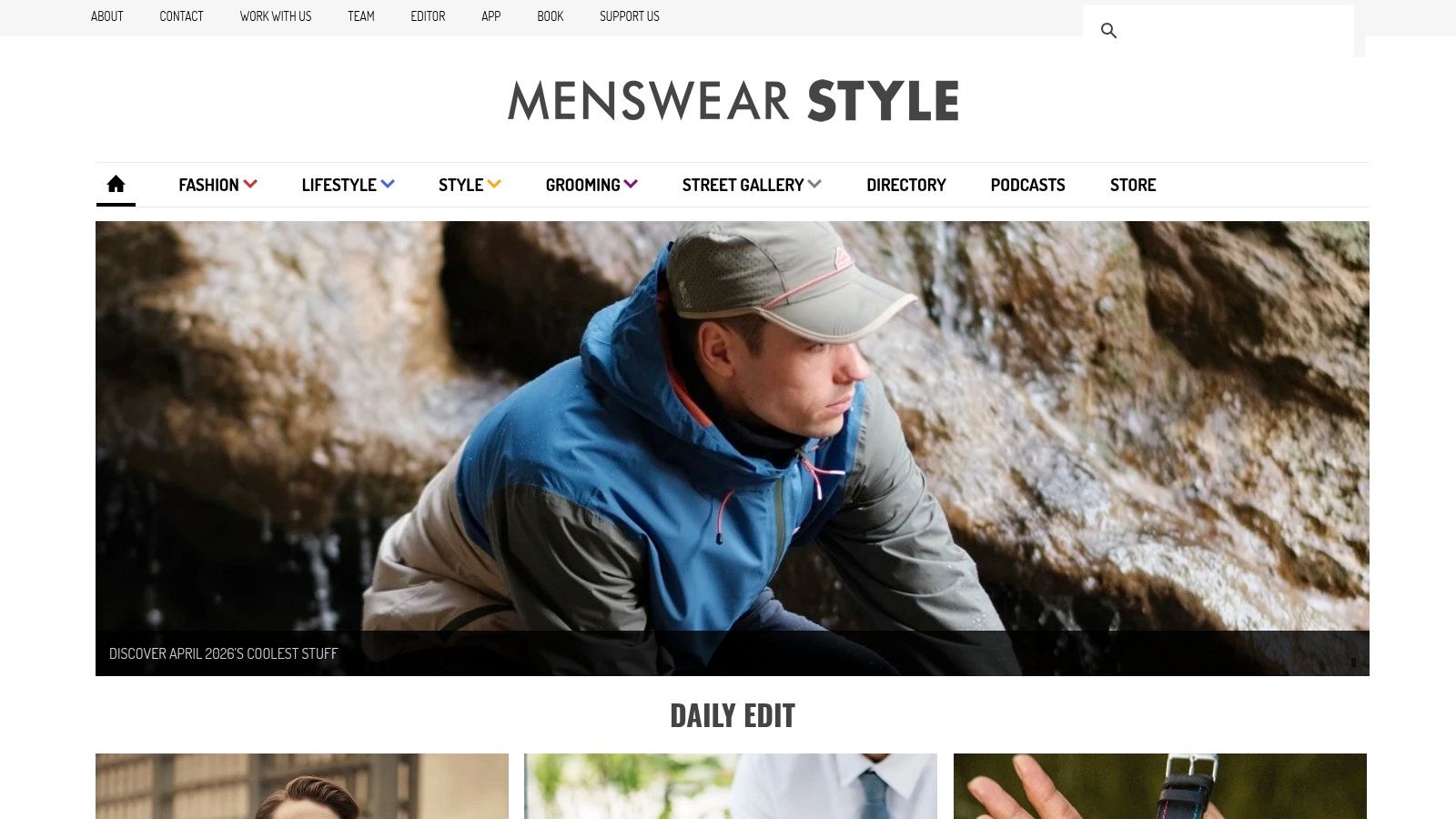
MenswearStyle fits brands that need repeat visibility across several editorial angles, not a single founder-led recommendation. If the brief is launch support, category presence, and enough content volume to test what drives clicks, this is a practical UK option.
The commercial appeal is straightforward. MenswearStyle covers fashion, grooming, lifestyle, and seasonal shopping topics at a pace that gives marketers more than one shot to place a product in front of the same audience. That matters for campaigns where one article will not do the job.
For brand managers, the key question is fit. This platform works best for accessible menswear, DTC products, gifting campaigns, and retail promotions that benefit from broad relevance rather than specialist authority. A versatile publication can create more entry points into the funnel, but the endorsement will usually feel lighter than it does on a personality-driven blog.
Best used as editorial distribution with commerce intent
Treat MenswearStyle like a media partner with shoppable potential. The value comes from format range and publishing frequency, which makes it easier to match the creative to the buyer stage.
Strong use cases include:
Collection launches: Trend-led features and product round-ups can give a new release timely context.
Direct-response testing: Commerce-friendly placements make it easier to track which headlines, hooks, or product categories convert.
Seasonal retail pushes: Occasion-based content gives campaigns a natural reason to run without forcing the integration.
There is a trade-off. Broad editorial coverage gives you scale across topics, but it can dilute the authority you get from a narrower specialist or a creator with a highly defined point of view. That is usually a fair exchange if the goal is reach, repetition, and measurable product discovery.
Use MenswearStyle when the campaign needs coverage across multiple categories and a clear path from editorial exposure to shopping behaviour. If the product needs deep technical validation or a strong personal endorsement, another creator type will often perform better.
5. Grey Fox Blog
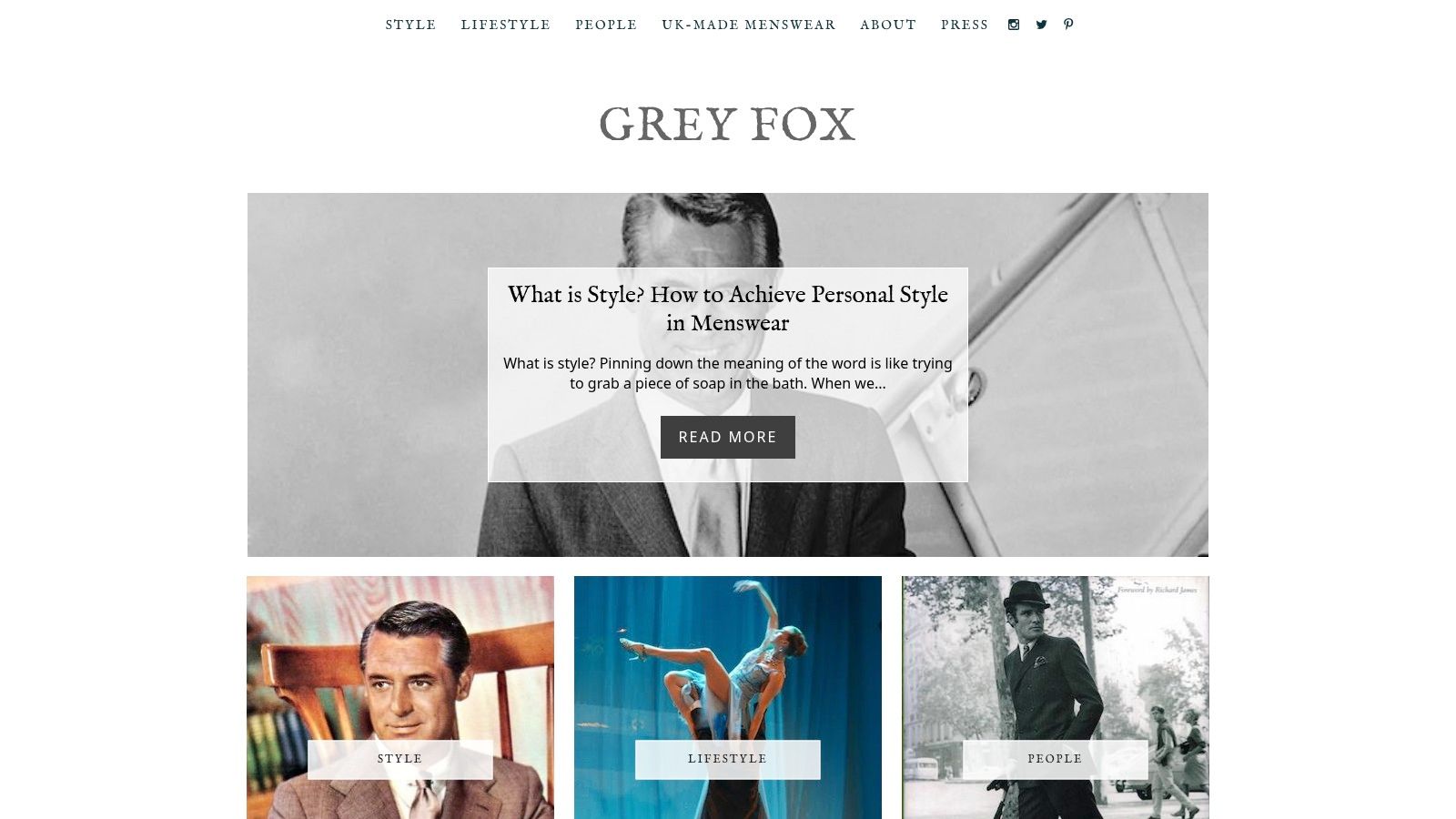
A common briefing scenario goes like this. The brand wants men 40+ with higher spending power, but the shortlist is filled with younger creators who drive attention rather than purchase confidence. Grey Fox Blog fits the gap because David Evans speaks to a mature buyer who cares less about trend participation and more about quality, longevity, and whether the product earns its price.
That audience definition is the commercial value.
Grey Fox Blog is strongest when the campaign needs trust with older menswear customers, especially in categories where fit, fabric, provenance, and durability affect conversion. British brands, heritage labels, knitwear, outerwear, footwear, watches, and well-made accessories all sit naturally in this environment. Sustainability can work too, but only when it is supported by real production detail rather than broad brand messaging.
The content style matters here. Evans does not sell aspiration in the same way a lifestyle-heavy creator does. He sells reassurance. For brand managers, that changes the collaboration brief. The best placements give readers enough substance to justify a considered purchase.
Formats that usually perform well include:
Factory visits and production features: Useful for brands with a credible manufacturing story.
Sponsored editorials with product context: Better for conversion than a glossy mention with little explanation.
Brand stories tied to craftsmanship or provenance: A strong fit when the product has a clear reason to cost more.
There are clear limits. Grey Fox Blog is a poor fit for hype-led drops, youth-coded streetwear, or campaigns that rely on fast social momentum. The audience is narrower, and the creative needs patience. But that trade-off can improve efficiency if your margin sits in fewer, better-informed purchases rather than broad awareness.
Older male buyers often need proof before action. Materials, construction, country of origin, and real-world wearability do more work here than polished slogans.
Grey Fox Blog will not give you scale. It can give you audience precision, stronger message match, and a cleaner route to conversion when the buyer profile is mature and deliberate.
6. Carl Thompson
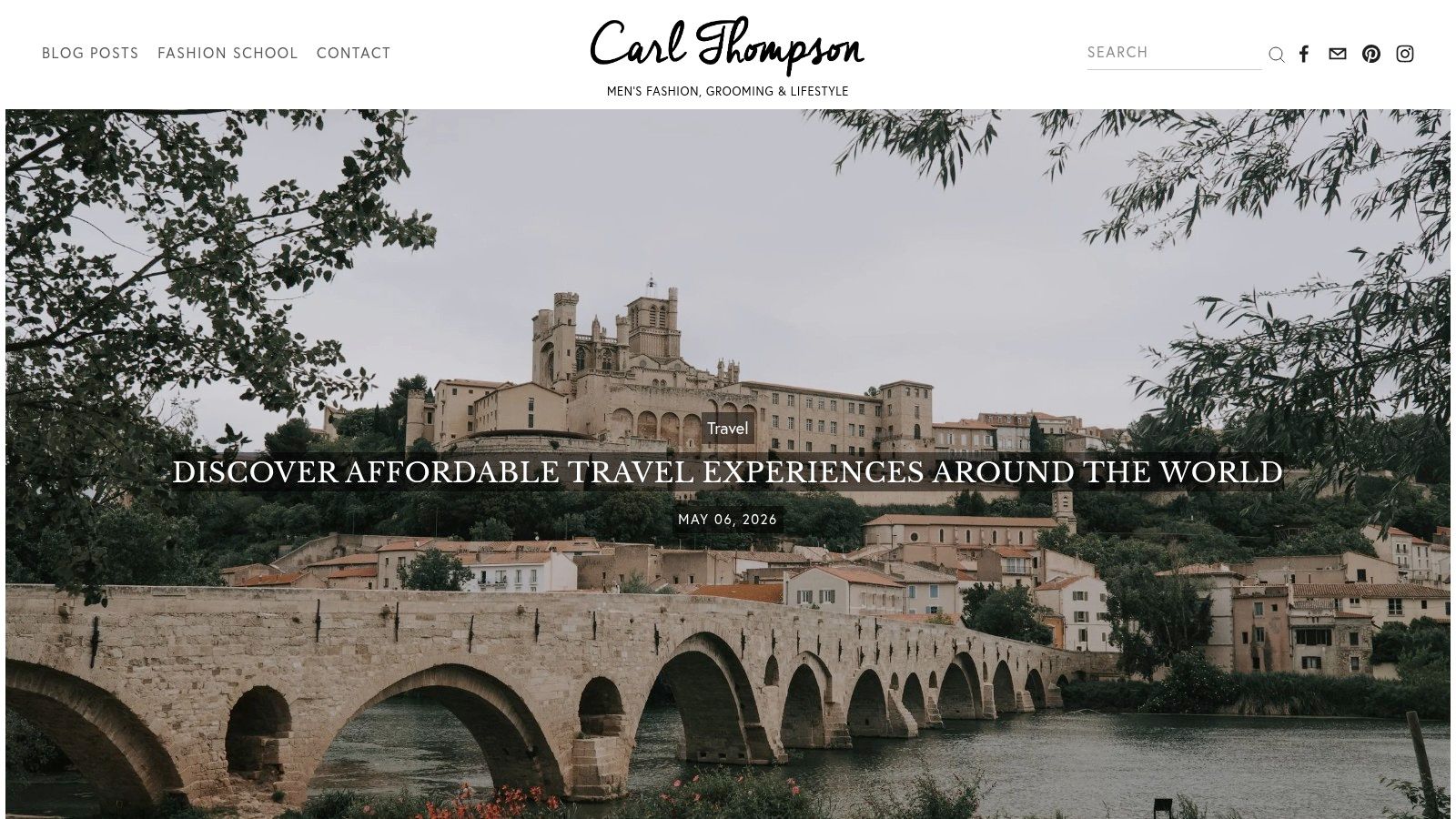
A brand wants menswear content that can live beyond a single outfit post. The brief needs to work across social, email, paid creative, and a landing page without feeling forced. Carl Thompson is useful in that setup because his content sits at the intersection of style, business, grooming, travel, and London lifestyle.
For brand managers, that creates a specific advantage. Thompson is less about technical garment analysis and more about commercial context. He can show how a product fits into work, weekends, events, restaurants, short-haul travel, and city routines. That usually gives campaign teams more usable angles than a narrower menswear creator.
Best for multi-channel lifestyle campaigns
His founder background with Hawkins & Shepherd adds weight to branded content. Audiences tend to trust product opinions more when the creator has operated inside the category and understands what goes into selling menswear, not just wearing it.
That makes him a practical fit for campaigns tied to:
Smart casual and occasionwear
Urban professional style
Grooming, watches, and accessories
Hospitality, venues, and location-led partnerships
There is a trade-off. If the campaign needs detailed commentary on cloth, construction, or heritage manufacturing, a more specialist menswear voice will usually do that job better. Thompson performs better when the goal is broader brand storytelling with a clear commercial use case.
That also changes how to brief the partnership.
Ask for asset reuse rights early, define channel deliverables before production starts, and plan from day one where the content will be repurposed. His strongest value often comes from content that can be reused in newsletters, retargeting ads, paid social, and product detail pages because it already feels native to an aspirational but attainable customer journey.
7. The Gentleman's Journal UK
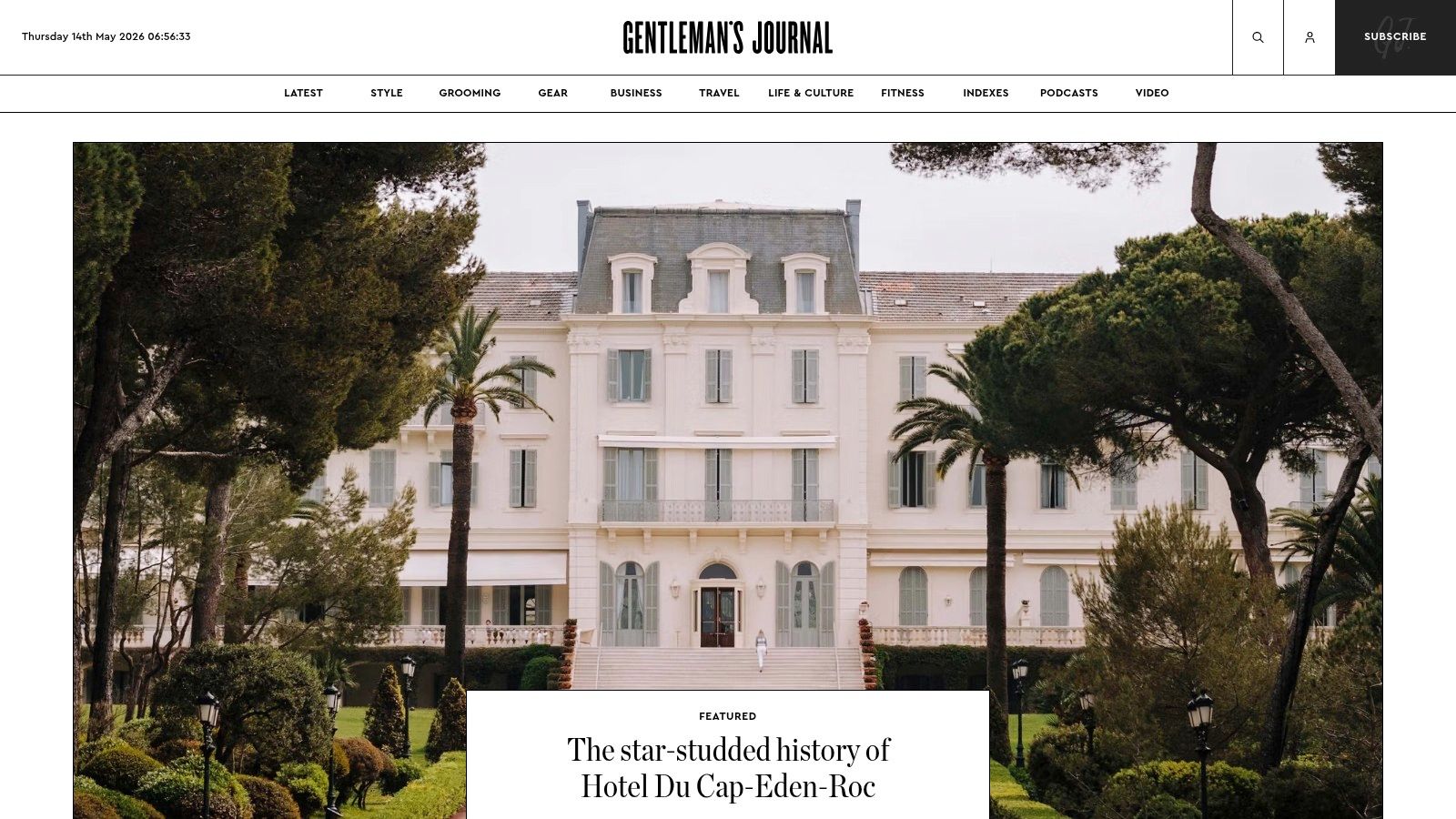
A brand manager launches a premium campaign, secures strong reach, and still struggles to prove commercial impact. That usually happens when the placement looks luxurious but the audience, buying intent, and campaign structure were never aligned.
The Gentleman's Journal is useful because it gives premium brands access to an affluent editorial setting with broader lifestyle relevance than a typical menswear creator. The title covers style, entrepreneurship, cars, travel, grooming, culture, and events, which gives marketing teams more than one route into the same customer. For the right product, that breadth can increase campaign efficiency because one partnership can support awareness, consideration, and hospitality-led relationship building.
The fit is strongest for brands already priced and positioned for a luxury audience. Tailoring, watches, luggage, premium grooming, private travel, hotels, and high-end consumer services all make sense here. The environment does part of the qualification work for you. A product placed beside luxury travel, business coverage, and event content starts with more perceived credibility than it would in a mass-market feed.
That does not remove the need for discipline.
Publication-led partnerships often look polished on the surface, but performance depends on how the deal is structured behind the scenes. Ask early how sponsored placements are distributed, what audience segments will see the content, whether social support is included, and what reporting will be available after launch. If the package includes events, get specific on guest profile, attendance expectations, capture rights, and post-event content usage. Those details determine whether the spend behaves like a branding exercise or a measurable acquisition channel.
The Gentleman's Journal is less useful for products that need heavy education, price justification, or aggressive conversion mechanics. Its strength is brand association and premium context, not hard-sell persuasion. If the offer only works after deep product explanation or repeated promotional messaging, a specialist creator or search-led publisher will usually convert more efficiently.
Use it when the product already belongs in the room. If the campaign has to manufacture luxury positioning from scratch, the media buy will be expensive and the lift will be limited.
Top 7 Mens Fashion Bloggers Comparison
Publisher | Implementation complexity 🔄 | Resource requirements ⚡ | Expected outcomes 📊 | Ideal use cases 💡 | Key advantages ⭐ |
|---|---|---|---|---|---|
Permanent Style (Simon Crompton) | High, long-form investigative pieces, factory visits | Moderate–High, premium fees, product samples, time for bespoke activations | Strong brand credibility and long-term conversions | Bespoke/MTM, heritage footwear, premium apparel activations | Authoritative, evergreen content, loyal readership |
Man For Himself (Robin James) | Medium, tutorial-led content and video production | Moderate, video and UGC management, review samples | High intent traffic for grooming with trackable conversions | Grooming CPG, salons/barbers, haircare launches | Practical tutorials, strong search/video footprint |
Ape to Gentleman | Medium, SEO-driven guides and regular editorial cycles | Moderate, editorial effort for buyer's guides and shopping content | Good purchase-driven traffic; guides move readers to buy | Mid‑to‑premium brands seeking shopping-oriented content | Balanced coverage, SEO-friendly shopping guides |
MenswearStyle (UK) | Medium–High, daily publishing across formats | High, frequent content, podcast production, shoppable integrations | Broad reach with measurable commerce uplift and social reach | DTC brands, accessible fashion, UK retail launches | Large audience, multi-format distribution, clear collaboration paths |
Grey Fox Blog (David Evans) | Low–Medium, niche, steady cadence focused on 40+ audience | Low, sponsored posts, shoots, targeted collaborations | High average order value potential; strong brand trust | Heritage British brands, knitwear, footwear, sustainability stories | Distinct underserved demographic, credibility with heritage labels |
Carl Thompson | Medium, multi-channel lifestyle storytelling and shoots | Moderate, creator fees, on-site shoots, flexible formats | Good engagement with urban/professional audiences | Lifestyle storytelling, founder-led collaborations, events | Founder-level credibility, flexible creative formats |
The Gentleman's Journal (UK) | High, subscription model, paywalled content and events | High, premium editorial fees, event programming, fulfilment | High-impact editorial and experiential ROI with affluent audience | Luxury/premium integrations, watches, events, membership activations | Affluent audience, events and experiential programming |
From Insights to Action
A menswear campaign goes off track fast when the wrong creator gets the brief. A heritage shoe brand pays for broad reach on a lifestyle profile, then wonders why traffic is high and basket value is weak. A grooming brand books a respected editorial platform, then expects creator-style code redemptions that were never the right KPI. The fix is usually not more spend. It is tighter matching between creator type, audience intent, and commercial goal.
The strongest programmes treat men fashion bloggers as distinct channel types, not one influencer bucket. Permanent Style can support trust and consideration for premium products that need expertise. MenswearStyle UK can help drive broader shopping traffic at scale. Grey Fox Blog can outperform larger names when the product is built for older, higher-value customers. That distinction matters more than follower count because it shapes how people buy, what they click, and whether they convert.
Briefs need the same level of precision. If the goal is revenue, ask for assets and placements built for purchase intent. That usually means tracked links, clear product framing, a defined call to action, and landing pages that match the creator's audience. If the goal is reusable brand content, structure the deal around usage rights, shot list, and format delivery from the start. Brands lose margin when they buy one thing and measure another.
Operations matter just as much as creator selection.
Once a team is handling prospecting, rate negotiation, approvals, links, promo codes, usage rights, reporting, and post-campaign analysis across several partners, manual workflows start to slow decision-making. Platforms such as Sup can support sourcing, outreach, tracking, and attribution so the team spends less time updating spreadsheets and more time improving offers, creative angles, and creator fit.
Measurement should stay simple enough to act on. Give each partner a unique code, a unique tracked link, and one primary job in the funnel. Use specialist blogs for authority and high-consideration products. Use utility-led publishers for shopping traffic. Use magazine-style titles for reach and brand lift. Use lifestyle creators for content that can be reused across paid and owned channels. The point is not perfect attribution. The point is a cleaner read on what to scale, what to cut, and where margin is generated.
That is how men fashion blogger partnerships start behaving like a real acquisition channel instead of a series of one-off tests. It is also the same commercial logic behind other creator monetisation models, including these ways creators can earn ad revenue.
If you're building a repeatable creator programme, Sup is built for that workflow. It helps teams source relevant creators, manage outreach, assign promo codes and UTM links, and keep reporting in one place so men fashion blogger partnerships can be judged on revenue, not guesswork.

Matt Greenwell
Share