You're probably in one of three situations right now.
You've run a few creator collaborations and can't tell which one drove sales. Or your team is buried in Instagram DMs, chasing local creators one by one. Or you've been told to “test micro influencers” and the brief still sounds like brand awareness, good vibes, and screenshots of likes.
That's where most micro influencer marketing programmes go wrong. The issue usually isn't creator quality. It's the system behind the campaign. If the goal is fuzzy, the creator match is lazy, and the tracking is an afterthought, you don't have a channel. You have a collection of posts.
The good news is that micro influencer marketing works well when you treat it like performance marketing with a human layer. For UK brands, the opportunity is obvious. Micro-influencer campaigns with clearly defined goals and audience-brand fit reached a median engagement rate of 8.1%, and 67% beat a 3x ROI benchmark, while poor fit cut conversions by 45%, according to this UK micro-influencer effectiveness study.
The rest is operational discipline. Clear briefs. Tight creator selection. Essential tracking. Fast follow-up. Reusable content. That's how restaurants, ecommerce teams, and multi-location chains turn creator campaigns into a repeatable revenue channel instead of a monthly experiment.
Building Your Micro Influencer Campaign Blueprint
A bad campaign usually starts with a vague brief and a spreadsheet full of creator names. Two weeks later, the team is arguing about fees, no one agrees on success, and tracking gets bolted on after posts go live. That is how brands end up with content, screenshots, and no clean read on revenue.
Set the operating model before you contact anyone.
The blueprint has three parts: the business outcome, the creator profile, and the budget structure. Get those right and the rest becomes much easier to run across a single restaurant, a DTC store, or a chain with multiple locations.
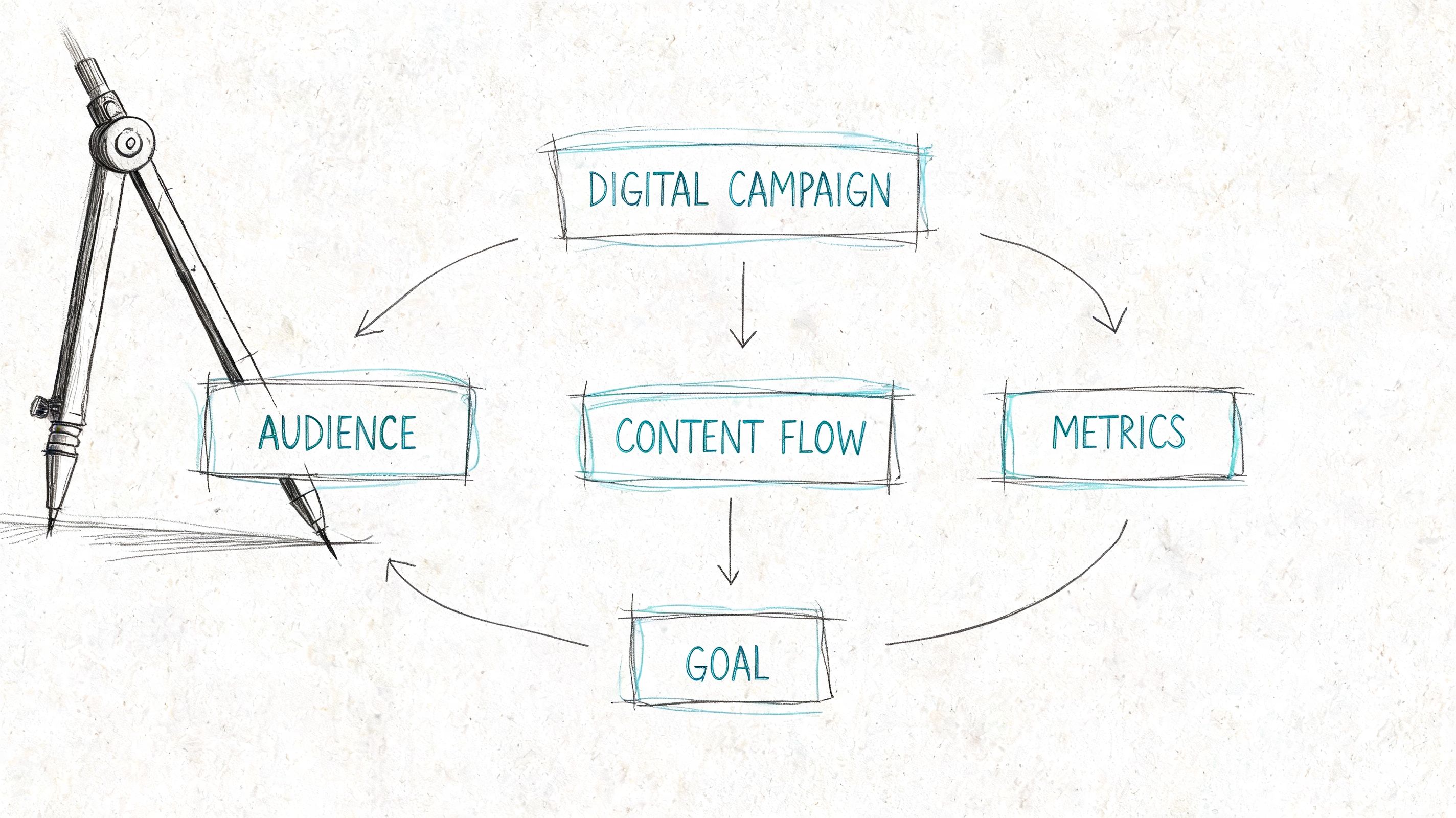
Start with the business outcome
“Awareness” is not a campaign goal. It is a side effect.
Pick the result the business needs. For restaurants, that usually means bookings, walk-ins, reviews, or redemptions tied to a specific offer. For ecommerce, it is usually first orders, repeat orders, average order value, or usable content for paid social. For multi-location chains, branch-level performance matters more than blended totals, because one strong site can hide weak execution everywhere else.
Write the KPI in language finance and operations will accept:
Restaurant launch push: booking code use, offer redemptions, review lift
Ecommerce product push: revenue from creator links, code-driven orders, cost per first purchase
Multi-location campaign: branch-specific redemptions, store visits, local content output by region
A simple rule keeps teams honest. If the metric cannot be tied to a till, checkout, booking form, CRM, or branch report, treat it as a supporting signal.
This matters even more once you scale. A single-location venue can get away with rough reporting for a month. A 20-site chain cannot. If every branch manager is reporting results differently, the programme turns into anecdotal feedback and “we think it worked”.
Build an actual creator profile
Follower count helps with filtering. It does not help with forecasting.
A useful creator profile should answer a few practical questions before outreach starts:
Where is their audience? Local relevance matters more than raw reach for restaurants and regional chains.
What kind of content do they post? Casual TikTok reviews, polished Reels, creator-as-customer content, offer-led posts, or routine-based product content all perform differently.
Do people respond with intent? Look for comments that show buying behaviour, local questions, tagged friends, saves, and requests for recommendations.
Is there a believable next step? Their audience should plausibly book, visit, order, or enquire without a huge leap.
I have seen teams waste days building detailed personas, then approve creators with the wrong geography, the wrong audience age band, or an engagement pattern that is all emojis and no purchase intent. Keep the profile short enough that someone can use it fast.
If you want a stronger filter for trust and content usability, Aicut's take on authentic marketing strategies is a useful reference. It aligns with what tends to work in practice: content that feels like a real customer recommendation usually travels further than polished sponsorship creative.
It also helps to benchmark against the right creator model. This analysis of why micro-influencers outperform macro-influencers with data is a good sanity check if someone internally is pushing for bigger names without a clear attribution case.
Budget for outputs and tracking
Creator budgets fall apart when the agreement is “one post” and nothing else is defined. The actual cost sits inside the details: content format, posting timeline, usage rights, revision limits, exclusivity, branch coverage, code setup, and reporting requirements.
That is why I budget by deliverables and tracking method, not by vibes or follower count.
Use a simple structure:
Campaign type | Best comp structure | When it works |
|---|---|---|
Local restaurant visit | Gifted meal plus tracked incentive | When the venue is visually strong and easy to visit |
DTC product push | Paid fee plus code-based commission | When you need reliable posting and sales accountability |
Multi-location chain | Flat fee with branch-specific tracking | When consistency matters across locations |
There is a trade-off here. Gifted campaigns can be efficient, but they often produce inconsistent output and slow posting. Flat fees give you control, but weak creators can still miss on sales. Hybrid deals usually work best when the goal is attributable revenue and a reusable bank of content.
Start with a test pool large enough to compare creators, not just prove that one person had a good week. Then reserve budget for a second wave. That second wave is where repeatability starts. You already know who can hit deadlines, follow the brief, and drive measurable action.
Finding and Recruiting the Right Creators
Recruitment often proves to be the most time-consuming aspect. They search broad hashtags, send copy-paste DMs, then wonder why replies are slow and results are mixed.
The fix isn't “more outreach”. It's better filtering before you write the first message.
Where to look without drowning in tabs
For restaurants and hospitality, start inside location tags and local search behaviour on Instagram and TikTok. Search the venue's area, nearby neighbourhoods, and adjacent venues. The best local creators often don't label themselves as “food influencers”. They post consistently about where they go.
For ecommerce, start with creators already discussing the category. Search product pain points, alternatives, “favourites” videos, routine content, and creators who already explain why they choose certain products. Those creators usually convert better than purely aesthetic accounts.
For multi-location chains, split discovery by branch cluster. Don't recruit one national lifestyle creator and expect local trust everywhere. A chain needs local proof in each catchment.
A useful side channel is your customer base. People already buying from you often make stronger micro creators than cold prospects. This playbook on how to turn customers into micro-influencers for your restaurant is especially relevant if you already have regulars posting organically.
Vet like a sceptic
A 2025 UK benchmark found templated outreach DMs had a 62% response rate, but campaigns also saw a 32% underperformance rate tied to influencer fraud where fake followers were above 15%, according to this UK benchmark on niche-market influencer effectiveness. Good outreach gets replies. It doesn't guarantee quality.
Use a short vetting checklist:
Check recent comments: Are people asking real questions or only dropping generic praise?
Check audience relevance: For local campaigns, are locals engaging?
Check posting rhythm: Consistency matters more than occasional viral spikes.
Check story behaviour if available: Many creators look strong on feed and weak in action.
Check sponsored content tone: If every ad reads like a script, performance usually suffers.
Most bad creator partnerships looked avoidable in hindsight. The warning signs were there in the comments, the audience geography, or the awkward brand fit.
Outreach that doesn't sound automated
Generic DMs fail because they put all the work on the creator. The creator has to guess what you want, whether there's budget, whether the offer is relevant, and whether you've even watched their content.
Use templates, but personalise the reason for contact.
Gifted collaboration script
Hi [Name], I'm with [Brand]. I found your content through your posts about [specific place/topic/style], and your recent [specific video/post] felt like the kind of genuine local recommendation people act on.
We'd love to invite you to try [product/meal/experience] and create content only if it feels like a fit after trying it. If you're open, I can send the details, what's included, and the simple posting requirements. We'd also set up a personal code so we can track any redemptions from your audience.
Interested?
Paid collaboration script
Hi [Name], I'm reaching out from [Brand]. Your content stands out because [specific reason tied to audience or format]. We're planning a paid collaboration around [offer/product/location] and think your audience is a strong fit.
The partnership would include [deliverables], a clear timeline, and a tracked link or code so we can measure results properly. If that sounds relevant, send over your rates or media pack and I'll share the brief.
Later in the process, it helps to align your team on what a good creator pitch sounds like in practice. This short video is a useful reset.
Mistakes that quietly kill response quality
Leading with your brand story: Creators don't need your origin story in the first DM.
Hiding the commercial terms: Say whether it's gifted, paid, or hybrid.
Sending huge briefs too early: First get interest. Then send the details.
Using the same message for everyone: Personalisation doesn't need to be long, but it does need to be real.
The best recruiters aren't charming. They're clear, quick, and specific.
Activating Your Campaign for Smooth Execution
Once a creator says yes, most of the risk moves into execution, leading to deadlines slipping, content missing the mark, and the team realises nobody set up tracking properly.
A clean activation process needs two things. A brief that removes ambiguity, and a tracking setup that exists before the first post goes live.
Write a brief people can actually follow
Bad briefs are either too vague or too controlling. If you give a creator one sentence, you'll get random output. If you give them a twelve-page script, you'll get stiff content.
A working brief covers the essential requirements and leaves room for the creator's natural format.
Include these points:
Core objective: one sentence only
Offer: what the audience gets, and why it matters now
Deliverables: for example, one TikTok, one Instagram story sequence, or one reel plus story frames
Mandatory mentions: product names, location, booking detail, launch date, code, link
Disclosure requirement: #ad or equivalent disclosure language in line with UK rules
Deadlines: draft date if required, posting window, follow-up window
Usage rights: where you can reuse the content and for how long
If the campaign is for a restaurant, add the operational details creators always need but brands often forget. Booking name, arrival instructions, who to ask for, what's included, and whether guests are allowed. Most no-show confusion starts here.
A strong brief protects performance without flattening the creator's voice.
Set up tracking before content goes live
This part is not optional. If the link and code are created after posting, the attribution is already compromised.
Keep the stack simple:
Create one UTM link per creator using Google's Campaign URL Builder or your analytics tool.
Create one promo code per creator in Shopify, WooCommerce, Square, your booking system, or your POS.
Name both consistently so your team can reconcile reporting later.
Log them in one sheet or dashboard with creator name, platform, post date, branch or product, fee, and deliverables.
Test the link and code yourself before sending the brief.
For restaurants, codes usually matter more than links because people often view content on mobile and redeem in person later. For ecommerce, use both. Links catch click-through behaviour. Codes catch delayed conversion and desktop purchases.
If you want to avoid stitching this together manually, teams often use a combination of Shopify, Google Analytics, Airtable, Later, and Slack. Some use a platform layer as well. Sup is one option for teams that want creator sourcing, outreach, campaign setup, codes, UTM links, and attribution in one workflow.
Keep the campaign moving after launch
Execution doesn't end when the post goes live. Most lift comes from disciplined follow-up.
Use a lightweight operating rhythm:
Day before post: confirm timing, tags, and code
Day of post: screenshot live content and verify link or code placement
Day after post: collect early comments, save UGC, ask for story analytics if relevant
End of campaign window: log results, payment status, and reuse rights
The teams that get repeatable results don't just “launch campaigns”. They run a small production system.
Measuring Attribution and Calculating ROI
The fastest way to make micro influencer marketing look ineffective is to measure it badly. Likes, views, and reach can tell you whether content travelled. They can't tell you whether the campaign paid for itself.
Attribution starts with accepting that creator campaigns often influence a customer across more than one action. Someone sees the post, visits the profile, clicks later, searches your brand, then buys two days after that. If your setup only records the first click, you'll undercount. If it records nothing beyond impressions, you're flying blind.
What to track that actually matters
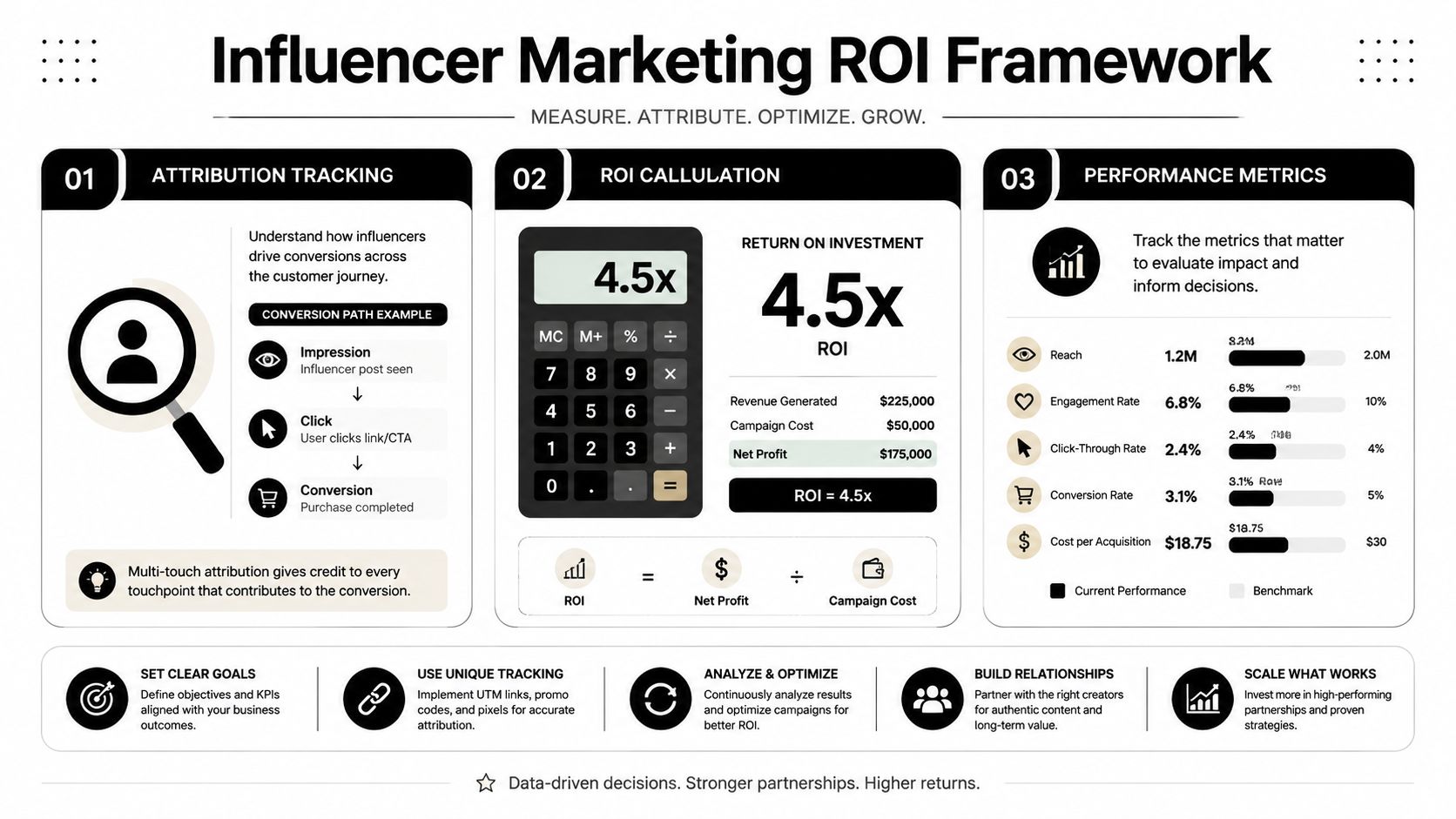
A 2025 UK report found only 22% of UK DTC brands and 18% of restaurants use trackable promo codes or UTM links, which leads to 40% underreported revenue. The same report found campaigns with proper tracking saw 2.7x higher ROI, averaging £4.50 return per £1 spent, according to this UK report on micro-influencer ROI tracking.
That gap is why attribution should be built around two signals:
Tracking input | What it tells you | Best use case |
|---|---|---|
UTM link | Clicks, sessions, assisted conversions | Ecommerce and bookings |
Unique promo code | Direct purchases or redemptions | Ecommerce, restaurants, in-store offers |
This matters even more when you're reporting upwards. Finance and ops teams don't care that a reel got strong comments if there's no clean line to revenue, bookings, or footfall.
A practical ROI formula
Use one formula across every campaign so comparisons stay clean.
ROI formula: (revenue attributed to the campaign minus campaign cost) divided by campaign cost
Campaign cost should include creator fee, gifted product cost if material, shipping, venue comp, and any paid amplification you layered on top.
Attributed revenue should come from:
UTM-linked purchases or bookings
Promo code redemptions
In-store redemptions tied to a named creator or branch campaign
For teams building tighter reporting habits, this guide on how creators track content marketing revenue is a useful companion because it treats measurement as an operational process rather than a vanity dashboard.
If you need a more channel-specific framework, this article on influencer marketing ROI and how to measure what actually works is useful for structuring reporting across creators, codes, and reuse.
How to read the results without fooling yourself
Don't rank creators only by sales volume. A creator with lower direct sales may still be valuable if they produce reusable UGC, drive cheaper assisted conversions, or perform strongly in one location where you need demand.
Also separate three things in your reporting:
Direct response: tracked purchases, bookings, redemptions
Content value: assets you can reuse in ads, email, landing pages, or social
Local lift: branch-level footfall or enquiry movement where direct ecommerce attribution isn't the whole story
That's how you avoid killing good creator relationships just because they don't fit a simplistic last-click report.
Scaling Your Micro Influencer Programme
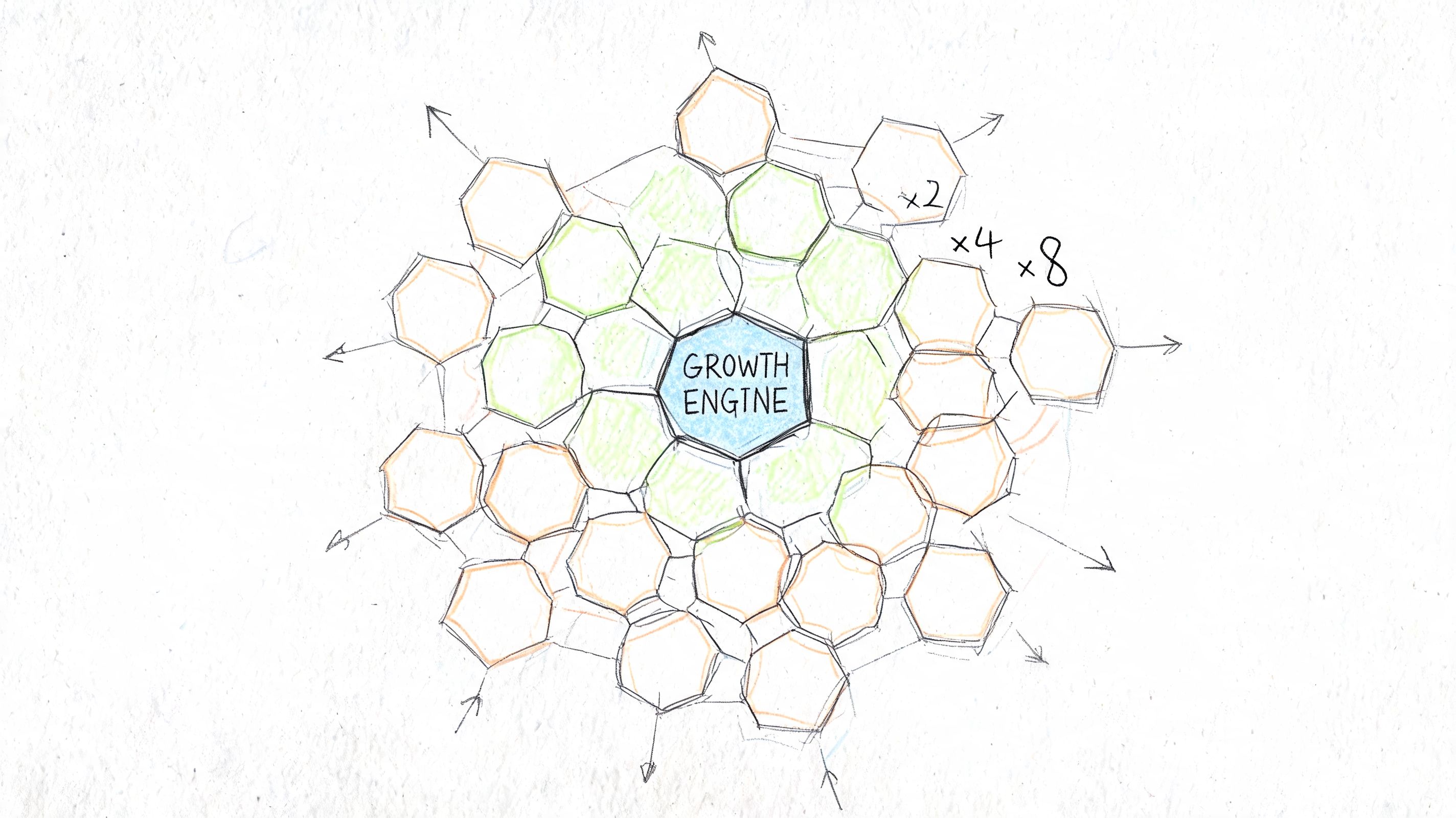
Scaling doesn't mean sending more DMs. It means turning one-off wins into a repeatable operating model. The shape of that model changes depending on whether you sell online, sell locally, or manage multiple branches.
The easiest way to understand this is through three common scenarios.
The DTC brand that stops treating creators like ad hoc freelancers
A DTC team usually starts with scattered product sends. A few creators post. A few don't. Nobody knows who deserves a second brief.
The more durable model is an always-on roster. Keep a small active group of creators, track them consistently, and rebook based on conversion quality, not just aesthetics. The roster usually includes a mix of reliable sellers, strong UGC creators, and niche voices with unusually good audience trust.
What changes at scale is cadence. Instead of launching from zero each month, the team runs recurring drops, seasonal pushes, product tests, and affiliate-style incentives on a stable base of creators. That's much easier to forecast and much easier to improve.
The restaurant that builds a local ambassador loop
For a restaurant, the smart play is usually not “go bigger”. It's “go more local, more often”. One local creator visit can work. A small network of recurring local creators works better because the content feels familiar rather than staged.
A strong local loop looks like this:
invite creators who are local
tie each collaboration to a bookable offer or redemption prompt
schedule around menu launches, events, quieter weekdays, or new openings
reuse the best content across Instagram, TikTok, and paid retargeting
This is especially relevant for operators who need footfall, not just online buzz. Hyper-local campaigns for UK franchises have already shown what that can look like at scale. A 2024 analysis of 150 UK franchises found a 28% increase in footfall from hyper-local micro-influencer campaigns, delivering £11 ROI for every £1 spent, tracked through in-store promo code redemptions, as covered in this analysis of UK franchise micro-influencer results.
If you run physical locations, local trust usually beats broad reach.
For brands outside hospitality but still reliant on local service demand, some of the same mechanics apply. This comprehensive guide for home service businesses is useful because it shows how local acquisition channels become stronger when the offer, geography, and tracking stay tightly aligned.
The multi-location chain that organises by branch, not brand page
Chains often try to centralise too much. Head office approves creators nationally, but customers buy locally. That disconnect weakens results.
The scalable version is hub-and-spoke. Central team controls the framework, branch-level creator pools supply the relevance. Each branch or territory gets local creators, branch-specific codes, and a light operating playbook that head office can monitor without micromanaging every post.
A simple scaling system for chains includes:
one shortlist standard for vetting
one brief template with local fields
one reporting format across every branch
one content library so top-performing UGC can be reused centrally
That's the point where micro influencer marketing stops being a social task and starts behaving like a growth channel.
Common Pitfalls and How to Avoid Them
It's often assumed that the biggest risk is picking the wrong creator. It isn't. The bigger risk is assuming the campaign will run smoothly once the creator agrees.
Run a pre-mortem before every campaign. Ask where this could fail in practice.
The failures that show up again and again
Ghosting after gifting: Product-only deals can attract opportunists. Protect yourself with a simple written agreement, a clear acceptance step, and a shortlist that favours creators with a visible history of collaborations.
Off-brand content: If the creator had too much freedom, that's on the brief. If they had no freedom, the content will look stiff. Give boundaries, not scripts.
Missed deadlines: Late posting usually comes from vague timing and weak follow-up. Set a posting window and confirm it twice.
No rights to reuse UGC: If usage rights aren't agreed up front, your paid social team can't touch the content later.
Confused disclosure: If #ad requirements are fuzzy, creators improvise. That creates compliance risk and weakens trust.
Good campaigns rarely collapse from one dramatic mistake. They leak value through small preventable failures.
The practical fix is boring and effective. Tighter agreements. Better creator vetting. Cleaner briefs. Faster follow-up. A shared reporting sheet. That's the work teams frequently skip because it isn't glamorous. It's also the work that makes micro influencer marketing profitable.
If you want a cleaner way to run this without juggling spreadsheets, DMs, codes, and reporting across tools, Sup helps teams launch and manage attributable creator campaigns for restaurants, ecommerce brands, agencies, and multi-location chains with built-in sourcing, outreach, tracking, and UGC collection.

Matt Greenwell
Share