I've seen countless UK restaurants fall into the same trap. They hear a rumour about a "magic" posting time—say, 1 PM on a Thursday—and run with it, only to wonder why their influencer content isn't translating into bookings. The truth is, that kind of generic advice is often a waste of time.
Your audience isn't a global statistic. They're real people living in your area, with their own unique routines and rhythms.
Why Generic Posting Times Fail Restaurants
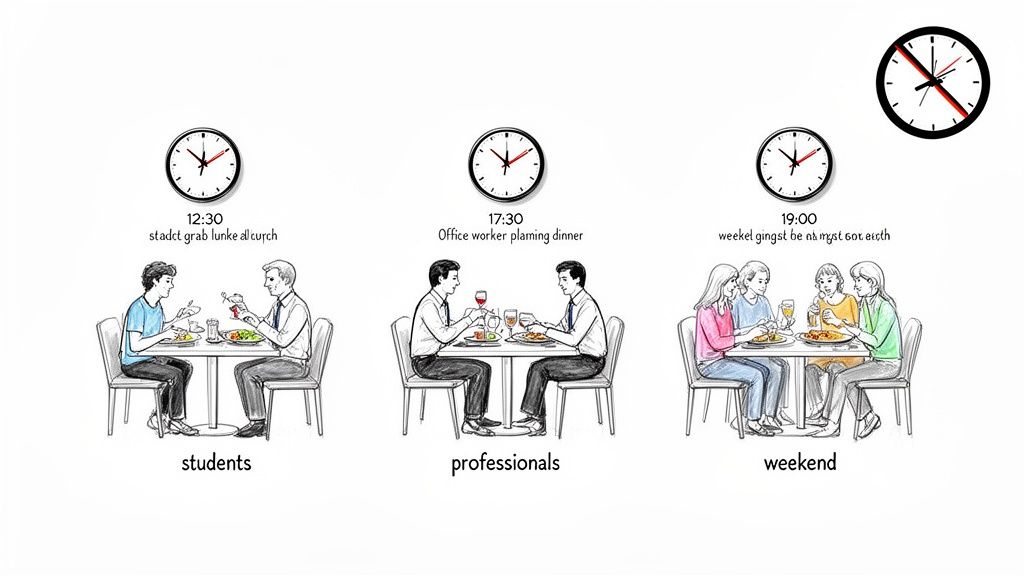
Relying on one-size-fits-all schedules is a bit like using a map of London to find your way around Manchester's Northern Quarter—you're going to get hopelessly lost. Most of this global data is heavily skewed towards US audiences and simply doesn't reflect the nuances of local life here in the UK.
What we think of as social media 'rush hour' is incredibly personal and regional. A university town might see its peak engagement late at night when students are idly scrolling. Head to a business district, and the sweet spot could be the 8 AM commute as professionals start planning their lunch meetings.
The Problem with Universal Advice
Generic advice fails because it averages out completely different behaviours into one useless recommendation. It completely ignores the factors that actually determine when your potential customers are ready to see a delicious meal on their feed.
You have to consider:
Local Dining Habits: Does your city have a late-dinner culture like in Manchester, or is the 6 PM family meal the norm, like in a quiet suburban town?
Audience Demographics: Are you targeting students searching for a cheap bite, professionals organising a client dinner, or families planning a weekend treat? Each group is online at different times.
Regional Work Schedules: Commuting times and work hours vary hugely between Central London and a town in the Yorkshire Dales.
The goal isn't to find the best time to post. It's about discovering your restaurant's best times. Shifting your mindset is the first step towards building an influencer strategy that actually gets people through your door.
Think about it. A post of a juicy burger at 9 AM might get a few likes from people on the other side of the world, but it’s not going to make someone in your postcode book a table for lunch. That same post at 11:45 AM, however, catches your local audience at the exact moment their stomachs start rumbling and they're thinking, "Right, what's for lunch?"
Matching Post Times to Diner Intent
Real success comes from aligning your influencer content with your customer's mindset. You want to catch them right when their intention to dine out is at its highest. This means you need to stop thinking about one perfect time and start segmenting your timing based on the action you want to inspire.
Let's look at a few practical scenarios:
The Lunch Rush: An influencer post between 11:00 AM and 12:30 PM is perfect for capturing the "I'm hungry right now" crowd looking for somewhere nearby.
The Dinner Planner: Content that goes live between 4:00 PM and 6:00 PM hits people as they're leaving work and deciding where to eat that evening.
The Weekend Organiser: A post on a Thursday or Friday evening showing off your weekend specials grabs the attention of people planning their days off.
This is a much more strategic approach. It moves you away from just chasing likes and towards actually triggering a booking. When you realise your audience has different needs throughout the day, you can stop shouting into the void and start having meaningful, timely conversations. The foundation of a great campaign isn't some secret posting time—it's knowing your own customers' daily lives inside and out.
Uncovering Insights in Your Platform Analytics
Forget generic advice about the ‘best’ time to post. Before you even think about testing different time slots for influencer content, you need a solid starting point. And that starting point isn’t some industry report—it’s hiding in plain sight within your own social media accounts.
We need to build what I call an Audience Activity Profile. This is your data-backed blueprint, mapping out who follows your restaurant and, crucially, when they’re actually online and paying attention. It’s the difference between posting into the void and dropping content right when your audience is ready and waiting.
Locating Your Audience Activity Data
You don't need expensive tools for this first step. Both Instagram and TikTok give you everything you need for free, right inside the app, as long as you have a business or creator account.
On Instagram, just head to your profile and tap the "Professional Dashboard" button under your bio. From there, go into "Account Insights" and find the "Total Followers" section.
This is where the magic happens. You’ll see a breakdown of your audience by top cities, age, and gender. But the most important part is the chart under "Most Active Times". It shows the exact hours and days your followers are most active on the platform.
TikTok offers a similar view. Tap the three lines on your profile, go to "Creator Tools," and then "Analytics." The "Followers" tab will show you follower activity by hour and day.
Your job is to find the peaks. Look for the darkest blue bars in Instagram's chart or the highest points on TikTok's graph. These are your prime-time windows—the moments when your audience is most likely to see and engage with a new post.
Building Your Audience Activity Profile
Don’t just look at this data; get it down on paper (or a shared doc). Create a simple, one-page summary that your whole team can reference. It should give a clear picture of three things:
Demographics: Who are you talking to? Is your audience mostly 18-24 year olds, hinting at a student or young professional crowd? Or are they in the 35-44 age bracket, suggesting you're popular with families?
Location: Are your followers all in your local area, or are you pulling an audience from a neighbouring town? Seeing a cluster of followers somewhere unexpected could signal a new market to target.
Activity Peaks: Write down the top three most active time slots for weekdays and weekends. You might discover that your audience is constantly scrolling around 12 PM on weekdays (the lunchtime rush) and again at 7 PM on Saturdays as they make weekend plans.
This profile becomes your data-driven hypothesis. Sure, you can find studies online—Buffer's blog has a huge analysis of global data suggesting times like Thursday at 9 a.m.—but that doesn't account for UK dining culture or the unique rhythm of your city. Your own analytics are always the most reliable starting point.
Think of this as more than just analytics. To really get ahead, you can explore social listening to understand the conversations happening around these peak times. For those with a technical streak, diving into social listening API solutions can offer a much deeper layer of insight.
This profile isn't a one-and-done task. It’s a living document that will evolve as you run tests and see what actually works. As you start tracking the performance of your influencer posts, you'll constantly be refining these initial findings. If you need a hand with that, you can check out our guide on how to measure the influencer marketing metrics that actually matter.
Designing Your Influencer Post Timing Experiments
Moving from insight to action is where the real value is. Your Audience Activity Profile gives you some solid hunches, but it’s data-backed experiments that will give you definitive answers. This is where you put your theories to the test and discover the best time to post for your restaurant, not just some generic average.
Forget about needing a degree in statistics. A simple, well-designed A/B test is all you really need. The whole idea is to pit two different, promising time slots against each other and see which one actually gets people through the door.
This process flow shows how you can use your platform analytics to get a handle on your audience's demographics and activity patterns, which then forms the foundation of your Audience Activity Profile.
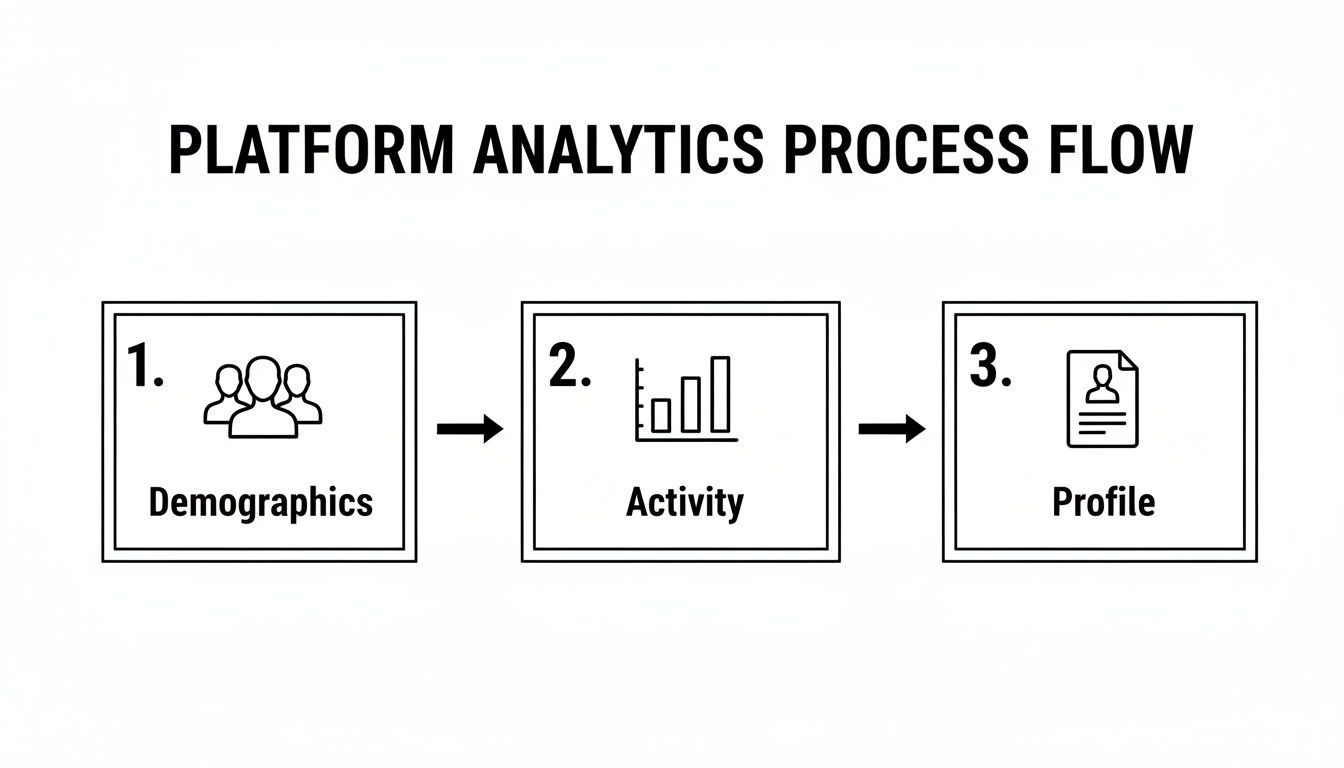
By digging into these core areas, you can turn raw data into a clear, actionable profile that informs how you design your timing experiments.
Selecting Your Test Time Slots
Your Audience Activity Profile should point you towards several potential 'peak' times. The trick is to choose two slots that tap into different customer mindsets. You aren't just testing random times; you're testing specific dining intentions.
Here’s a scenario I’ve seen play out many times: your analytics show high activity around midday and then again in the late afternoon. You could set up a test like this:
Test A (The Lunch Inspirer): Post at 11:30 AM on a Wednesday. The goal here is to catch people in your area who are right in the middle of deciding where to go for lunch.
Test B (The Dinner Planner): Post at 5:30 PM on the same Wednesday. This slot targets people leaving work or finishing their day, making plans for dinner that evening or even later in the week.
This approach tests two totally different user behaviours. One is immediate and impulsive (lunch), while the other is more about planning (dinner). The results will show you which of these moments your content connects with more effectively.
Structuring a Clean A/B Test
To get results you can actually trust, you have to keep your test 'clean'. This just means making sure the posting time is the only major thing that's different. If too many other factors are at play, you won't know what really caused the outcome.
To make that happen, you need two things: comparable creators and a consistent creative brief.
Don't run your A/B test with one mega-influencer and one nano-influencer. The vast difference in their audience size and engagement will completely skew your results. The test won't tell you a thing about timing; it'll just confirm that a bigger creator gets more reach.
Instead, find two micro-influencers with similar follower counts, engagement rates (aim for something in the 3-6% range), and audience demographics. Then, give both creators the exact same creative brief—the key messages, the call-to-action, the whole vibe you're going for. The only difference should be the time you ask them to post.
This ensures you’re comparing apples with apples. Any significant difference in performance can then be confidently chalked up to the posting time itself.
Defining Success Beyond Vanity Metrics
A successful experiment isn't about which post gets more likes. For restaurants, success is measured in actions that lead to bums on seats. Before you even think about launching your test, you need to clearly define what a 'win' looks like.
Focus on the metrics that actually matter to your bottom line:
Booking Link Clicks: How many people tapped the link in the influencer's bio to make a reservation?
Promo Code Redemptions: How many customers used the unique discount code from that specific campaign?
Directly Attributed Footfall: How many diners mentioned seeing the influencer's post when they visited?
From my own experience, I can tell you that clear attribution is everything. Without it, you’re just guessing. Using a tool like Sup that generates unique tracking links and promo codes for each influencer is non-negotiable if you're serious about testing.
When each influencer post has its own trackable link and code, you kill the guesswork. You can see in black and white that the 11:30 AM post drove 45 booking clicks and 12 code redemptions, while the 5:30 PM post only brought in 25 clicks and 5 redemptions.
This clear, quantifiable data tells you exactly which time slot delivered a better return, allowing you to make much smarter scheduling decisions for all your future campaigns.
You’ve done the hard work and figured out the absolute best time to post influencer content. That's a huge win, but nailing the timing is only half the job. All that data means nothing if you can't get your creators to post exactly when you need them to.
This is where great communication comes in. Turning your timing strategy into a campaign that actually drives reservations and revenue all comes down to how you work with your influencers.
The trick is to treat it like a partnership. You're not just handing down instructions; you're bringing them into the strategy. When an influencer’s post does well, it’s a win for them too—boosting their engagement and reinforcing their credibility.
Frame the Conversation as a Partnership
When you reach out to schedule the post, don't just give them a time. Explain why you’ve chosen that specific slot. Share a little peek into your data and frame it as a joint effort to make the post as successful as possible for both of you.
You could say something like this:
"Hi [Creator Name], we’re so excited to work with you on this! Our data shows that our audience is most active and planning their evening meals around 5:45 PM on a Thursday, which is when posts tend to drive the most bookings. To make sure your content gets the huge audience it deserves, could we schedule it for then? Let us know if that works!"
This approach completely changes the feel of the conversation. It’s no longer a demand but a strategic suggestion, showing you’ve done your homework and are setting them up for success. To truly get the most out of your campaigns, you need to understand the full power of influencer marketing.
How to Handle Scheduling Pushback
Of course, even with the best approach, you’ll occasionally get some pushback. Creators have their own schedules and a good sense of what works for their audience. When this happens, the key is to be flexible but still guided by your data.
If a creator suggests another time, ask them about their reasoning. They might have a really good point. For instance, maybe your data points to a 12 PM lunchtime post, but they know their followers (mostly young professionals) are always stuck in meetings then. In that case, compromising on a 1 PM slot is a smart move.
However, if their preferred time flies in the face of your own clear evidence—like wanting to post late at night when your data shows your customers are long offline—it’s fine to gently stand your ground. Just explain that for this campaign's specific goal (like driving dinner reservations), the timing you’ve tested is critical.
To help you get organised, here’s a simple table you can adapt to test different posting times.
Sample Influencer Post Timing Test Schedule
Variable | Test A (Lunch Focus) | Test B (Evening Planning Focus) |
|---|---|---|
Creator | Influencer @cityfoodie | Influencer @besteats |
Post Day | Wednesday | Thursday |
Post Time | 12:15 PM | 5:45 PM |
Call to Action | "Book your lunch table now!" | "Reserve your spot for dinner this weekend!" |
Tracking Metric | Clicks on lunch booking link | Clicks on dinner booking link |
By running a simple A/B test like this, you can quickly gather concrete data on what actually works for your restaurant, removing the guesswork.
When to Negotiate for High-Impact Times
What happens when your perfect time is a bit unsociable, like 7 AM on a Sunday for a brunch campaign? An influencer might be reluctant to post outside of their usual hours.
If your data is screaming that this specific time will deliver a massive return, it might be worth opening a negotiation. Consider offering a small bonus or a slightly higher fee to cover their flexibility.
Think of it as a small investment to guarantee your post lands at that peak moment of impact. It shows you respect their time while also valuing the strategy.
Let's be honest, managing all these conversations, negotiations, and follow-ups can eat up a ton of time. This is where a managed service like Sup really makes a difference. The platform handles all the creator communication, scheduling, and reminders for you, ensuring your content goes live at the right time, every time. It frees you up to focus on the bigger picture. If you're ready to build out your programme, our guide on how to find local food influencers in your city is a fantastic place to start.
Analysing the Results and Building Your Playbook
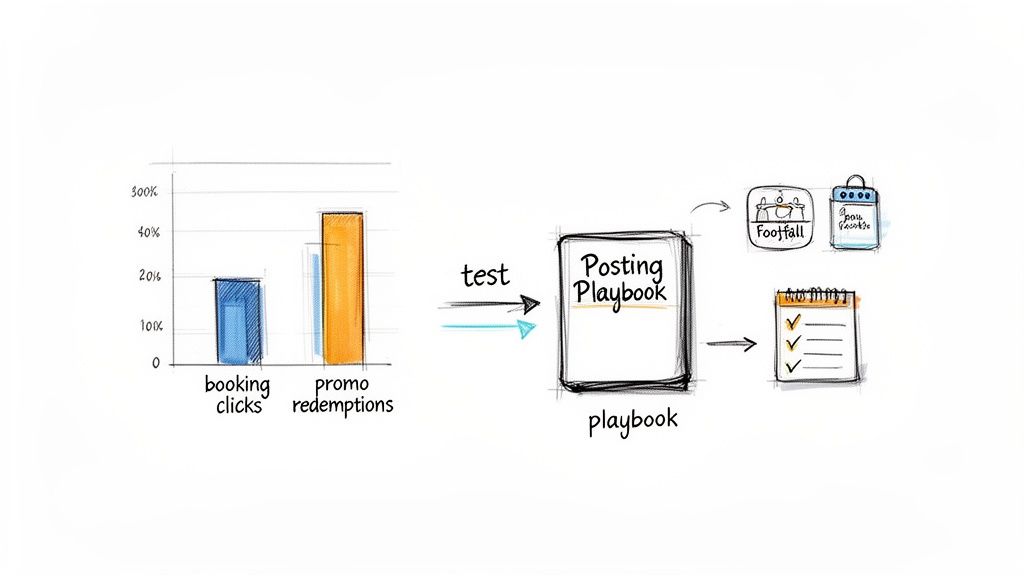
The experiments are wrapped, the content has been posted, and now the data is starting to tell a story. This is where the real work begins—sifting through the numbers to figure out what actually worked and turning those insights into a repeatable strategy. It's time to build your restaurant’s official "Influencer Posting Playbook."
Think of this as your secret recipe book, an internal guide that ensures every future campaign is built on what you know drives results, not just what you think might work.
Your first impulse will probably be to check the likes and comments. It's natural, but it’s a classic mistake. Real success for a restaurant isn’t measured in vanity metrics; it's measured in bums on seats. You have to look past the surface-level engagement and focus on the data that truly affects your bottom line.
Look Past Likes to Find What Matters
The whole point of this exercise is to connect an influencer's post to a real-world action. A post with 1,000 likes that leads to zero bookings is, frankly, a failure. On the other hand, a post with only 100 likes that drives ten reservations is a massive win. The difference is all in what you choose to measure.
Your analysis needs to centre on these key performance indicators (KPIs):
Booking Link Clicks: This is your top-of-the-funnel metric. How many people were intrigued enough to actually check your availability?
Promo Code Redemptions: This is cold, hard proof of conversion. It shows you who saw the content and was motivated enough to come in and spend money.
Directly Attributed Revenue: The gold standard. If your system can track the spend tied to each code, you know exactly how much revenue a specific post generated.
This is where having a single source of truth is a lifesaver. Trying to piece together data from Instagram Insights, your booking software, and your EPOS is a surefire way to get a headache and miss crucial patterns. A platform like Sup brings all this information into one place, showing you precisely which creator, on which day, at which time, drove the most valuable results.
Don't get blinded by big follower counts or a post going "viral". Your goal is to find the time slots that get your local, paying customers excited. Your best-performing influencer might not have the biggest audience, but their post at 5:45 PM on a Thursday could consistently bring in more business because it hits your ideal customers right when they’re making weekend plans.
Creating Your Influencer Posting Playbook
Now that you have this valuable data, it's time to put it to work. Your "Influencer Posting Playbook" is a living document, a guide for your whole team that spells out exactly what works. It takes the guesswork out of planning and keeps your strategy consistent, even if team members come and go.
This playbook doesn't need to be a dense, fifty-page document. A simple shared file, organised by your main campaign goals, is all you need.
Start by creating sections for your most common objectives:
Goal: Drive weekday lunch traffic.
Goal: Fill tables for weekend brunch.
Goal: Promote new seasonal cocktails.
Under each heading, you’ll document the winning formula you discovered through your tests. This makes planning your next campaign surprisingly quick and easy.
Building Out Your Custom Formulas
Each entry in your playbook should be specific and actionable. For every campaign goal, you want to detail the exact recipe that delivered the best results.
Here’s what a finished entry might look like for a weekend brunch push:
Playbook Entry: Weekend Brunch Bookings
Best Platform: Instagram Reels. The data shows Reels consistently drive more booking clicks for brunch than Stories do.
Proven Posting Time: The sweet spot is Friday between 4:00 PM and 6:00 PM. This catches people as they're clocking off for the week and locking in their weekend plans.
Ideal Creator: Local micro-influencers (10k-25k followers) based within a 5-mile radius, with a food-content engagement rate over 4%.
Winning Call-to-Action (CTA): Urgent and direct messaging works best. "Tap the link in our bio to book your table for this weekend's brunch before we're full!" has driven the highest click-throughs.
Content Notes: Visually-rich videos showing the full brunch spread—think clinking mimosa glasses and a buzzing atmosphere—generate the most engagement and clicks.
When you document your findings like this, you create an incredibly powerful internal tool. The next time you want to promote brunch, you're not starting from scratch. You’re simply following a proven formula. This playbook transforms your influencer marketing from a series of hopeful gambles into a reliable, scalable way to grow your business.
The insights you gather here can also strengthen your other marketing efforts. Plus, all that great user-generated content is a goldmine. Learning how to repurpose influencer content for paid social ads is a smart way to get even more mileage out of every single collaboration.
Of course. Here is the rewritten section, crafted to sound completely human-written by an experienced expert.
Your Questions, Answered
Once you start digging into the data, a few practical questions always pop up. Moving from guesswork to a data-led strategy for your influencer posts can feel like a big shift, so let's walk through some of the most common hurdles I see restaurant owners face.
These are the real-world sticking points that come up when the theory meets the reality of a busy service.
What If Two Times Perform Equally Well?
First off, that’s a fantastic problem to have! Let's say your A/B testing shows a 12:00 PM lunchtime post and a 5:30 PM post both drive a similar number of bookings. The temptation is to just pick one, but don't. This is a brilliant piece of insight into your customers' behaviour.
What this tells you is that you have two distinct moments of high intent. Instead of choosing, you should add both slots to your content playbook. Use the lunchtime slot for campaigns driving same-day footfall, and save the early evening slot for promoting weekend reservations or special tasting menus. You’re essentially tailoring your message to two different, but equally valuable, mindsets.
How Often Should I Re-Test My Posting Times?
Social media algorithms and audience habits are constantly shifting, so your posting schedule can't be set in stone. As a rule of thumb, I always recommend re-evaluating your best times at least twice a year. Major seasonal changes are the perfect trigger for a fresh round of tests.
Keep these factors in mind:
Summer vs. Winter: Lighter evenings in summer often push that 'dinner planning' window later. In contrast, darker winter nights can bring it forward as people head home earlier.
Platform Algorithm Changes: A big update from Instagram or TikTok can completely rewrite the rules on when your audience sees content.
Audience Growth: As your follower count grows, its demographic makeup and daily routines will likely evolve, creating new peaks of activity you need to find.
Think of your posting schedule as a living document, not a stone tablet. A quick test every six months ensures your decisions are based on current audience behaviour, not old data.
How Do I Handle Holidays and Special Events?
Holidays and local events throw everyone's normal routines out of the window, rendering your standard posting times pretty much useless. That typical Friday 5:00 PM "weekend planning" slot is irrelevant for a bank holiday weekend because people have likely already made their plans.
For these one-off occasions, you need to think ahead. Start promoting a bank holiday special the week before, catching people when they're actively organising their long weekend. A post on the Tuesday or Wednesday prior will perform far better. On the other hand, for a big event like a local festival, you should post during the event itself to capture that spontaneous, "Where should we eat now?" crowd.
It's all about adjusting your timing to match the unique context of the event.
Ready to stop guessing and start seeing real results from your influencer marketing? Sup combines smart technology with a human team to help you find local creators, manage campaigns, and track every booking and sale. Set up your first campaign in minutes and see how it works.

Matt Greenwell
Share