A micro-influencer is usually a creator with 10,000 to 100,000 followers who serves a defined niche and, in the UK, often delivers 3% to 5% Instagram engagement rather than the weaker engagement larger creators typically produce. More importantly for brands, that smaller audience often behaves like a performance channel, not just a reach channel.
The most popular advice on influencer marketing still pushes brands towards scale first. Bigger names, bigger follower counts, bigger splash. That advice sounds sensible until you have to explain spend against sales, bookings, code redemptions, or store visits.
For most ecommerce brands, restaurants, hospitality groups, and multi-location operators, the question isn't “who has the biggest audience?” It's “who can move a specific audience to act, and can we track it properly?” That's where micro-influencers stop being a nice add-on and become a core acquisition and retention lever.
Beyond Follower Counts The Rise of the Micro Influencer
Big creators are often the least accountable line item in the budget.
The old playbook treated influencer marketing like rented reach. Pay for a large audience, get exposure, report on views, and hope sales follow. That can work for awareness. It breaks down fast when the brief is tied to revenue, bookings, footfall, or repeat purchases.
I have seen the same pattern across ecommerce, hospitality, and multi-location brands. A team signs one recognisable creator, gets clean content and strong vanity metrics, then struggles to explain what the spend produced. The problem is rarely creative quality. The problem is channel fit. Broad reach is useful, but broad reach without audience intent usually produces weak efficiency.
Why bigger often underperforms
Micro-influencers tend to sit inside a clear buying context. Their audiences follow them for specific recommendations, not general visibility. That could be neighbourhood dining, budget travel planning, skincare for a narrow skin concern, strength training for new mothers, or modest fashion in a particular city. That specificity gives brands a better shot at relevance, response, and conversion.
Trust also behaves differently at this level. A smaller creator usually has more repeated contact with the same audience, more comment-level interaction, and a clearer editorial lane. That does not guarantee results. It does improve the odds that a recommendation feels credible enough to drive an action you can measure.
That is the commercial shift behind the rise of the category. Brands are not just buying attention. They are buying access to niche demand clusters that can be tested with codes, tracked links, landing pages, affiliate mechanics, and location-specific offers.
There are still cases where larger creators make sense. Product launches, mass awareness pushes, and brand repositioning can justify the spend. But teams comparing creator spend against paid social, search, or affiliate usually come to the same conclusion. Micro-influencers are easier to brief precisely, easier to test in batches, and easier to scale once a repeatable pattern appears.
A closer look at why micro-influencers outperform macro-influencers with data shows why performance teams keep shifting budget in this direction. For a broader strategic view of the differences between micro and macro creators, the useful question is simple: which tier gives you measurable commercial outcomes at a cost you can defend?
Defining the Modern Micro Influencer
A micro-influencer is not just a smaller version of a celebrity creator. For performance teams, it is a separate media unit with different economics, different audience behaviour, and a much better chance of producing attributable action.
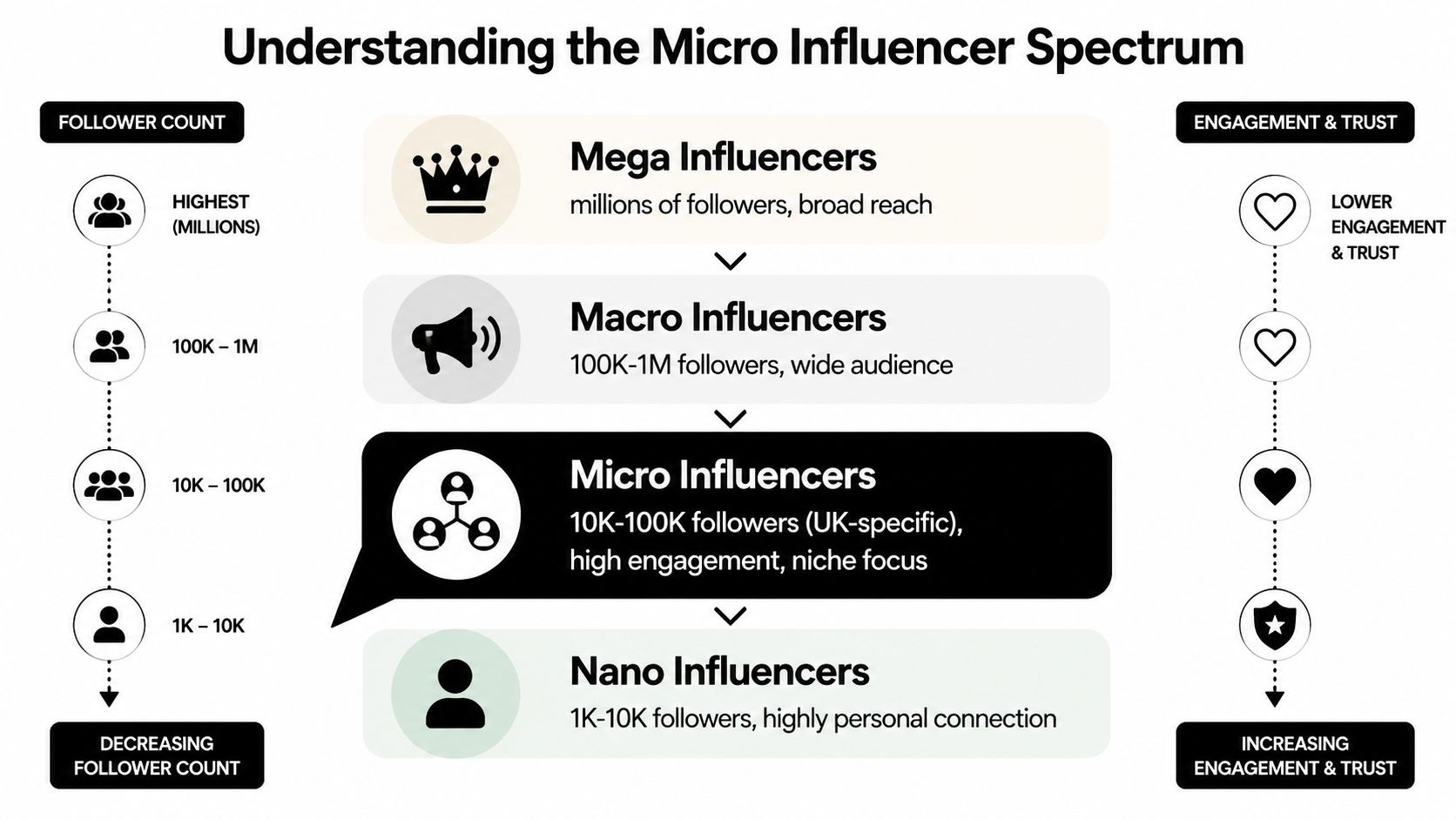
The usual range is 10,000 to 100,000 followers. That number helps with classification, but it does not tell you whether the creator can sell, generate bookings, or drive qualified traffic.
A practical definition for brands
A useful definition has three parts. The creator sits in the micro tier by audience size, publishes consistently inside a clear niche, and gets audience response that suggests purchase intent rather than passive scrolling.
That third point matters most. A creator can have 40,000 followers and still be a poor commercial fit if the comments are generic, the content jumps between unrelated topics, or every sponsored post feels forced. On the other hand, a creator with a tightly defined audience in fitness, beauty, home improvement, parenting, or local food can outperform much larger accounts because the recommendation lands in the right context.
Micro-influencers work more like specialist media placements than broad awareness buys. They usually have enough reach to matter and enough audience closeness to influence action. That combination is why they sit in the middle of the creator market so effectively.
For a useful primer on the differences between micro and macro creators, that comparison helps clarify where each tier fits in a media plan.
Influencer tiers compared
Tier | Follower Range (UK) | Avg. Engagement (IG) | Typical Cost (Per Post) | Best For |
|---|---|---|---|---|
Nano | 1K to 10K | Not cited here | Not cited here | Local credibility, early testing, highly personal recommendations |
Micro | 10K to 100K | As noted earlier, typically higher than larger creator tiers | Not cited here | Performance campaigns, niche targeting, scalable creator programmes |
Macro | 100K to 1M | Lower than micro in many categories | Not cited here | Broad awareness, larger launches, brand visibility |
Mega | 1M+ | Lower than micro in many categories | Not cited here | Mass exposure, PR-style visibility |
These tiers are useful for planning spend, but they are not enough for creator selection. I have seen brands overpay for “micro” accounts that looked right on paper and underperformed because the audience was too broad, too international, or too conditioned to ignore sponsored posts.
What brands should screen for first
Start with fit, not popularity.
The strongest early filters are usually:
Niche relevance: The creator already speaks to the customer segment you want.
Audience behaviour: Comments show questions, recommendations, product interest, or local intent.
Format fit: The creator can produce the content type the campaign needs, whether that is Reels, Stories, TikToks, or UGC for paid usage.
Commercial credibility: Sponsored content still sounds like the creator, not like a script pasted into a caption.
Operational reliability: They reply on time, follow a brief, and can supply links, codes, or usage rights without friction.
A good micro-influencer behaves like a distribution partner with creative skill, not just a person renting out attention.
If you are building your first shortlist, this guide to micro-influencer marketing for small businesses is useful because it focuses on setup, outreach, and campaign structure rather than vague creator advice.
Why Micro Influencers Deliver Superior ROI
A lot of influencer content still treats creators as a brand channel first and a performance channel second. That is usually why teams struggle to defend spend. Micro-influencers work best when they are planned like paid acquisition partners with creative upside, clear tracking, and room to scale.
The economics are hard to ignore
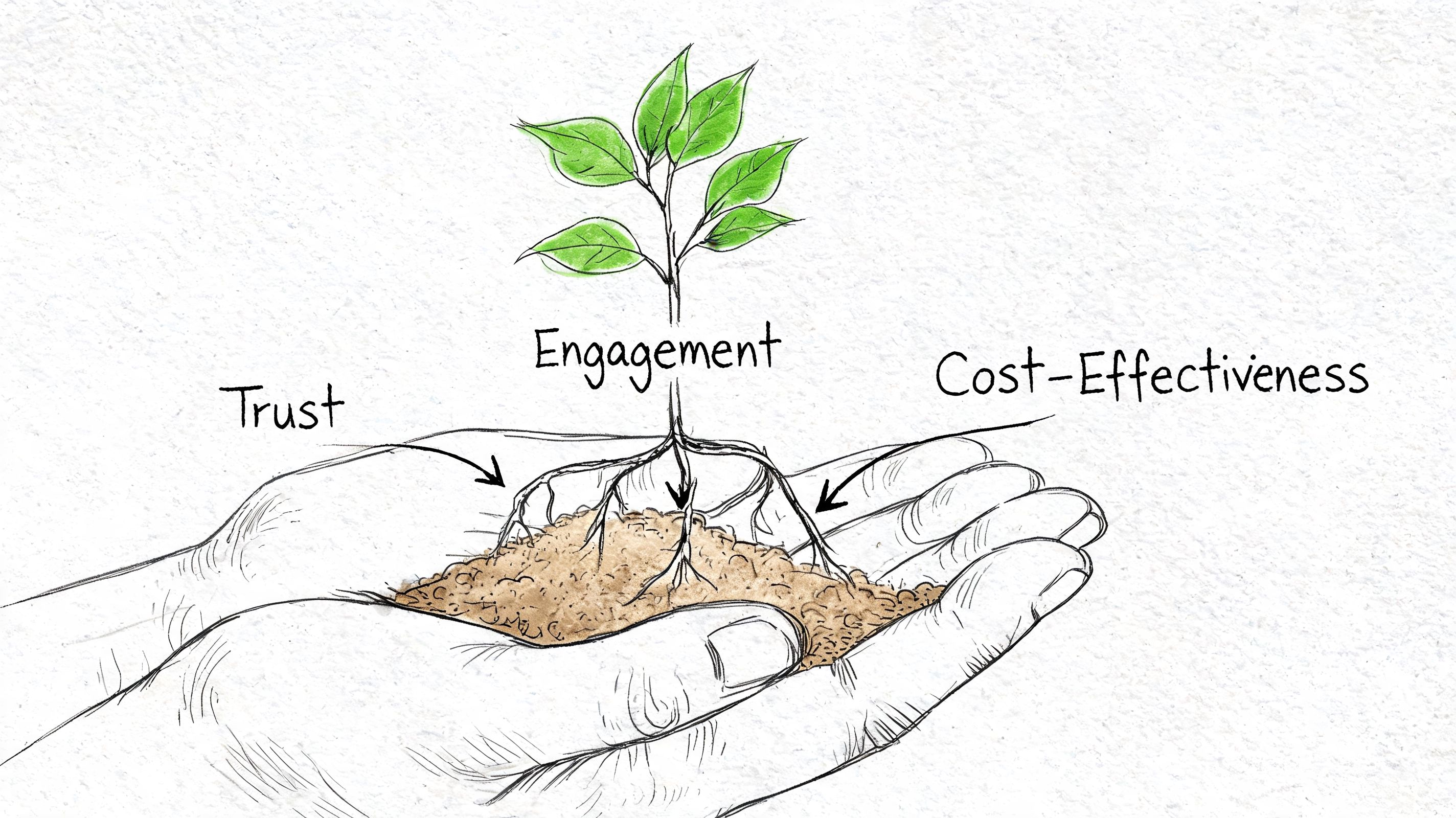
The commercial case is not just that micro-influencers cost less. It is that they often produce more measurable output per pound spent. As noted earlier, benchmark reporting has found stronger engagement and materially lower cost-per-engagement for micro creators than for larger accounts. That matters because lower CPE gives a team more room to test hooks, offers, formats, and audience segments before spend gets expensive.
The planning advantage is simple. One large creator gives you one audience, one creative interpretation, and one set of results. A micro-influencer portfolio gives you multiple shots at message fit, stronger coverage across sub-niches, and cleaner readouts on what moves clicks, code use, leads, or bookings.
That is a better operating model.
Trust creates performance, not just sentiment
Micro-influencers usually convert for a practical reason. Their audiences still pay attention. The recommendation feels closer to a credible prompt from someone who uses the product, knows the category, or has local relevance.
In reporting, that shows up as higher-intent behaviour. People ask where to buy, whether the code still works, which location was featured, what shade was used, or whether the product is worth switching for. Those are not empty engagement signals. They often sit one step before action.
Practical rule: If a creator consistently triggers comments, saves, DMs, and code questions, that creator is much closer to revenue than a polished post with passive likes.
Trust is not automatic, though. I have seen brands hire the right-sized creator and still miss target because the brief sounded unnatural, the offer was weak, or the landing page did not match the content. Micro-influencers improve the odds of response. They do not fix bad campaign design.
For teams trying to tie creator activity to revenue, this piece on boosting social media impact is a useful reminder that attribution discipline matters as much as creative quality.
What works better than one big creator
The strongest micro-influencer programmes look like a testable portfolio, not a single booking.
That usually means:
Several creators in the same category: Better message testing and a more reliable performance baseline.
A mix of local and niche voices: Useful for hospitality, retail, clinics, fitness, and any business with geographic buying intent.
Repeat placements with the creators who convert: Familiarity often improves response more than constant one-off posts.
Trackable campaign structure: Unique codes, UTMs, landing pages, branch links, and post-level reporting.
The mistake is paying for content and stopping there. ROI improves when creator selection, offer design, paid usage rights, and measurement are planned together from the start.
Practical Use Cases for Your Business
Micro-influencer strategy becomes much clearer once you stop thinking in abstract marketing language and start matching creators to commercial jobs.
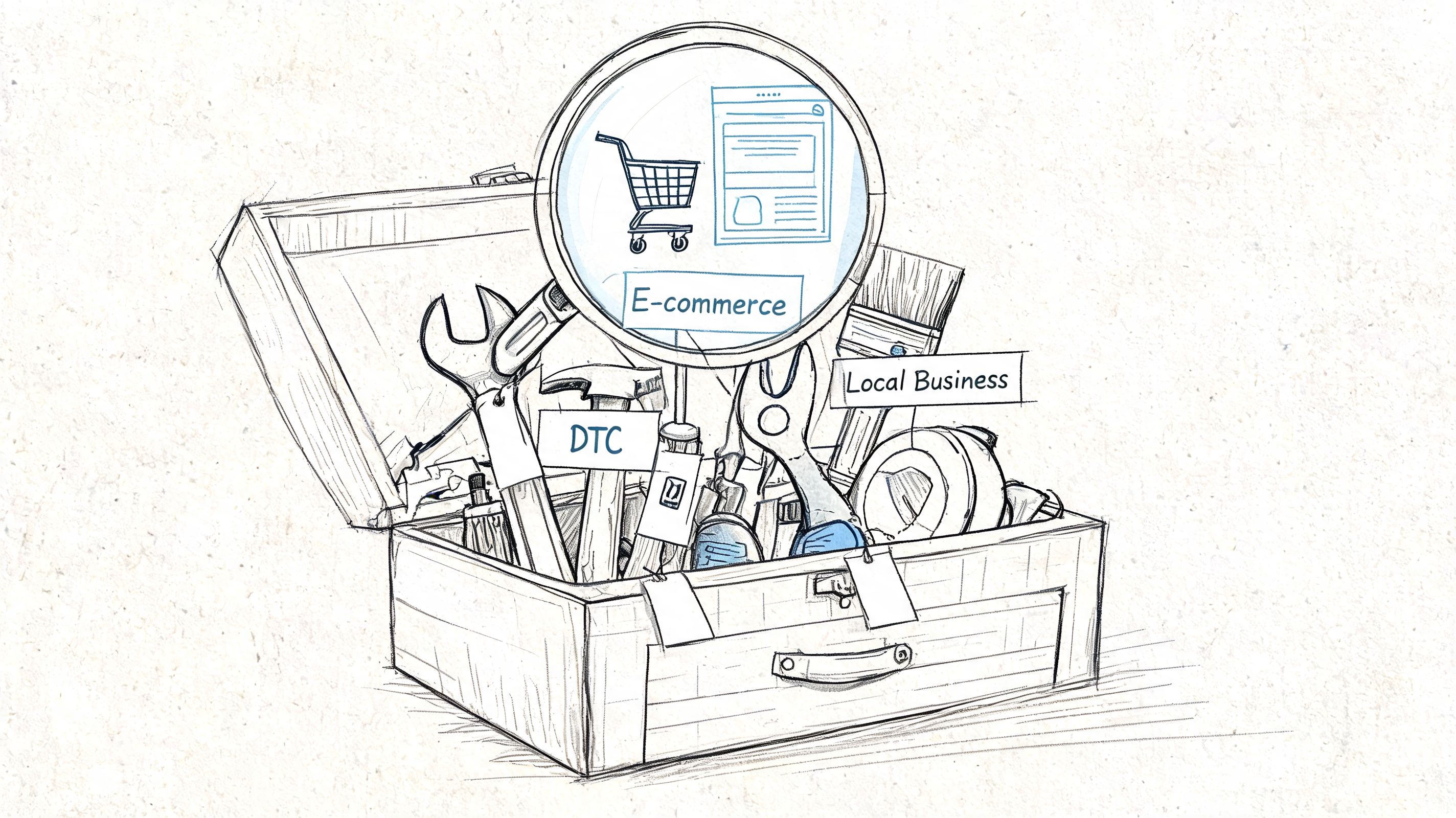
Different businesses need different outcomes. An ecommerce brand wants product sales. A restaurant wants bookings, walk-ins, and reviews. A multi-location chain wants local relevance without building separate teams in every market.
Ecommerce and DTC
For ecommerce, the best micro-influencers usually behave like a mix of affiliate partner and creative producer. They don't just post. They create content that can sell.
A skincare brand might work with creators who already post routine videos. A food brand might brief recipe-led creators who can show the product in use. A fashion brand may get better results from “three ways to wear it” than from a polished brand-style campaign.
This works because niche alignment is stronger with micro-creators. Brandwatch notes that micro-influencer audiences show 70% to 85% match rates to advertiser customer profiles, versus 30% to 50% for macro-influencers, and that niche campaigns can produce 40% to 60% lower cost-per-qualified-conversion (micro-influencer audience precision and efficiency).
Restaurants and hospitality
Restaurants often overcomplicate influencer campaigns. They don't need cinematic production. They need local trust and a clear reason to visit.
The useful formats are usually simple:
A first-visit reaction: Good for new openings and local discovery.
A menu-specific post: Better than generic venue coverage.
A time-bound offer or event mention: Helps turn attention into footfall.
A review with practical details: Price, location, booking, favourite dish, atmosphere.
What tends to fail is inviting creators with broad lifestyle audiences who don't influence local dining decisions. Local fit matters more than polished reach.
In hospitality, the creator isn't just promoting food. They're reducing the hesitation that stops someone choosing your venue tonight.
Multi-location brands and franchises
Micro-influencers become operationally powerful in these specific contexts. One national creator rarely speaks equally well to Birmingham, Manchester, Bristol, and London. Local buying decisions are local.
A fitness chain, coffee group, or franchise network gets better traction by activating creators around each branch or city cluster. The message feels more relevant, the audience is geographically useful, and the attribution setup can be tied to location-specific links or offers.
That approach also helps agencies. Instead of selling vague creator awareness, they can build location-based programmes with clearer reporting and easier optimisation.
How to Run a Measurable Micro Influencer Programme
The difference between a creator campaign and a creator programme is process. Campaigns are one-offs. Programmes are repeatable. If you want reliable returns, you need the second.
Teams often don't fail because they chose the wrong channel. They fail because the workflow is loose. They source manually, brief inconsistently, track badly, and then conclude that influencer marketing is hard to measure.
Start with the KPI, not the creator
Before outreach, decide what success means in business terms. Not “strong engagement.” Not “good content.” Use metrics that can survive scrutiny.
For most brands, that means one primary outcome and a few supporting signals:
Primary commercial metric: sales, bookings, covers, footfall, leads, or first orders
Trackable action metric: code redemptions, link clicks, landing page sessions
Content metric: saves, shares, comments with intent, view quality
If you don't choose the reporting model first, you'll end up with creators who look impressive but don't answer the actual brief.
Source and vet properly
Manual discovery through TikTok and Instagram can work, but it's slow and inconsistent. Teams often overvalue aesthetics and undervalue audience fit.
A tighter vetting process usually includes:
Audience relevance: niche, location, and customer match
Content evidence: can they produce format-native content that feels credible?
Commercial behaviour: do previous brand posts feel trusted or forced?
Response reliability: are they organised enough to deliver on time?
Avoid shortlists built on follower count alone. A creator can sit inside the “right” tier and still be the wrong partner.
Brief for performance
Good briefs create consistency without killing authenticity. The usual mistake is swinging too far in one direction.
Some brands send almost nothing, which leads to weak calls to action and unusable content. Others script every word, which strips out the creator's voice and makes the post feel synthetic.
A useful performance brief should cover:
The offer: what exactly the audience should do
The angle: why this product, venue, or experience matters
The essentials: claims, tags, disclosures, location details
The tracking method: code, link, booking page, branch-specific CTA
The content rights: whether the brand can reuse the asset in ads or organic
If the brief doesn't specify how the audience converts, the post usually defaults to generic lifestyle content.
Build attribution before launch
This is the part many teams leave until after content goes live. That's backwards.
UK DTC brands have real tracking problems after privacy changes. Tribe Group notes that 42% of UK DTC brands struggle to track micro-influencer-driven sales after iOS privacy updates. The same source cites hospitality examples where TikTok micro-influencers can drive a 22% footfall lift via promo codes, but 37% of attribution fails without proper tools such as UTM links and tracking dashboards (UK attribution challenges in micro-influencer campaigns).
Those numbers should change how you set up campaigns. Every creator needs a clean tracking structure before they post.
Use a simple operational framework
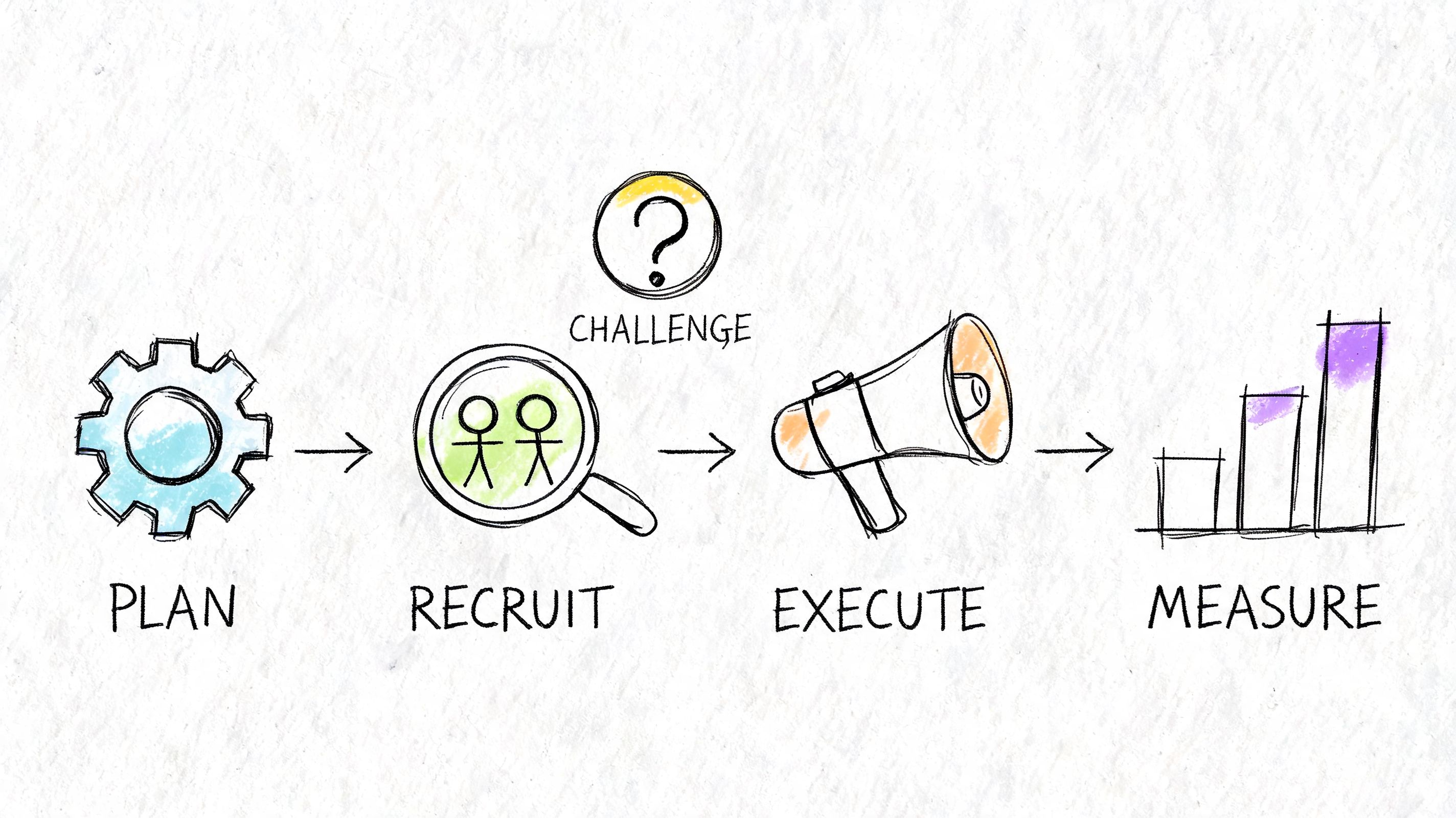
A measurable programme usually runs best with a simple weekly rhythm:
Stage | What the team does | What to watch |
|---|---|---|
Plan | Define offer, location, KPI, target creator type | Weak goals create weak reporting |
Recruit | Vet creators, negotiate terms, confirm posting windows | Don't compromise on audience fit |
Execute | Ship product or arrange visit, review drafts, confirm disclosures | Keep the CTA clear |
Measure | Track views, clicks, code use, bookings, and content quality | Optimise by creator, format, and offer |
Many teams need structure more than inspiration. A practical framework for influencer marketing ROI and how to measure what actually works helps if your current reporting still stops at engagement screenshots.
Optimise like a performance marketer
Once the campaign is live, don't judge too early and don't judge on one metric.
Review:
Which creator drove the best qualified traffic
Which creative angle produced the strongest action
Which offer had the best redemption behaviour
Which locations or audience segments responded fastest
Then keep the winners, cut the passengers, and iterate. That's how micro-influencer marketing becomes a growth channel rather than a sequence of disconnected collabs.
Common Mistakes to Avoid in Your First Campaign
Most first campaigns don't fail because micro-influencers are ineffective. They fail because the setup is sloppy.
The fastest way to improve outcomes is to avoid a few common traps.
Mistake one is treating follower count as the main filter
A creator can have the right headline number and still be a poor commercial fit. For performance-led campaigns, engagement quality matters far more. InfluenceFlow notes that micro-influencers in the 10K to 100K range typically deliver 3% to 10% engagement, a 200% to 400% differential over macro creators, and that this directly affects promo code redemption and UTM click efficiency (engagement as a conversion predictor).
That doesn't mean every high-engagement creator will convert. It means low-engagement creators are harder to justify from the start.
Mistake two is sending product without a conversion path
Gifting can work. Random gifting rarely does.
If the creator gets a product, visit, or comped experience with no agreed output, no timeline, and no CTA, you haven't built a campaign. You've funded a possibility. Sometimes that possibility pays off. Usually it doesn't in a way you can repeat.
Mistake three is having no measurement system
A surprising number of teams still rely on screenshots, vanity metrics, and end-of-campaign guesswork.
You need a basic attribution setup from day one:
Unique codes: One per creator
Tracked links: One destination per offer or location
Consistent reporting windows: So creators are compared fairly
Clear ownership: Someone has to reconcile the results
Mistake four is treating every creator as one-and-done
The best creators often improve on the second and third collaboration because they understand the product, audience response, and objections. One-off posting leaves a lot of that value unused.
The first post often tests attention. The repeat post tests trust.
Mistake five is forgetting content rights
If a creator makes strong UGC and your team wants to reuse it in paid social, email, landing pages, or in-store screens, that has to be handled upfront. Sorting it out after the content performs well is slow and awkward.
From Understanding to Action Your Next Steps
If you came here asking what is a micro influencer, the technical answer is straightforward. It's a creator in the 10,000 to 100,000 follower range. The useful answer is more commercial. A micro-influencer is a specialist creator with a defined audience, stronger engagement, and a better chance of producing measurable business outcomes than a larger, less focused account.
That's why the channel matters so much now. Brands don't need more creator activity for its own sake. They need programmes that can drive sales, bookings, footfall, reviews, and reusable content without turning into spreadsheet chaos.
The trade-off is real. Micro-influencer marketing can outperform, but it only does so when sourcing, briefing, attribution, and optimisation are handled properly. Without that structure, teams end up with scattered posts and fuzzy reporting. With it, they get a repeatable channel.
If your current influencer work still feels hard to measure, that's usually a systems problem, not a channel problem. Fix the workflow, and the economics of micro-creators start to make much more sense.
If you want help turning micro-influencer marketing into a repeatable, measurable channel, Sup is built for exactly that. It combines AI with a human team to source vetted micro and nano creators, run outreach, manage campaigns, and track results through unique promo codes and UTM links, so your team can connect creator content to clicks, bookings, conversions, revenue, and reusable UGC without the manual admin.

Matt Greenwell
Share